
Can charge be increased indefinitely while keeping mass fixed?

Various objects exist in this world. They possess a non-negative mass M and carry a corresponding mass-energy. Some objects also possess an electric charge Q. M determines the strength of the interaction with the gravitational field, while Q determines the strength of the interaction with the electromagnetic field. From a naive classical perspective, one might think that gravitational and electromagnetic fields are distinct. Consequently, one might think that while keeping the value of M fixed, one could continue to charge the object such that the absolute value of Q becomes infinitely large. However, general relativity and superstring theory conclude that this is not possible. In the following, we adopt the natural unit system where

It is known that the upper limit of the absolute value of Q is M. It cannot exceed the value of M.
For example, consider general relativity in five-dimensional spacetime. Only the gravitational field exists, and an independent electromagnetic field does not appear in five dimensions. Then, we compactify the extra spatial degree of freedom y into a torus of radius R. From the metric tensor in the five-dimensional spacetime below, the electromagnetic potential A in four-dimensional spacetime emerges.

Please refer to the article below regarding this.
In this theory, the charge Q of a particle in four-dimensional spacetime is proportional to the particle's momentum in the extra y-direction. Therefore, it can be seen that Q cannot be larger than the particle's energy E in four-dimensional spacetime. For a particle moving within this five-dimensional spacetime, the relativistic momentum vector P satisfies the relation

where the right side is a constant equal to the negative square of the particle mass in five-dimensional spacetime. By substituting the metric tensor of Equation (1) into Equation (2) and rearranging, the following relational expression is obtained for the particle mass M in four-dimensional spacetime.

From this equality, the following inequality, which holds in general, is derived.

In other words, the absolute value of the charge Q that a particle can possess cannot exceed its mass M.
However, this argument was made under the assumption that the particle's energy and charge do not affect spacetime. In reality, spacetime is deformed by the influence of the particle. The particle becomes a black hole-like object. In that four-dimensional spacetime region, the following charged black hole spacetime appears.

Here, the function f(r) is given by using the black hole mass M and charge Q as

The event horizons of this black hole appear in two locations, inside and outside, and their radii are found from f(r)=0 as

The temperature of the Hawking radiation emitted outside the outer event horizon is also determined from M and Q as

is calculated as follows. Therefore, for the radius of the event horizon and the temperature of Hawking radiation to be real numbers, it is required from equations (7) and (8) that the upper limit of the absolute value of the charge be M. And for a black hole where the absolute value of Q is at its maximum
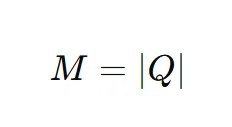
is obtained, but in this case, the two inner and outer event horizons merge, and the temperature of the Hawking radiation becomes zero. In terms of the analysis using the light particle picture above, this corresponds to the limit where the mass of the particle in five-dimensional spacetime becomes zero. And this is a situation where its momentum in the y-direction provides the rest mass M of the matter in four-dimensional spacetime. A black hole that satisfies equation (9) is named an extremal black hole. An extremal black hole is a very special type of black hole, and it has a spatial structure where the vicinity of the event horizon is stretched infinitely in the radial direction.
From these considerations, it is believed that there is no stable object where the absolute value of the charge Q can be increased infinitely while keeping the mass M fixed.
Finally, as a comment, let us introduce another property of extremal black holes. In this case, the gravitational force and the electric force are exactly balanced. Let us place two black holes with the same mass M and charge Q sufficiently far apart. Then, the magnitude of the gravitational force acting between the two is

Also, the magnitude of the electric force is

Since gravity is an attractive force and the electric force is a repulsive force, in natural units, the total force acting on the two black holes is

Then, if the two are extremal black holes satisfying M=Q, it can be confirmed that the total force vanishes. These extremal black holes are also important in supersymmetry theory and superstring theory, and in particular, for extremal black holes called BPS black holes, it is possible to understand their thermal entropy analytically by summing the number of states in statistical mechanics.
いいなと思ったら応援しよう!
 サポートありがとうございます。