
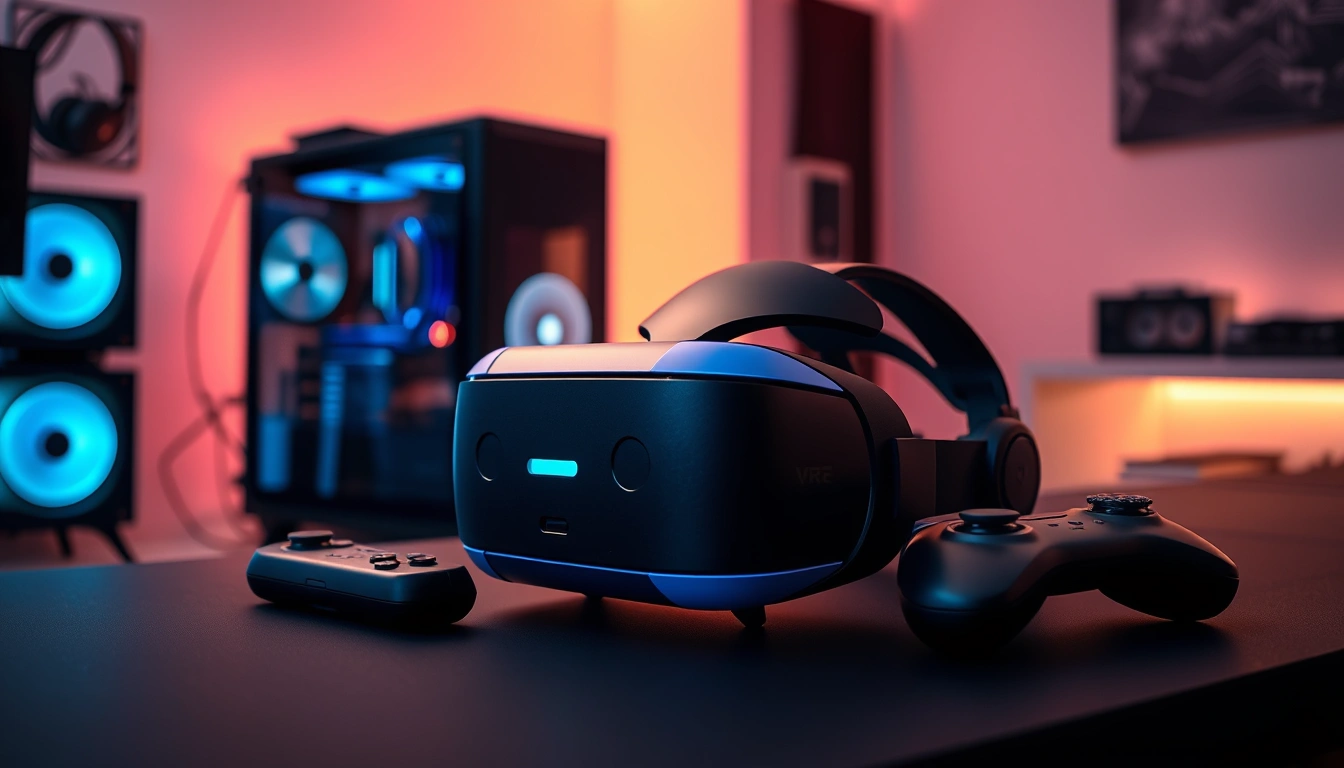

Valve’s Steam Frame was supposed to be the headline gaming-hardware story of 2026: a standalone, wireless virtual-reality headset that streams your entire Steam library off your gaming PC, packs 16GB of RAM and dual 2160×2160 panels, and finally retires the aging Valve Index. Instead, Valve’s current position is that the Steam Frame is shipping in summer 2026, and the company has said memory and storage shortages have created real headwinds for both its shipping schedule and its pricing — the same supply-chain squeeze now rippling across the entire industry.
This is a news analysis of where the Steam Frame stands right now: the confirmed specifications, the pricing question that won’t go away, how it stacks up against the Meta Quest 3, Quest 3S and Apple Vision Pro, and why a global DRAM crunch turned the most anticipated PC-VR device in years into a moving target. If you have been searching for Steam Frame news, a confirmed Steam Frame release date, or whether to wait for it instead of buying a Quest, this is the current picture.
Don't miss new tech stories on Google
Add Tech Insider once in the Google app and our stories appear in your news suggestions.
Steam Frame News: Latest Updates (July 2026)
For anyone tracking the story day to day, here’s a quick timeline of the latest Steam Frame news, updated July 29, 2026:
- August 5, 2026: Still no Valve price announcement, no reservation window and no confirmed release day. The one procedural step in the past week: the FCC formally granted its equipment authorization on July 29, 2026, giving Valve the regulatory sign-off to sell the Steam Frame in the US — but a grant alone does not set a retail date.
- July 29, 2026: Still no price, no pre-order date and no confirmed release date — the single biggest open question in Steam Frame news remains unanswered, even with the hardware customs-cleared and FCC filings public.
- Mid-July 2026: A rumored July 4, 2026 launch date, circulated by YouTube leak channels, came and went with no Valve announcement — treat unofficial Steam Frame release date predictions with caution until Valve confirms one directly.
- June 2026: Shipping manifests tagged “virtual reality devices,” combined with public FCC filings, show roughly 32,000–35,000 kg of Steam Frame hardware already cleared through US customs into Valve’s US warehouses.
- June 30, 2026: The companion Steam Machine shipped at $1,049 (512GB), giving the still-unpriced Frame its clearest price signal yet.
- January 2026: Czech retailer listings, spotted by GamersMarkt, pegged early Steam Frame pricing at roughly $950 for the 512GB model and about $1,070 for a larger storage tier — numbers that look conservative next to July’s estimates closer to $1,200.
Steam Frame: What Valve Actually Announced
Valve has confirmed a “this summer” (roughly June 21 through August or September 2026) shipping window for the Steam Frame, with pre-orders not yet open as of July 2026 — alongside the living-room Steam Machine and a redesigned Steam Controller. The Frame is positioned explicitly as the successor to the Valve Index, the company’s PC-tethered headset that launched in 2019 at $999 for the full kit and has gone six years without a true replacement.
The pitch is different this time. Where the Index was a high-end headset bolted to a desktop with a cable, the Steam Frame is a standalone, streaming-first device. It runs SteamOS on a mobile chip, can play native ARM and Android-class VR titles on its own, and — the part Valve cares about most — streams demanding PC VR games wirelessly from your gaming rig over a dedicated high-bandwidth link. In Valve’s own framing, it is a “streaming-first” headset, not a standalone console that happens to support PC streaming as an afterthought.
That single design decision — build the whole product around wireless PC streaming rather than on-device rendering — is what makes the Steam Frame interesting and what makes it different from everything Meta sells. It also raises the stakes on the one spec Valve still hasn’t confirmed: the price. The headset has been demoed, detailed and targeted for a summer 2026 launch, yet more than a year after the November 2025 reveal there is still no official MSRP, and Valve has publicly signaled that the pricing remains in flux because of the memory market — even as the Steam Machine has already shipped ahead of it.
Steam Frame Specs: 16GB RAM, 2160×2160 Per Eye
On paper, the Steam Frame is a serious piece of hardware that undercuts the Index on weight while leapfrogging it on resolution. The core optical module is reported at roughly 185–190 grams, with a total system weight around 435–440 grams once the headstrap, facial interface and rear-mounted battery are included — a deliberately balanced design that puts the lithium-ion cell at the back of the head rather than the front of the face.
The display is the headline number. Two LCD panels render 2,160 × 2,160 pixels per eye, roughly four times the per-eye pixel count of the original Valve Index and in the same class as the Meta Quest 3. Valve and detailed spec sheets list a 72–120Hz refresh rate with an experimental 144Hz mode, a field of view up to roughly 110°, and a Snapdragon 8 Gen 3 (4nm) paired with 16GB of LPDDR5X RAM — double the RAM of any standalone headset Meta currently ships. Valve put a number on that performance bar at GDC 2026 in March, introducing a “Steam Frame Verified” program that requires games to sustain 90 FPS to earn standalone-mode certification — the clearest sign yet of how Valve wants the headset judged on native performance, not just streaming. As with any pre-retail hardware, treat refresh-rate and FOV figures as targets until final review units are in reviewers’ hands.
Streaming, Eye Tracking and Foveated Rendering
The Steam Frame’s wireless story is built on Wi-Fi 7 with a 2×2 dual-band (5GHz/6GHz) radio and a dedicated wireless adapter that plugs into your gaming PC. The point of the design is to keep VR streaming traffic on its own dedicated 6GHz channel so it doesn’t fight with the rest of your home network, the classic failure mode of earlier wireless-PCVR setups. Valve pairs that with onboard eye tracking that drives foveated streaming — the headset sends the sharpest, highest-bitrate image only to the small region your eyes are actually pointed at, dramatically cutting the bandwidth needed to stream a high-resolution PC game.
Inside-out tracking is handled by four outward-facing monochrome cameras with infrared LEDs for low-light rooms, and passthrough is monochrome rather than full color — a clear signal that Valve is prioritizing gaming and PC streaming over the mixed-reality, color-passthrough use cases Meta and Apple have been chasing. The package ships with two 6-DOF Steam Frame Controllers designed to resist the stick drift that has plagued consoles for a decade. There’s even a user-accessible expansion port carrying a dual 2.5Gbps MIPI camera interface and a Gen 4 PCIe lane for future peripherals.
- Resolution per eye is 2160 × 2160 on dual LCD panels, as reported by PC Gamer and corroborated in FCC filings from June 2026.
- Refresh rate ranges from 72Hz to 120Hz standard, with an experimental 144Hz mode enabled via software.
- The headset weighs roughly 435–440 grams total (about 185–190 grams for the core optical module alone), per FCC documentation and detailed spec sheets.
- Two Steam Frame Controllers (left and right) connect wirelessly, each featuring a thumbstick, D-pad, face buttons, trigger, bumper, tracking ring and a replaceable AA battery rated for around 40 hours.
- Field of view is up to ~110°, as listed in detailed specification sheets for the standalone headset.
- Eye tracking drives foveated streaming to optimize performance, a key feature highlighted across the Steam Frame overview and FCC documentation.
Steam Frame vs Meta Quest 3 vs Quest 3S vs Valve Index
The cleanest way to understand where the Steam Frame lands is to put it next to the headsets people are actually buying today. Meta owns the standalone market, and its Quest 3 and Quest 3S are the obvious cross-shop. The Valve Index is included as the baseline the Frame is built to replace.
| Spec | Steam Frame | Meta Quest 3 | Meta Quest 3S | Valve Index (2019) |
|---|---|---|---|---|
| Type | Standalone + streaming | Standalone | Standalone | PC-tethered |
| Chip | Snapdragon 8 Gen 3 (4nm) | Snapdragon XR2 Gen 2 | Snapdragon XR2 Gen 2 | PC-dependent |
| RAM | 16GB LPDDR5X | 8GB | 8GB | PC-dependent |
| Resolution per eye | 2,160 × 2,160 (LCD) | 2,064 × 2,208 (LCD) | Lower-res (fresnel) | 1,440 × 1,600 (LCD) |
| Refresh rate | 72–120Hz (144Hz exp.) | Up to 120Hz | Up to 120Hz | Up to 144Hz |
| Field of view | Up to ~110° | ~110° | ~96° | ~130° |
| Eye tracking | Yes (foveated streaming) | No | No | No |
| OS | SteamOS | Horizon OS | Horizon OS | SteamVR (PC) |
| Storage | 256GB / 1TB + microSD | 512GB | 128GB / 256GB | N/A |
| Price (current) | Not announced (est. $899–$1,199, trending toward $1,200) | $599.99 | $349.99 / $449.99 | $999 (kit, 2019) |
Two things jump out. First, the Steam Frame is the only headset in this group with eye tracking and foveated streaming, which is the entire technical basis for its wireless-PCVR ambitions. Second, it doubles the RAM of every Meta headset on the market — a spec that looks generous on a slide and, as we’ll see, has become the single biggest threat to the device ever shipping at a sane price.
The Pricing Question Valve Won’t Answer
Here is the most important news development around the Steam Frame and the reason a year-old product still doesn’t have a price tag. Valve has stated it must “revisit” its exact shipping schedule and pricing because of memory-chip shortages affecting both the Steam Frame and the Steam Machine. That is not analyst speculation — that is the manufacturer telling buyers, in its own words, that the numbers on the box were not yet settled. With the Steam Machine now out at $1,049, the Frame’s number is the last shoe to drop.
The math behind that caution is brutal. The Steam Frame ships with 16GB of LPDDR5X RAM, making it uniquely vulnerable to 2026 DRAM price volatility. DRAM and high-bandwidth memory prices began spiking sharply in February 2026 as AI data-center demand consumed memory production capacity, turning a commodity component into the most volatile line item in any consumer-electronics bill of materials. At the Steam Machine launch Valve put a number on it: memory contract prices up more than 170% year over year. A headset whose marquee spec is “twice the RAM of a Quest” is, in 2026, also a headset whose marquee spec is the part getting most expensive fastest.
Valve has said it wants the Frame to come in cheaper than the full Valve Index kit ($999). That goal is now in tension with component reality: recent Steam Deck price hikes and the $1,049 entry point Valve had to set on the Steam Machine both signal how much the memory crunch is reshaping its math. The company that wrote “we’ll wait and ship it right” into its corporate DNA with the Steam Deck has every incentive to get the number right rather than launch into a margin trap — but every month of delay also hands Meta and the broader standalone market more runway, especially after Meta raised Quest 3 and 3S prices in April 2026.
Steam Machine at $1,049: The Price Ceiling Now Hanging Over the Frame
The single most useful data point for predicting the Steam Frame’s price arrived in June with its sibling. On June 30, 2026, Valve shipped the second-generation Steam Machine, confirming the pricing on the way out the door. That number still reframes every Steam Frame estimate a month later, because both devices draw on the same expensive memory supply.
| Steam Machine config | Price |
|---|---|
| 512GB (no controller) | $1,049 |
| 512GB + Steam Controller | $1,130 |
| 2TB (no controller) | $1,349 |
| 2TB + Steam Controller | $1,428 |
Valve explicitly attributed the higher-than-hoped $1,049 entry price to the memory market, citing contract prices that have climbed more than 170% year over year on AI data-center demand. When the November 2025 reveal happened, plenty of observers assumed a sub-$1,000 living-room box; the crunch pushed it past that line. That is the cautionary backdrop for the Frame.
What it means for the Steam Frame is concrete. The Steam Machine’s $1,049 floor sets a practical price ceiling reference for the headset in the minds of analysts: with both products bound to the same DRAM costs, the optimistic $499–$799 figures floated for the 256GB and 1TB Frame configurations earlier in the cycle now look fragile, and the current analyst consensus has drifted up to roughly $899–$1,199 for the 256GB base model. Some commentators go further, pegging a full kit anywhere from $1,000 to $1,500, and Czech retailer listings spotted by GamersMarkt back in January 2026 pointed to similar territory — roughly $950 for a 512GB configuration and about $1,070 for a larger storage tier. The newest data point, from July 2026 coverage, pushes even higher: several outlets now peg the base configuration closer to $1,200. None of these are Valve numbers — Valve has confirmed none of them, and retailer-system leaks are not official pricing either — but the Steam Machine just demonstrated, with a real price tag, exactly how hard the memory market is pushing.
How the Steam Frame price estimate has moved, in one table:
| Estimate source | Steam Frame price estimate | As of |
|---|---|---|
| Early rumors (pre-DRAM crisis) | $499–$799 (256GB/1TB) | Late 2025 |
| Analyst consensus | $899–$1,199 (256GB base) | June–July 2026 |
| Retailer leak (GamersMarkt) | $950–$1,070 | January 2026 |
| Latest July 2026 reports | Closer to $1,200 | July 2026 |
| Steam Machine (confirmed, different product, sets the ceiling) | $1,049–$1,428 | June 30, 2026 |
The Memory-Chip Crisis Reshaping All Gaming Hardware
The Steam Frame’s pricing limbo isn’t an isolated Valve problem — it’s the consumer-facing edge of an industry-wide 2026 memory crunch. The clearest proof came in April 2026, when Meta, the dominant force in standalone VR, did something it almost never does mid-generation: it raised prices across the entire Quest lineup, explicitly tying the move to memory costs.
| Meta headset | Old price | New price (April 2026) | Increase |
|---|---|---|---|
| Quest 3S (128GB) | $299.99 | $349.99 | +$50 |
| Quest 3S (256GB) | $399.99 | $449.99 | +$50 |
| Quest 3 (512GB) | $499.99 | $599.99 | +$100 |
A $100 hike on the flagship Quest 3 and a $50 bump on the budget Quest 3S, two-plus years into their lifecycles, is the kind of move that only happens when the underlying component economics break. The Quest 3S that launched at a headline-grabbing $299.99 in 2024 is now $349.99. And if memory pressure can push up the price of headsets that shipped years ago — and force a $1,049 entry price on Valve’s own Steam Machine — it explains precisely why Valve has been so cautious about committing to a number on a headset carrying double the RAM that hasn’t even reached retail.
This is the same macro force squeezing the rest of the industry’s roadmap. GPU makers, console refreshes and handhelds are all competing for constrained memory supply against AI buyers willing to pay far more per gigabyte than any games company can. The Steam Frame is simply the highest-profile gaming device caught in the crossfire at exactly the wrong moment in its launch cycle.
Why “Streaming-First” Changes the VR Math
Strip away the supply-chain drama and the Steam Frame’s core bet is genuinely novel. Every standalone headset to date has been judged on what its onboard chip can render. Meta’s entire strategy is to make a self-contained mobile computer good enough that you never need a PC. Valve is making the opposite bet: the headset’s mobile silicon is a streaming terminal, and the heavy lifting happens on the gaming PC you already own — or, increasingly, on the new Steam Machine.
If it works, it sidesteps the fundamental ceiling of standalone VR. A Snapdragon 8 Gen 3 can’t natively render the most demanding PC VR titles at 2160×2160 per eye and 120Hz — but it doesn’t have to, if a desktop with a high-end GPU is doing the rendering and the Frame is just decoding a foveated video stream over its Wi-Fi 7 link, fed by the dedicated wireless adapter bundled with the headset. The eye-tracking-driven foveation is what makes that bandwidth budget plausible: send full quality only where the eye looks, compress the periphery hard, and the wireless link stops being the bottleneck.
The risk is equally clear. Streaming-first means the experience is only as good as your network and your GPU. Latency, compression artifacts and Wi-Fi reliability become the make-or-break variables, and they’re exactly the things a glossy spec sheet can’t promise. It’s the same architectural debate playing out in cloud gaming services, only now the “cloud” is the PC in your own home and the tolerances for VR latency are far tighter than for a flat-screen game.
Steam Frame vs Apple Vision Pro: Different Universes
It’s worth situating the Steam Frame against the other end of the market. Apple’s Vision Pro launched at $3,499 and got an M5-chip refresh in late 2025, but it sits in a completely different category — a premium spatial-computing and productivity device, not a games machine. Apple has never seriously courted the gaming audience, and its price puts it an order of magnitude above where the Frame will land.
That contrast matters because it clarifies who the Steam Frame is actually fighting. It is not chasing Apple’s enterprise-and-creative niche, and it is not trying to be a do-everything mixed-reality computer. With monochrome passthrough and a SteamOS gaming focus, Valve has drawn a hard line: this is a headset for playing your existing Steam library, full stop. The only company occupying the same value-for-gaming space at volume is Meta, which is exactly why the Quest comparison — and the Quest price hike — matters so much more than anything Apple does.
Historical Context: From Index to a SteamOS Hardware Push
Valve’s hardware history is a story of patient, sometimes painful iteration. The original Steam Machines initiative in the mid-2010s flopped. The Valve Index in 2019 was a critical success but a niche, expensive, PC-tethered enthusiast product. The real turning point was the Steam Deck in 2022, which proved SteamOS could power a mainstream, mass-market gaming device and that Valve could ship hardware at scale and at a competitive price.
The November 2025 triple reveal — Steam Frame, Steam Machine and Steam Controller on the same day — signaled that the Deck was not a one-off. It was the start of a coordinated SteamOS hardware ecosystem spanning the living room, the handheld and now the face. The Frame is the most technically ambitious of the three precisely because VR is the hardest of those form factors to get right, and because streaming-first VR has never been done well at consumer scale.
That ecosystem play is also why the memory crisis stings more than a single delayed product would suggest. Valve isn’t launching one headset; it’s trying to establish SteamOS as a credible alternative platform across multiple devices at once, the same way the Steam Deck reshaped the handheld market. A botched or absurdly overpriced Frame launch would dent the whole narrative — which is exactly why the $1,049 Steam Machine that ships first is being read so closely.
What the Experts Are Saying
The industry reaction to the Steam Frame has been a mix of genuine excitement about the hardware and hard-nosed caution about the timing. The consensus framing across VR coverage has been that this is the most credible challenger to Meta’s standalone dominance in years — if Valve can actually ship it at a sane price.
“The Steam Frame is the headset PC VR enthusiasts have been waiting for since the Index, but the single most important spec — the price — is the one Valve still won’t commit to,” said one analyst tracking the standalone VR market. “Until that number exists, everything else is a wishlist.”
VR commentators have repeatedly flagged the foveated-streaming approach as the technical crux. “Eye-tracked foveated streaming is the thing that could make wireless PC VR finally feel native,” noted one veteran VR reviewer. “If Valve nails the latency, it changes what a mobile chip in a headset is even for — it stops being a renderer and becomes a really good decoder.”
Supply-chain watchers have been blunter. “When a company that’s already in production raises prices on hardware that’s been on shelves for two years, that tells you the memory market is genuinely broken,” one hardware analyst observed of Meta’s April move. With the Steam Machine arriving at a $1,049 floor, that warning now reads as a preview: the same 16GB LPDDR5X memory bill driving the Frame’s marquee spec is the part the AI data-center shortage has made most expensive. Meta CTO Andrew Bosworth has long argued that VR’s biggest barrier is hitting the right price-performance point — a bar the 2026 component crunch has just raised for everyone, Valve included.
Steam Frame Release Date: What We Actually Know
Valve has confirmed the Steam Frame and Steam Machine are both shipping “this summer” (roughly June 21 through August or September 2026). The Steam Machine shipped on its locked date — June 30, 2026 — but the Frame still has no exact retail date and no announced pre-order date. Valve initially talked about an early-2026 launch at the November 2025 reveal, then narrowed to a summer window after acknowledging it had to revisit the schedule because of RAM and storage component costs, and reaffirmed in a June 5, 2026 blog post that all three products — Frame, Machine and Controller — remain on track to ship within 2026. As of July 29, 2026, “summer 2026, exact date unannounced” is still the honest and consistent read.
New in July 2026: The Hardware Has Reached Valve’s US Warehouses
The most concrete signal yet came from import tracking rather than from Valve itself. Valve-focused leaker Bradley has identified shipping manifests, tagged “virtual reality devices,” showing roughly 32,000–35,000 kg of Steam Frame and related VR hardware clearing US customs into Valve’s US warehouses in June 2026 — a detail corroborated by publicly available FCC filings. That points to a device that’s physically staged and ready to sell, which reframes the delay: at this point it looks like Valve simply hasn’t picked a day and a price, not a manufacturing or logistics holdup. RoadtoVR and other outlets have reconfirmed the summer 2026 window over the same period, but as of July 29, 2026, Valve still hadn’t named the day — despite the hardware sitting in customs-cleared warehouses and its FCC filings being public record.
| Date | Milestone |
|---|---|
| 2019 | Valve Index ships at $999 (full kit) |
| 2022 | Steam Deck proves SteamOS at mass-market scale |
| Nov 12, 2025 | Steam Frame, Steam Machine & Steam Controller revealed |
| Feb 2026 | RAM and storage prices begin spiking sharply on AI data-center demand |
| March 2026 | Valve unveils “Steam Frame Verified” 90 FPS standalone-performance program at GDC 2026 |
| April 2026 | Meta raises Quest 3 / 3S prices, citing memory costs |
| June 2026 | ~32,000–35,000 kg of Steam Frame & VR hardware clears US customs into Valve’s US warehouses |
| June 5, 2026 | Valve blog post reaffirms Frame, Machine & Controller all still shipping in 2026 |
| June 25, 2026 | Steam Machine pre-order reservation lottery closes |
| June 30, 2026 | Steam Machine ships at $1,049 (512GB), citing 170% YoY memory costs |
| July 29, 2026 | Valve still has not named a Steam Frame ship date or price; hardware remains customs-cleared with FCC filings public, and a rumored July 4 launch date has already passed unconfirmed |
| Summer 2026 | Steam Frame ships (exact date & price still unconfirmed as of this July 2026 update) |
For anyone trying to plan a purchase, the honest read is this: the hardware is real, demoed and detailed, but the two numbers that determine whether you should buy it — price and exact date — are precisely the two Valve has declined to lock down for the Frame, and the reason is a memory market outside its control. The Steam Machine’s $1,049 launch is the closest thing to a leading indicator we have.
Steam Frame Pre-Order Playbook: How to Actually Get One
Because Valve just ran the same drill with the Steam Machine, we now have a concrete template for how the Steam Frame pre-order is likely to work. Valve has not announced a Frame pre-order date, but the Steam Machine playbook is the best guide available. Here is how to position yourself.
- Watch for the reservation lottery, not a “buy now” button. The Steam Machine used a randomized reservation queue rather than first-come-first-served, deliberately to blunt resellers and scalpers. Expect the Steam Frame to use the same lottery-style reservation system.
- Move fast once the window opens. The Steam Machine reservation window was short — it closed June 25, 2026 at 10 AM Pacific, only a few days after opening. A Steam Frame window is likely to be similarly tight, so reserve immediately rather than “later today.”
- Have a logged-in Steam account in good standing. Valve ties hardware reservations to Steam accounts. Make sure yours is active, has purchase history if possible, and has a valid payment method and address on file before the window opens.
- Reserving is not the same as paying. Entering the reservation queue secures your place in line; Valve then notifies selected buyers (the Steam Machine cohort is notified during the week of June 29) when it’s their turn to actually purchase. A reservation costs nothing up front.
- Decide your storage tier in advance. The Frame is expected in 256GB and 1TB configurations with microSD expansion. Know which you want before you reserve, because the cheaper tier will be the most contested.
- Budget for the real number, not the hopeful one. With Valve having to price the Steam Machine at $1,049, plan around the higher analyst range ($899–$1,199 for the 256GB Frame, potentially $1,000–$1,500 for a full kit) so a high MSRP doesn’t blow up your decision at checkout.
- Watch the official channels for the trigger. The Steam Frame product page (store.steampowered.com/hardware/steamframe) and Valve’s Steamworks development updates are where the date and price will surface first. Pre-orders were originally expected to follow the Steam Machine’s by days to weeks; that window has already passed, and as of July 29, 2026 there is still no announcement (a rumored July 4 launch date already came and went unconfirmed), so treat any specific predicted date as speculation until Valve confirms it directly.
The short version: get your Steam account ready now, decide your storage tier and budget ceiling in advance, and be prepared to reserve within minutes of the window opening. Everything about the Steam Machine rollout suggests the Frame’s first allocation will be small and the reservation window brief.
Market Impact: What the Steam Frame Means for VR in 2026
Meta has dominated standalone VR by undercutting everyone on price, and that moat is exactly what the 2026 memory crisis is eroding. With the Quest 3 now at $599.99 and the Quest 3S at $349.99/$449.99, even Meta’s prices have crept up — and the Steam Frame’s own price is still unannounced (the lower estimates have drifted toward the $899–$1,199 analyst range for the 256GB model). If everyone’s costs are up, the relative gap between Valve and Meta may stay survivable even at elevated absolute prices.
The deeper impact is platform competition. A successful Steam Frame would put SteamOS and the full Steam catalog directly against Meta’s walled Horizon ecosystem, the same disruptive dynamic SteamOS already brought to handhelds and is now bringing to the living room with the Steam Machine. For PC gamers who already own a capable GPU, a streaming-first headset reframes VR from “buy a second computer for your face” to “buy a wireless display for the computer you already have.” That’s a fundamentally different and cheaper value proposition than Meta’s standalone-everything model.
It also slots into Valve’s broader hardware momentum. The same SteamOS push that produced the Steam Machine and continues to pressure rivals in the console space — a fight that runs right alongside the Xbox-versus-PlayStation and Nintendo Switch 2 battles — now has a VR front. Whether it becomes a real beachhead depends entirely on execution and that elusive price.
5 Predictions for the Steam Frame and VR Hardware
Based on the current trajectory of the Steam Frame, Valve’s track record and the 2026 memory market, here is where this is most likely headed:
- The Steam Frame ships in the summer 2026 window, shortly behind the Steam Machine. The Machine shipped June 30 as planned, and import filings now show Steam Frame hardware already sitting in Valve’s US warehouses as of June 2026 — so the remaining gap looks like Valve picking a date and a price, not manufacturing readiness. Expect the Frame’s pre-order and date to land within that same June 21-to-September window rather than slipping out of summer entirely.
- The 256GB Frame lands above early hopes, in the $899–$1,199 analyst range rather than the once-rumored $499–$799. Valve will try to undercut the Index’s $999 kit, but the same memory crunch that forced a $1,049 Steam Machine makes the “aggressively cheap” scenario unrealistic; expect pricing tied to storage tier near the upper analyst band.
- The headline review battleground will be latency and image quality in real homes, not the spec sheet. Foveated streaming is confirmed, but whether the Frame succeeds will hinge on how the wireless link holds up across messy real-world networks — reviews will live or die on that.
- Meta responds on software, not price. With its own costs up, Meta is more likely to deepen its content and ecosystem lock-in than to start another price war it can no longer afford.
- Memory pressure stays tight through 2026. The DRAM/HBM squeeze driven by AI demand won’t resolve this year — contract prices are already up more than 170% year over year — meaning the Steam Frame launches into a genuinely constrained component market.
Should You Wait for the Steam Frame?
The practical buyer’s question is whether to hold out for the Frame or buy a Quest now. If you already own a strong gaming PC and care about playing the demanding end of the PC VR catalog wirelessly, the Steam Frame is the device built for you — but it’s a bet on a product with a confirmed summer 2026 window whose price and exact date are still unconfirmed. If you want VR today, want it untethered from any PC, and value a mature content store, the Quest 3 at $599.99 (512GB) or the Quest 3S at $349.99/$449.99 are the proven options shipping now.
For most people, the rational move as of late July 2026 is still to wait for Valve to confirm the Frame’s official price and pre-order date — both expected within the summer window, though the once-plausible “days to weeks behind the Steam Machine” timeline has already slipped without an announcement — while recognizing that the same memory crisis creating the uncertainty has already pushed estimates up (the $1,049 Steam Machine is the clearest sign, with some reports putting a full Frame kit anywhere from $1,000 to $1,500). It’s the same calculus playing out across gaming hardware right now, from GPUs to handhelds to the PS5 Pro.
Frequently Asked Questions
What is the Steam Frame?
The Steam Frame is Valve’s standalone, wireless VR headset announced on November 12, 2025, as the successor to the Valve Index. It runs SteamOS on a Snapdragon 8 Gen 3 chip with 16GB of RAM and dual 2,160×2,160-per-eye LCD panels, and is designed to stream your full Steam library wirelessly from a gaming PC over Wi-Fi 7.
What’s the latest Steam Frame news?
As of July 29, 2026, the latest Steam Frame news is that the two questions that matter most still have no answer: Valve has not announced a price or an exact release date. The company continues to hold at a “this summer” window (roughly June 21 through August or September 2026), Steam Frame hardware has already cleared US customs into Valve’s warehouses with FCC filings now public, and the delay traces back to the global memory and storage shortage that also pushed the companion Steam Machine to a $1,049 starting price on June 30, 2026. A rumored July 4, 2026 launch date circulated by YouTube leak channels came and went with no Valve confirmation, so treat any unofficial Steam Frame release date claim as speculation until Valve confirms one directly.
How much will the Steam Frame cost?
Valve has not announced an official price, and that’s still true as of July 29, 2026. It originally aimed to undercut the $999 Index, but the global DRAM shortage has pushed estimates higher: analyst consensus sits around $899–$1,199 for the 256GB base model, some reports put a full kit anywhere from $1,000 to $1,500, and the newest July 2026 coverage puts some estimates closer to $1,200. For context, Valve had to price the companion Steam Machine at $1,049 (512GB), citing memory contract prices up more than 170% year over year. No official Steam Frame MSRP exists yet.
When is the Steam Frame release date?
Valve has confirmed a “this summer” (roughly June 21 through August or September 2026) shipping window for the Steam Frame, but no exact retail date has been announced. The companion Steam Machine shipped June 30, 2026, and the Frame was originally expected to follow within days to weeks; as of July 29, 2026 that gap has already passed with no announcement (including a rumored July 4 launch date that also came and went unconfirmed), though Valve has reconfirmed the summer window, its FCC filings are public, and import filings show Frame hardware already staged in its US warehouses.
How do I pre-order the Steam Frame?
Valve has not announced a Steam Frame pre-order date yet. Based on the Steam Machine rollout, expect a randomized reservation lottery (not first-come-first-served) tied to your Steam account, with a short window. Get your Steam account active with a valid payment method and address, decide on a storage tier (256GB or 1TB), and watch the official Steam Frame hardware page and Valve’s Steamworks updates for the trigger. See the pre-order playbook section above for the full checklist.
Is the Steam Frame better than the Meta Quest 3?
On hardware, the Steam Frame matches the Quest 3 on per-eye resolution, doubles its RAM (16GB vs 8GB) and adds eye tracking with foveated streaming, which the Quest 3 lacks. The Quest 3, however, is shipping now at a known price ($599.99), while the Steam Frame’s price and exact availability remain unconfirmed.
Does the Steam Frame need a gaming PC?
No, it is a standalone device that can run native SteamOS and Android-class VR titles on its own. But it is designed “streaming-first,” meaning its best experience — demanding PC VR games at high resolution — comes from wirelessly streaming over Wi-Fi 7 from a capable gaming PC (or a Steam Machine) using the included adapter.
Why did Meta raise Quest prices in 2026?
Meta raised prices across the Quest lineup in April 2026 — the Quest 3 to $599.99 and the Quest 3S to $349.99/$449.99 — citing the rising cost of memory. The same DRAM crunch, driven largely by AI data-center demand, is what put Steam Frame pricing in flux and forced Valve to set a $1,049 entry price on the Steam Machine.
Related Coverage
- Steam Machine: 6x Deck Power, Priced Like a PC
- Steam Deck vs ROG Ally 2026: $789 vs $599 [Tested]
- GeForce Now vs Xbox Cloud 2026: 4K 120 vs 1440p 60
- Xbox Series X vs PS5 2026: $649 vs $549 [Tested]
- PS5 Pro vs PS5 2026: 16.7 TFLOPS, 45% Faster GPU
- Switch 2 Hits 19.86M, Outsells PS5 by 1M
- Mobile Gaming 2026: Trends, Platforms & Engines
Sources & Further Reading
- Valve — Steam Frame official hardware page (shipping “this summer” 2026)
- UploadVR — Steam Frame announcement details
- Road to VR — Steam Frame release window, price TBA, specs
- VR.org — Steam Machine $1,049 on June 30 sets the price ceiling for Steam Frame
- TechRadar — Steam Frame: 7 things to know (summer 2026 launch, price TBA, Snapdragon 8 Gen 3)
- Wikipedia — Steam Frame
- Meta — Quest 3S official page

