
Musashi GYM's diet method that lost 14kg and 13% body fat in 8 months while drinking alcohol every day

Hello, this is Musashi GYM.
I succeeded in losing 14kg (83kg to 69kg) in 8 months, and my life has changed dramatically.

Recently, I've been asked by acquaintances and people around me,
"How did you change so much?"
"Tell me how to lose weight."
and since I've been asked so often, I thought I'd start writing articles to share it with everyone who is interested.
Also, I thought that by constantly recording and sharing,
it would help me maintain my own motivation.
Before starting my diet,
"I absolutely do not want to quit drinking alcohol"
I firmly decided, and I have been drinking large amounts of alcohol every day until now (lol).
Through my experience, I will introduce how I realized a healthy diet without strain.
I will talk about how to value work, family, and yourself while enjoying alcohol every day.
Self-introduction
I am a company owner and a father of a 1-year-and-9-month-old daughter.
In my busy daily life, weight management and health maintenance were always challenges.
"Someday I'll get a good body"
I thought, but it didn't really lead to reality.
Actually, I have been fat since I was 5 years old, and I was often called "fatty" by people around me.
*At my nursery school graduation ceremony, I was the only one whose uniform didn't fit, and I felt embarrassed wearing a different colored suit.
I started playing baseball around the 4th grade of elementary school, and although I lost weight temporarily between junior high and high school, I was always a substitute because I was too slow.

As I mentioned at the beginning, my nicknames from people around me were mostly "fatty" or "pig" (lol).
Because of this, my self-esteem was low, and I always had a complex about my body shape.
After becoming a working adult, I lived an irregular life, drinking beer and eating ramen late at night, and my weight increased to a maximum of 86.4kg.

My body felt so heavy that I don't think I had any motivation for work in general.
At that time, a senior colleague invited me to the gym, saying, "Your body is getting sloppy, so let's do some muscle training," and I decided to go on a diet.
It was the perfect timing because I was thinking that I should lose weight soon anyway.
I succeeded in losing 10kg in 3 months,
and I remember walking around with my shoulders back, thinking, "Man, I'm looking great."
After a while, I lost touch with that senior, and before I knew it, I had gained more weight than before in a year.

After that, I ended up dieting again, and I succeeded in losing 12kg in 3 months.


And before I knew it, I had rebounded.

From my two experiences of rebounding,
"I will never be able to get a good body in this life"
I had always believed that.
Once, when I went river boarding with friends, a friend muttered while we were changing, "You're pretty chubby," and although I knew it, I felt incredibly depressed.
Also, another friend with a sharp tongue,
kept repeating things like "Fat people aren't popular," "Being fat is evil," and "You're ugly,"
and I was so incredibly annoyed that a switch flipped, and I decided to go on a diet for the third time.
Since I knew from my two previous rebounds that short-term efforts fail, I decided to build my ideal body over the long term (one year later) and started the diet.
When I started the diet, I didn't want to quit drinking, so I consulted a junior colleague who was a muscular drinker,
"You get stressed and rebound because you hold back on alcohol.
You don't diet to lose weight, you exercise and manage your diet to maintain a cool body even while drinking every day."
The advice I got from a different perspective became a tailwind for me.
I started the diet at 83.5kg, and 5 months passed, reaching 74.4kg, a loss of 9.1kg.

They are super faint, but my abs started to show.
I never thought the day would come when I could see my own abs in my life.
People around me started saying, "You've lost a lot of weight!" and I gained more and more confidence.
One month later, I reached 72.9kg, a total loss of 10.6kg.

My abs started to show properly.
Once my abs started to show faintly, they became more visible every time I lost weight,
"I hadn't broken through this wall in my previous diets"
I regretted my past self.
Once you get past this point, it's easy mode from there.
By the way, when your abs show, you really, really gain confidence.
And 8 months after starting my diet, I went from 83.5kg to 69.4kg, successfully losing 14kg.

I've finally reached the point where I'm almost ripped. I used to hate taking off my clothes in front of others, but now I look in the mirror every day and admire my abs. If someone told me to take them off, I could do it anytime.
*Honestly, I feel embarrassed when I look at my old body.
The words from my friend were truly shocking and irritating, but looking back now, if it weren't for those words, I think I would still be living with this life-long complex.
Well, I am grateful for them.
Furthermore, the birth of my child made the time I spend with my family even more precious, and making staying healthy my biggest goal was a major factor in my diet's success.
Currently, while I am in a responsible position as a company executive, I strive to lead a balanced life.
To ensure I have time for my wife and time to play with my daughter, I look for ways to work efficiently and am actively engaged in managing my own health.
Long-term Goal Setting and Maintaining Motivation
When I started losing weight, I first set a goal to lose weight in the long term rather than the short term.
"I want to have a great body in 1 or 2 years."
"I want to lose about 10kg in a year."
I thought long-term and made a plan to achieve that. My strong desire to continue being a cool and healthy father for my wife and daughter also became a major driving force in maintaining my motivation.
Past Dieting Experience
In my two previous diet attempts, I succeeded in achieving results in a short period, but it was difficult to maintain them.

In my second diet, I completely reverted back within two years.
Looking back now, I realize that I stopped stepping on the scale after achieving my goal in the short term.
From the experience of rebounding, I learned that it is important to find a long-term, sustainable method.
I reviewed the balance between my diet management and exercise habits, and searched for a method I could continue within a range that wasn't unreasonable for me.
Diet Management and the Joy of Cooking
Diet management is the foundation of weight loss.
In fact, it is no exaggeration to say that this is everything.
I calculated my calories thoroughly and kept my diet low-fat and high-protein.
I basically switched to cooking for myself and improved my culinary skills.
By developing and trying new recipes, every meal became something to look forward to, which became my motivation to continue.

Bottom left: Roast beef, Chinjao Rosu / Bottom right: Liver and chives, cod stir-fry in sweet and sour sauce
Drinking Alcohol Every Day
Alcohol is my reason for living.
I drink quite a lot of alcohol every day, but that never hindered my weight loss.
Without restricting the alcohol I love at all, I was able to succeed in my diet and balance maintaining a good physique with enjoying myself.
The important thing is balance.
Establishing Exercise Habits (Strength Training)
Exercise (strength training) is also an essential element for weight loss.
*I feel like it's possible to lose weight just by managing your diet, but if anyone has lost weight only through diet, please let me know.
I went to the gym a few times a week and only incorporated strength training.
I'm not good at aerobic exercise (like running), so I was confident that if I incorporated it, I wouldn't stick with it.
Strength training is important for increasing basal metabolism and helped me maintain a sustainable physique.
I believe that if I have muscle even when I get old, I can live a life without needing a cane.
Also, by incorporating strength training, I was able to switch my mindset, which was a huge help in increasing my motivation for work.
Balancing Eating Out and Dieting
As a company executive, I have many opportunities to attend business dinners and drinking parties, but that never hindered my weight loss.
I basically like eating out, so I personally eat out quite frequently as well.
Even when eating out, I was conscious of calories and by choosing appropriate meals, I was able to maintain my health while enjoying my social life.
Time with Family
My goal is to lead a healthy life while cherishing the time with my wife and daughter.
Especially when people start a diet with great enthusiasm, many seem to neglect family meals or prioritize going to the gym over family plans, but my priority was always time with my family.
Also, I talked to my wife about my desire to diet, and she became very cooperative, allowing us to spend fulfilling time together.
Time with my family is my healing, and it became a great support for succeeding in my weight loss.
Success in dieting and subsequent changes
By succeeding in weight loss, not only my body but also my mind changed significantly.
I gained confidence, and my daily life has become more fulfilling.
Feeling lighter has made me more active, which has had a positive impact on my work and family life.

Recommendation for a sustainable diet
The secret to my weight loss success is 'not overdoing it'.
Extreme diets and excessive exercise do not last.
As I mentioned earlier, I rebounded twice as a result of trying to lose weight too aggressively.
It is important to continue a diet that suits you while enjoying the process.
By incorporating a balanced approach of calorie-conscious meals, moderate exercise, and mental care, you can achieve a healthy and fit body without strain.
Musashi GYM's diet strategy: Losing weight without giving up alcohol
From here on, I will talk in detail about the diet strategy I practiced, which allowed me to continue drinking alcohol every day without strain.
Finding a method you can stick to long-term is the key to success.
1. Long-term goal setting
For dieting, aiming for long-term results is far more important than short-term success.
Looking ahead to where I wanted to be in a year, I set the following goals:
① -12kg in 1 year
② -1kg in 1 month
③ -250g in 1 week
In reality, I lost 14kg in 8 months.
The feeling of 'this seems doable' is important, and this goal setting allows you to proceed at a sustainable, stress-free pace.
If you don't reach them, it's absolutely fine, so the important thing is to keep going.
If you don't lose 1kg in a month, just switch your goal to losing 1kg in two months.
No one will complain if you don't reach your goals, and in the long run, you will definitely lose weight.
The point is to never rush and to enjoy the feeling of weight gradually coming off.
2. Understand your current diet
Start by recording what you eat in a day.
If you can grasp everything you normally consume, the foundation for your diet is set.
I recommend the smartphone app 'MyFitnessPal' to record your daily meals in detail.

This makes it easier to review your diet and find areas for improvement.
You can get a grasp of your diet in about a month, so once you get used to it, you don't have to continue recording your meals.
For those who drink alcohol, the key is to include 'alcohol' in your daily calorie intake records.
3. Meals conscious of 'Basal Metabolic Rate - Calorie Intake'
For meals, aim for a calorie intake that is slightly below your basal metabolic rate.
To calculate your own basal metabolic rate, you can search for 'basal metabolic rate calculation' online, and various sites will calculate it for you.

People with jobs that require standing or who have a habit of walking consume about 200-300 kcal a day, so try to keep your meals within the combined total of your basal metabolic rate and calories burned.
In my case, I calculated:
1,700 kcal (basal metabolic rate) + 200 kcal (gym exercise) = 1,900 kcal
and kept my meals below 1,900 kcal.
Unreasonable dietary restrictions don't last, so try to maintain a diet you can stick to long-term.
For example,
・Salad chicken
・Boiled eggs
・Broccoli
A diet consisting only of these is not sustainable, so it's a no-go.
※This is what I was eating before I rebounded.
Find a balanced diet that suits you and that you can continue long-term.
In conclusion, even if you like ramen or are someone who constantly eats snacks, it is perfectly fine to eat them as long as your daily calorie intake is lower than your basal metabolic rate.
If your calorie intake is lower than your basal metabolic rate, you will definitely lose weight.
Dieting is simple subtraction.
4. Do not get stuck on biased diet methods
Don't get stuck on diet methods found online, such as:
・Ketogenic
・Low-fat
・Autophagy or fasting
Instead, explore a diet that suits you.
I once fasted for 5 days in the past, but from the day the fast ended, I binged and gained weight. I also collapsed from dizziness.
I also tried 'low-fat' (a method of limiting fat and consuming carbohydrates and protein), but I ate too much rice and wheat and gained weight.
The important thing is to find a method you can continue while consulting with your own body.
Let's experiment while trying various things.
You have plenty of time, so please don't rush.
5. Choose low-fat ingredients
Choosing ingredients is the basis of dieting.
Fat has the highest calories among the three major nutrients at9 kcal per 1g.
At first, try to be conscious of limiting fat as much as possible.
Avoid high-fat beef belly or pork belly, and choose low-fat ingredients such as chicken breast, chicken thigh, pork tenderloin, or lean beef.
※Remove the skin from chicken to reduce fat
When choosing ingredients at the supermarket, search for 'ingredient name fat' and try to purchase low-fat ingredients.

When you really want to eat dishes using pork belly (such as ginger pork or twice-cooked pork), you can get satisfaction by choosing and substituting low-fat ingredients instead of pork belly, such as
skinless chicken breast,
skinless chicken thigh,
lean beef,
or pork tenderloin,
and cooking them in the same way.
*Thinly sliced pork tenderloin makes for a delicious ginger pork.
When buying fish, bonito, tuna, and red sea bream are also excellent choices as they are low in fat and high in protein.
Avoid fish like yellowtail and mackerel for now, as they are high in fat.
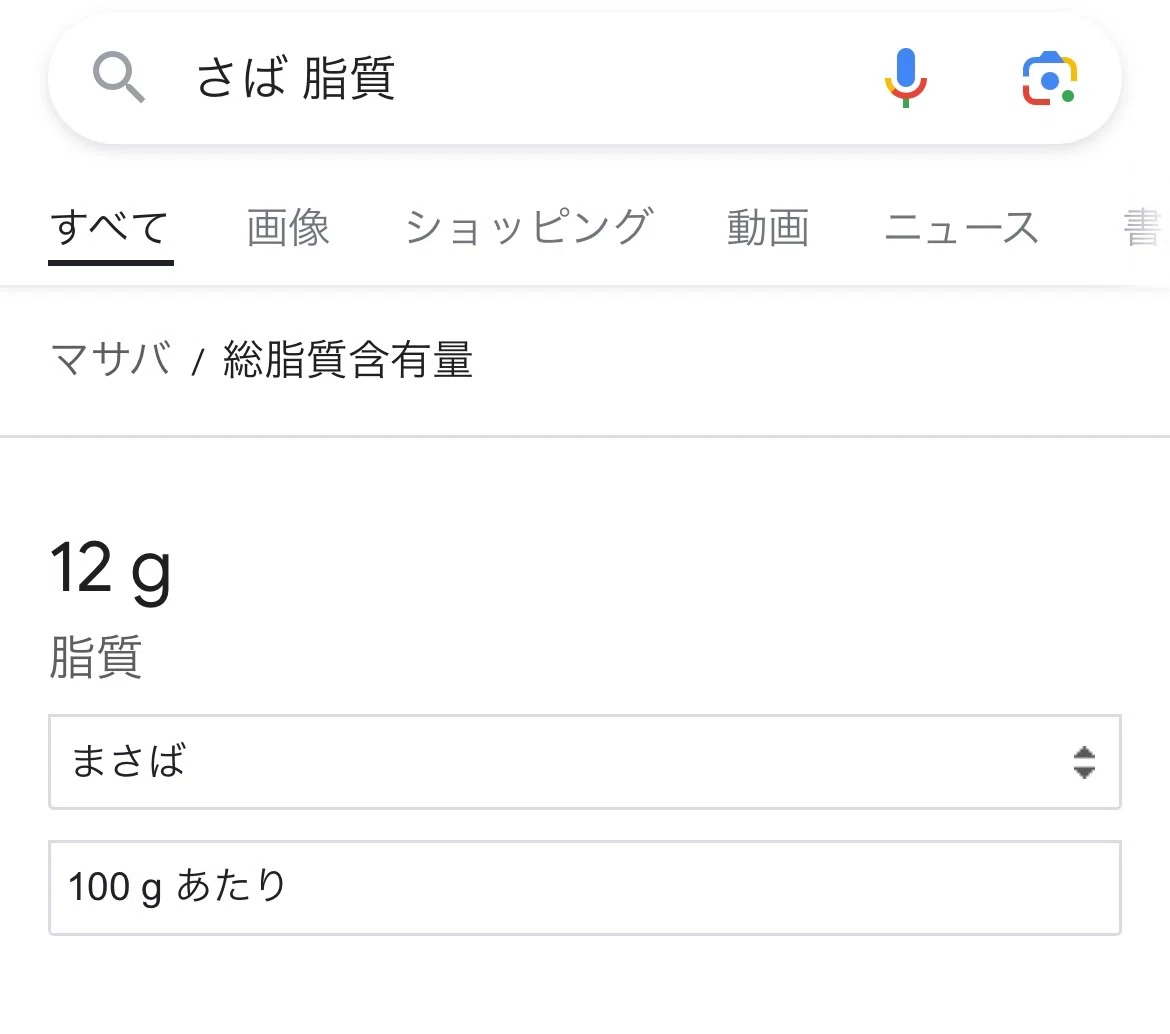
Since there are many types of fish, try searching for "fat content" on your smartphone before buying.
At first, try to be conscious of choosing ingredients with 10g or less of fat.The same applies when buying food at convenience stores.
6. Be conscious of protein
Protein is an important nutrient for building muscle.
As a general guideline, aim for about twice your body weight in protein intake.
For example, if you weigh 80kg, consume 160g of protein.Trying to stick to this strictly can be tiring, so just have the mindset of consuming plenty of protein.
By eating 200g of chicken for each of your three meals, you can consume almost 120g of protein.
Also, fish like tuna, bonito, and sea bream contain almost 20g of protein per 100g, so eating 200g per meal is fine.
At first, search online a lot to gain knowledge.
For the rest, use protein shakes, Oikos yogurt, or fish sausages and beef jerky for evening snacks.
Some people overeat because they are too conscious of protein, so everything in moderation.
7. Prevent binge eating
When your hunger reaches its limit, keep vegetables stocked in your refrigerator.
When you can no longer control your appetite, making a large amount of stir-fried vegetables or vegetable soup can soothe your hunger.
Vegetable mixes sold at convenience stores are easy and convenient.
Things I ate to prevent binge eating include:
・Stir-fried vegetables (vegetables only)
・Vegetable soup (vegetables only)
・Seaweed with vinegar
・Mozuku seaweed with vinegar
・Boiled komatsuna greens
・Pickled cucumbers
・Zero-carb noodles, etc.
Instead of reaching for cup noodles immediately because you are hungry,
try to avoid junk food for the moment by saying,
"Let's eat stir-fried vegetables first. If I'm still hungry after that, I'll think about it."
Avoid late-night cravings for the time being.
8. Be careful only with "oil" for seasonings
Deep-fried foods like karaage, tempura, and fries are basically off-limits.
Even if you choose low-fat ingredients, you will gain weight if you eat dishes that use a lot of oil.
It's okay once in a while, but if you want to lose weight, refrain from them.
If you cook for yourself, keep the amount of oil to one teaspoon or less when cooking.
Avoid salad oil as it is a chemical oil, and use sesame oil or olive oil instead.
Use oil-free dressings and keep mayonnaise to a minimum (a small amount is okay).
Seasonings like soy sauce have almost no fat, so use them without worry to season to your liking.
If you are worried about the pan sticking without oil, buy a fluorine-coated pan from Nitori or similar stores, and you won't have to worry about sticking at all.
● I use a Nitori fluorine-coated frying pan with a removable handle
https://www.nitori-net.jp/ec/product/8942217s/
9. You don't have to refrain from eating out
If you are conscious about choosing the right restaurant, there is no problem with eating out frequently.
When eating out, be conscious of calories and choose low-fat menu items.
In my case, I have many business dinners, so I eat out two or three times a week.
Izakayas have many excellent menu items, so choose "sashimi," "grilled fish," and "yakitori (search for low-fat yakitori on the spot)."

If the other party chooses yakiniku, Chinese food, or a Western restaurant, give up for that day and eat the same thing (people don't gain weight in one day).
The day after you overeat, just go back to your original diet.
Never force yourself to skip meals the next day.
Also, you often get hungry after drinking, but if you buy "zero-carb noodles" and "mekabu seaweed" at a convenience store and eat them, you can suppress your appetite.
In my case, I additionally buy a "highball" to have a nightcap before going to sleep.
10. Never miss a day of drinking alcohol
My hobby is drinking, so I was confident that a diet that required me to quit alcohol wouldn't last.
I calculated the calories of the alcohol I would drink in a day, subtracted that from my daily target calorie intake, and tried to eat within the remaining calories.
For example:
・1 can of Kaku Highball 350ml: 160kcal x 5 cans = 800kcal
・If basal metabolism + calories burned is 1,900kcal, the remainder is 1,100kcal
・Eat within 1,100kcal
As in the example above, eating within the remaining 1,100kcal is a bit of a hurdle, so be conscious of drinking low-calorie alcohol (distilled spirits) and, if you drink at home, adjust the amount of alcohol to reduce the calories per drink.
*I am the type who wants to drink without hesitation even if it means cutting back on food.

People who drink alcohol have to adjust their food intake, but dieting for people who don't usually drink is super easy mode.
11. Use of supplements
Honestly, I don't know if supplements are effective, but I take them for peace of mind.
By the way, if you are going to do muscle training, you should take protein.
Recommended supplements are:
・Multivitamin
→Vitamin A in multivitamins is said to be useful for the growth of protein needed for muscle growth.
Also, Vitamin C seems to have the effect of reducing the burden of muscle pain after muscle training.
・Multimineral
→Packed with nutrients necessary for the body
・Fat-burning supplements
→For peace of mind
・Biofermin
→To regulate intestinal environment
etc.
I happened to see it on a muscle training YouTube channel, but when a bodybuilder was asked, "If you could only take one supplement, what would you drink?" they answered without hesitation:
Multivitamin.So I continue to take it.
I will introduce some of the supplements I usually take.
*This is not an affiliate link
● Multivitamin
● Fat burner supplements
● Multimineral
● Protein
I like a fitness YouTuber named "Yamasawa-san," and I use his brand. It is recommended for its cost-performance.
I will say it again, supplements are just for peace of mind, so do not expect too much from them.
12. Establishing an exercise (strength training) habit
In my case, I try to use my free time to go to the gym.
Even on days when I don't want to go, if I just change into my gym clothes and leave the house, I end up wanting to go.
It becomes a habit in 2 or 3 months, so you need a little effort until you get used to it.
For those who physically cannot go to the gym or find the hurdle too high, it is good to start with 5-minute training videos on YouTube.
Kinnikun's "World's Easiest Strength Training & Aerobic Exercise" seems to be popular, so starting from there is also an option.
Even if you continue for just 1 minute a day, your motivation will increase, so please experience it for yourself.
Do not try to do it all at once; focus on continuing.
13. Keep recording
I basically step on the scale every day (or at least every other day) and record the fluctuations in my weight.
It doesn't have to be an expensive scale; just take a photo with your smartphone or record it in a diet app.
By the way, weight goes down while fluctuating up and down.

At first, you might feel down if your weight is higher than yesterday, but when viewed on a one-month span, it will definitely trend downward, so the point is not to get too happy or sad about it.
It was common for my weight to go up by about 1kg in a day due to things like bloating, but please rest assured that it will drop properly after 2 or 3 days.
Even if you reach your weight goal, please continue to step on the scale every day.
People tend to return to their old ways when they stop being conscious of it, so please make sure to turn it into a habit.
14. Overcoming the plateau period
You may have heard of it, but when you are on a diet, a "plateau period" will definitely come.
Simply put, it is a period when your weight does not decrease.

"I was losing weight steadily until now, so why isn't my weight changing?"
At first, I was almost completely discouraged.
However, if you just endure it and keep doing the same thing, your weight will drop again.
If you search online for "plateau period break," things like "cheat day" or "high carb" will come up, but if you get swayed by that information and binge eat, your motivation will drop significantly.
I also tried to have a cheat day many times, but I resisted.
There is a possibility that you will end your diet by making convenient excuses for yourself, so when you are not feeling well, block out information from the internet.
A good way to think during a plateau period is
"The fat I lost has been replaced by muscle, so it's plus-minus zero."
Be optimistic.
If you are not competing in a tournament, don't be impatient and enjoy the plateau period patiently.
The duration of the plateau period seems to vary from person to person, but no matter how long it lasts, if you keep going properly, your weight will definitely drop, so please rest assured.
15. Mindset
When you start a diet, you inevitably look at short-term results.
It's no use being impatient, but I always kept telling myself in my head,
"I've been fat my whole life, so it's fine if I get a good body in a year or two, right?"
Also, I saved examples of people who succeeded in dieting on YouTube and watched them repeatedly,
constantly motivating myself by thinking, "I can become like this someday too."
These are the YouTube videos I often watched back
What matters is spending the rest of your life in a healthy, fit body.
A year or two out of your whole life is nothing.
I hope your life changes for the better, with both a healthy body and mind.
Thank you for reading the story of Musashi GYM's challenge and success.
I've talked for a long time, but to summarize the diet method simply:
・Set long-term goals
・Understand your current diet
・Keep fat intake low at all costs
・Eat plenty of protein
・Make exercise and strength training a habit
・Keep records and keep going
・Mindset is important
Just put the above into practice.
I lived my life thinking, 'Because of my constitution, I can never lose weight.'
I realized once again that it was just a 'convenient misunderstanding.'
Friends I haven't seen in a while started saying things like,
'You've lost so much weight!'
'You look great!'
and I truly feel that my life has become more vibrant.
Even now that I've lost the weight, I'm still able to continue my diet and exercise.
It's really fun to experiment with my own body now, like 'Let's try increasing my rice intake a little.'
To lead a healthy life, balance and consistency are key.
I hope you all achieve your goals in a way that works for you without overdoing it.
I look forward to continuing to strive for a healthy life together with all of you.
Musashi GYM