


NVIDIA made some bold claims during their CES keynote just over a week ago, but the one that took the internet by storm was that of the 5070’s performance. NVIDIA claims users should expect 4090 levels of performance out of their 5070 GPU, which excited many PC enthusiasts. We’ve never seen that kind of leap in performance from one generation to the next, so naturally, this raised some eyebrows. Unfortunately, this is almost certainly a case of “if it sounds too good to be true, it probably is.” Here are the 2 main reasons why the 5070 won’t have 4090 levels of performance.
2 The spec numbers just don’t allow for it
Something isn’t adding up


 Credit: Source:
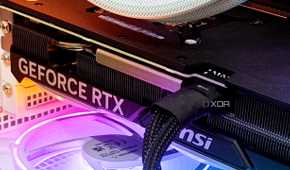

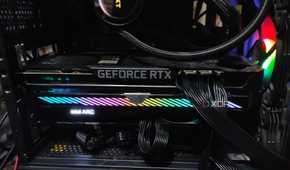

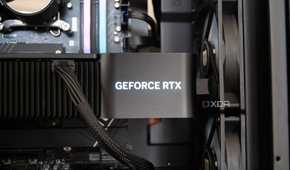
Besides the massive elephant in the room that is DLSS and frame generation (which we’ll get to), the spec sheet is the slightly smaller, but still big, elephant in the room. Let’s start with the VRAM. The 5070 is equipped with 12 GB of GDDR7, with a theoretical bandwidth of 672.2 GB/s. This card is no slouch, but the 12 GB on this card will not age well. Many games will run straight into that 12 GB limit, and the result will be stuttering and lower average framerates. Just for comparison’s sake, the 4090 has 24 GB of GDDR6X VRAM, with bandwidth coming in at 1.01 TB/s. This is already a point awarded to the 4090.
VRAM isn’t the be-all and end-all, of course. The 5070 has fewer shading units, Tensor Cores, cache, and lower clocks than the 4090. Even before seeing performance numbers, there’s simply no way the 5070 can go blow for blow with the 4090. I can see that happening maybe in ray tracing workloads, but even then, without the use of DLSS or Frame Generation, the 5070 would run into VRAM limits in basically every modern AAA title.
1 DLSS 4 + Multi Frame Generation are doing a lot of the heavy lifting
The elephant in the room

Now, it’s time to address DLSS and Frame Generation, the two technologies that took center stage alongside NVIDIA’s new 50-series cards. These two technologies, when used in tandem, is how NVIDIA is reaching crazy framerates while maintaining a somewhat passable level of fidelity at high resolutions. DLSS isn’t a new technology, so why is it suddenly able to quadruple framerates? The answer lies in Frame Generation, which was available on RTX 40 series cards.
The 50 series has enabled Multi Frame Generation, which generates multiple frames per “real” frame rendered by your graphics card. This solution enables NVIDIA to make some pretty crazy claims about the efficacy of its new 50 series GPUs, and therein lies the 5070-4090 claim. While it’s not a straight-up lie, the proof will be in the pudding. Once users get their hands on 50 series cards and begin to play their favorite games (which may or may not support DLSS 4) we’ll get a better idea of how big the generational gap truly is.
Despite some contrasting information, DLSS 4 Frame Generation does indeed use interpolation to generate multiple frames, and while that doesn’t necessarily add latency, it doesn’t improve it. Your input will still be sampled at the raw FPS value, meaning the game might look like 120 FPS, but it could still feel like 40. In some games, this doesn’t matter, but in anything fast-paced, players might want to avoid using DLSS entirely.
But that’s not what NVIDIA wants. They’re staking the future performance of these cards squarely on DLSS and Frame Generation and hope that gamers will continue to use them over “brute-force” rendering. The truth is, if they can somehow solve the “chicken and egg” problem of sampling low FPS input for a higher FPS output, there will no longer be “fake frames,” and besides some artifacts here and there, the experience will be somewhat indistinguishable from pure rasterization. However, we still play games that rely on this brutish method of rendering, and in these cases, the 5070 just can’t stack up against the 4090.
These technologies are the future, but the future isn’t now
The 5070 will be a good graphics card if the MSRP holds true for those wanting to buy and game on one. But it’s not a 4090. It wouldn’t be that bold of a bet to assume next year’s 6070 wouldn’t even be able to stack up, but, like NVIDIA, we shouldn’t get too far ahead of ourselves. Raster performance is still relevant for gamers in 2025, and while I do think AI-based rendering solutions are the future, NVIDIA is being a bit disingenuous with their attempts to market the 50 series.