In the world of high-performance systems, caching is a crucial technique used to enhance application speed, alleviate load on backend systems, and ensure improved fault tolerance. Whether you’re building a web application, a distributed microservices platform, or a real-time analytics engine, understanding different caching strategies is crucial to choosing the right one for your use case. Let us delve into understanding various caching strategies that optimize data access and improve application performance.
1. What is Caching?
Caching is a technique that stores frequently accessed data in a fast-access storage layer (like in-memory databases such as Redis or Memcached), allowing future requests to be served faster than fetching from the original, slower data source (like disk-based databases or APIs).
1.1 Benefits of Caching
Caching offers several advantages that make applications faster, more efficient, and more resilient.
- Performance Boost – Improves application speed by reducing access time
- Reduced Latency – Speeds up read and write operations
- Fault Tolerance – Allows applications to serve data even when the primary data source is unavailable
2. Caching Strategies
Caching isn’t a one-size-fits-all solution. Here are the most common strategies, each with their strengths and trade-offs:
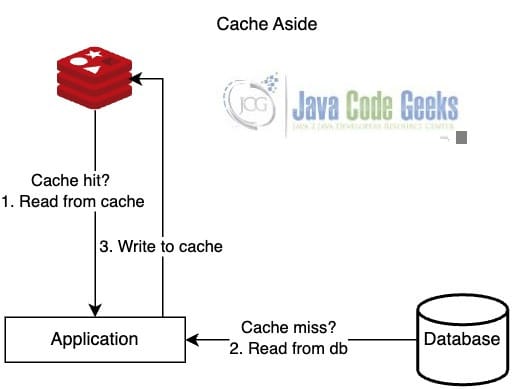
2.1 Cache Aside (Lazy Loading)
The application checks the cache first. If the data exists (cache hit), it’s returned immediately. On a cache miss, the application fetches the data from the database, stores it in the cache, and returns the response. Ideal for frequently read data with infrequent updates, such as product catalogs.
2.1.1 Pros
The Cache Aside strategy comes with several advantages, especially for applications with frequent read operations.
- Suitable for read-heavy workloads
- Fault-tolerant: if cache fails, fallback to DB
- Flexible cache structure: cached format can differ from DB schema
2.1.2 Cons
The Cache Aside strategy comes with several advantages, especially for applications with frequent read operations.
- First, read always results in a cache miss
- Risk of stale data or inconsistency if the cache is not updated correctly after write operations
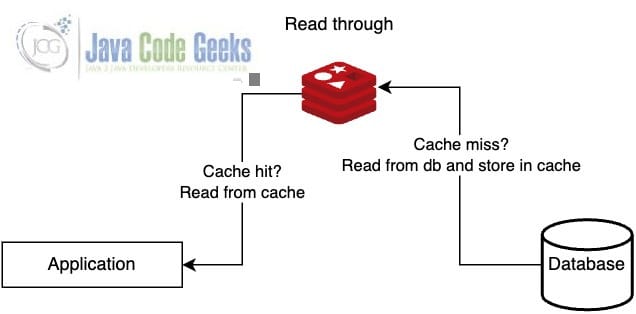
2.2 Read-Through Cache
The application interacts only with the cache. On a cache miss, the cache provider fetches the data from the database, stores it, and returns it.
2.2.1 Pros
The Read-Through strategy simplifies cache management and is well-suited for structured, read-heavy systems. Suitable for systems with predictable data access patterns, such as key-value lookups or shared metadata retrieval.
- Clean separation: the application doesn’t manage cache invalidation
- Ideal for read-heavy applications
2.2.2 Cons
However, it introduces some challenges related to data consistency and structural constraints.
- The first read is a miss
- Cache and DB must have identical schema
- Potential inconsistency if data is updated outside the cache’s knowledge
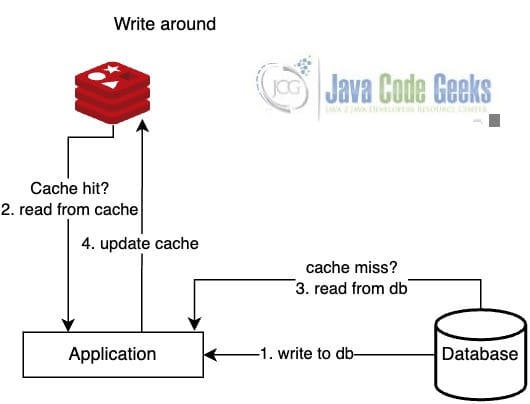
2.3 Write-Around Cache
The application writes data directly to the database, skipping the cache. The cache is updated only when a read operation fetches the data again from the database. Best suited for write-heavy systems with rare reads, such as logging or analytics ingestion.
2.3.1 Pros
The Write-Around strategy optimizes cache usage by focusing only on frequently accessed data.
- Prevents cache pollution with rarely read data
- Reduces cache write load
2.3.2 Cons
Despite its efficiency, this approach can lead to more cache misses and increased dependency on database availability.
- A cache miss is likely on the next read
- If the DB is down, write operations fail
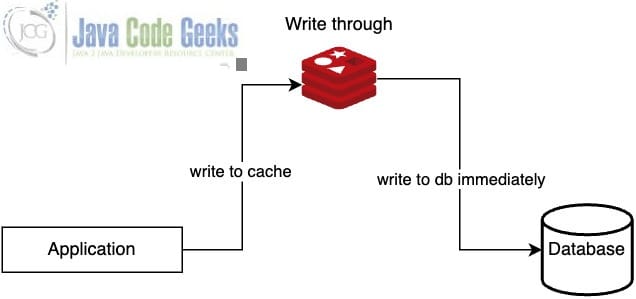
2.4 Write-Through Cache
The application writes data to both the cache and the database in a synchronous manner. The write is considered successful only when both operations succeed. Ideal for systems requiring immediate read-after-write consistency, like user profile updates.
2.4.1 Pros
The Write-Through strategy maintains strong consistency between cache and database while improving read performance.
- Ensures cache and DB consistency
- Increases chances of a cache hit for recent data
2.4.2 Cons
However, it introduces higher write latency and requires careful transaction coordination.
- Increases write latency
- Needs coordination (e.g., two-phase commit) for transactional integrity
- Typically paired with Read-Through or Cache Aside to support reads
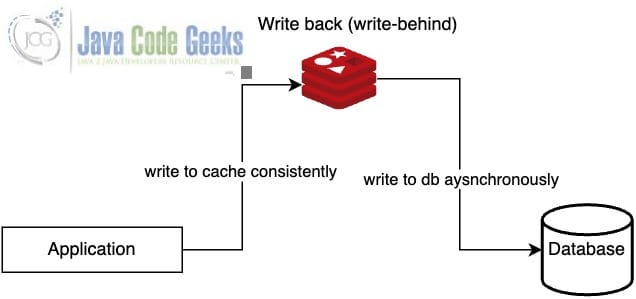
2.5 Write-Back Cache (Write-Behind)
The application writes data only to the cache. The cache asynchronously persists the data to the database in the background.
2.5.1 Pros
The Write-Back cache strategy offers significant performance benefits for write-intensive workloads. Well-suited for high-throughput write systems such as session stores, real-time data streams, or IoT event ingestion.
- Great for write-heavy applications
- Lower write latency
- High chance of cache hits
2.5.2 Cons
However, it carries risks related to data durability and demands a robust background flush process.
- Data loss risk if cache crashes before data is written to DB
- Requires reliable background flushing mechanism
3. Comparison Table
| Strategy | Read Latency | Write Latency | Data Consistency | Use Case Type |
|---|---|---|---|---|
| Cache Aside | Low (after warm-up) | Normal | Medium | Read-heavy apps |
| Read-Through | Low (after warm-up) | Normal | Medium | Structured lookup data |
| Write-Around | Low (if data read later) | Normal | Medium-Low | Logging, analytics |
| Write-Through | Low | High | High | Consistent data systems |
| Write-Back | Low | Very Low | Low (until sync) | High write volume apps |
4. Conclusion
Caching is a powerful pattern that, when used correctly, can vastly improve the performance and reliability of your systems. However, no single strategy fits all scenarios. By choosing the appropriate caching strategy—or a hybrid of them—you can build systems that are not only fast and scalable but also resilient and cost-effective.