In 2026, a seismic shift is reshaping how development teams interact with infrastructure. Platform engineering has emerged as the #1 priority for enterprise CTOs, promising to solve the very problems that DevOps inadvertently created at scale. But is this a genuine evolution in software delivery, or simply old wine in new bottles? Let’s cut through the hype and examine what’s really happening.
1. The DevOps Dilemma: When Success Breeds Complexity
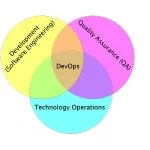
DevOps revolutionized software development by breaking down silos between developers and operations teams. It gave us faster deployments, continuous integration, and the “you build it, you run it” philosophy. For over a decade, this cultural shift was enough to drive meaningful improvements across the industry.
However, as organizations scaled, DevOps began showing its limitations. According to recent industry research, companies found that their DevOps practices, which once enabled speed, started introducing friction instead. Developers faced tool fatigue, operations teams drowned in complexity, and senior engineers became human bottlenecks for deployments and architectural decisions.
The Reality Check: In modern enterprises, developers can spend up to 16 hours just adding a new service to their infrastructure, and onboarding a new engineer can take 80 hours of setup time before they write their first line of productive code.
2. Enter Platform Engineering: Evolution, Not Revolution
Platform engineering emerged as a discipline focused on building Internal Developer Platforms (IDPs) that abstract infrastructure complexity while maintaining developer autonomy. Rather than replacing DevOps, platform engineering is widely considered the next evolution, building upon DevOps principles rather than discarding them.
2.1 What Makes Platform Engineering Different?
The core distinction lies in approach and scope. While DevOps is primarily a cultural philosophy promoting collaboration and automation, platform engineering is an engineering discipline that creates products for internal developers. Think of it this way: DevOps tells you why to collaborate and automate; platform engineering builds the tools that make collaboration and automation seamless.
| Aspect | DevOps | Platform Engineering |
|---|---|---|
| Core Focus | Cultural shift, collaboration between dev and ops | Building and maintaining internal platforms |
| Primary Goal | Automation and shared responsibility | Developer self-service with abstracted complexity |
| Team Structure | Cross-functional teams owning full lifecycle | Dedicated platform teams treating developers as customers |
| Complexity Management | Distributed across development teams | Centralized in platform with golden paths |
| Key Metrics | Deployment frequency, change failure rate | Time to first deployment, developer satisfaction, platform adoption |
3. The IDP Landscape: Backstage, Port, and Humanitec
Three major platforms have emerged as leaders in the platform engineering space, each with distinct philosophies and use cases.
3.1 Backstage: The Open-Source Pioneer
Backstage, originally developed by Spotify and open-sourced in 2020, has become the most recognized name in internal developer portals. It’s a framework for building developer portals that provides a software catalog, documentation system (TechDocs), and software templates.
Best for: Large organizations with dedicated platform engineering teams (3-15 FTEs) who want maximum flexibility and customization. However, implementation typically takes 6-12 months, making it a significant investment.
3.2 Port: The No-Code Contender
Port positions itself as a no-code platform that empowers platform engineers to build comprehensive internal developer portals without the overhead of Backstage. It offers a Software Catalog, Self-Service Actions, Scorecards, and Workflow Automation.
Best for: Organizations that want to move quickly without maintaining complex infrastructure. Port emphasizes getting value in weeks rather than months.
3.3 Humanitec: The Platform Orchestrator
Humanitec takes a different approach entirely. Rather than being a portal, it’s a Platform Orchestrator that sits in the backend of your IDP, handling application and infrastructure configuration dynamically. It reads workload specifications and generates standardized configurations for every deployment.
Best for: Enterprise teams that need deep infrastructure orchestration. Often used with a portal like Port or Backstage, not instead of one.
The Integration Reality: According to Humanitec’s own guidance, these tools aren’t competitors but complementary parts of a successful IDP. Port or Backstage serves as the interface (frontend), while Humanitec provides the graph-based backend orchestration.
4. The Numbers Tell the Story

The data is compelling. Gartner predicts that by 2026, 80% of large software engineering organizations will have platform engineering teams, up dramatically from 45% in 2022. This isn’t just hype—it’s a fundamental shift in how enterprises structure their engineering organizations.

5. Self-Service Infrastructure for Java Development Teams
For Java development teams specifically, platform engineering offers tangible benefits. Consider a typical Spring Boot application deployment. In a traditional DevOps model, developers need to understand:
- Docker containerization and multi-stage builds
- Kubernetes deployment manifests and service definitions
- JVM tuning parameters and memory management
- Database connection pooling and configuration
- Message broker setup (Kafka, RabbitMQ)
- Monitoring and logging integrations
With a well-designed IDP, this complexity is abstracted into simple, declarative configurations. As demonstrated in Pulumi’s platform engineering guide, platform teams can create reusable modules that handle all the complexity. A Java application module would encapsulate runtime requirements, memory settings, JVM options, scaling rules, health checks, monitoring, and security scanning.
The developer simply specifies their intent—what they need, not how to implement it. A Red Hat demo shows developers provisioning a complete Java application stack through self-service in minutes, compared to days or weeks in traditional ticket-based workflows.
6. The ROI Reality: Hard Numbers
Platform engineering delivers measurable business impact. Organizations implementing IDPs report:
| Metric | Before IDP | After IDP | Improvement |
|---|---|---|---|
| Time to add new service | 16 hours | 8 hours | 50% reduction |
| Developer onboarding time | 80 hours | 16 hours | 80% reduction |
| Deployment frequency | Baseline | 4x higher | 300% increase |
| Configuration files maintained | Baseline | 95% fewer | 95% reduction |
| Developer cognitive load | High | 40-50% lower | Significant relief |
These aren’t theoretical numbers. According to platform engineering implementation guides, saving 64 hours per developer per quarter across 50 developers equates to roughly 1.5 full-time engineers worth of productivity gained.
7. Is This Just Rebranding?
The skeptic’s question deserves a direct answer: Is platform engineering just DevOps with a new name?
No, but… it’s complicated. Platform engineering doesn’t replace DevOps principles—it institutionalizes them. As one industry expert put it, “DevOps gave us speed. Platform engineering is giving us scale.”
The key differences are structural:
- Product Thinking: Platform teams treat developers as customers, not just colleagues. This shifts the dynamic from “here’s the tool, figure it out” to “what do you need to be successful?”
- Abstraction by Design: DevOps democratized infrastructure access; platform engineering curates it. Not every developer needs to know Kubernetes internals to deploy a containerized application.
- Centralized Standards, Distributed Execution: Platform engineering centralizes complexity and best practices while enabling distributed teams to move independently within guardrails.
- Measurable Developer Experience: Success metrics shift from purely operational (uptime, deployment frequency) to experience-focused (time to first deployment, developer satisfaction, adoption rates).
The Verdict: Evolution Over Rebranding
Platform engineering represents a genuine evolution in software delivery practices. It emerged from observing DevOps at scale and addressing its pain points systematically. While the underlying principles—automation, collaboration, continuous improvement—remain DevOps principles, the implementation approach is fundamentally different.
8. What We’ve Learned
Platform engineering has become the #1 priority for enterprise CTOs in 2026 not because it’s trendy, but because it solves real problems that emerged as DevOps scaled. Tools like Backstage, Port, and Humanitec represent different approaches to the same challenge: how do we abstract infrastructure complexity while maintaining developer autonomy?
For Java development teams, the benefits are concrete—faster deployments, reduced cognitive load, and more time writing business logic instead of wrestling with infrastructure. The data shows that 80% of large organizations will have dedicated platform engineering teams by the end of 2026, with high-maturity teams reporting 40-50% reductions in developer cognitive load.
This isn’t rebranding; it’s recognition that DevOps principles need a structured implementation framework to survive contact with enterprise scale. Platform engineering provides that framework, treating internal platforms as products and developers as customers who deserve excellent user experiences.
The organizations succeeding in 2026 aren’t choosing between DevOps and platform engineering—they’re using platform engineering to make DevOps principles work sustainably at scale. That’s not just evolution; it’s the maturation of an industry learning from a decade of real-world experience.