Introduction
The software development landscape is experiencing a significant shift. While DevOps has been transforming how teams build and deliver software for over a decade, a new discipline is rapidly gaining momentum: Platform Engineering. This isn’t about replacing DevOps—it’s about extending and scaling its principles to address challenges that have emerged as organizations grow.
By 2025, over 78% of organizations globally have implemented DevOps practices, but many are finding that the very practices that freed them from siloed operations have created new bottlenecks. Developers who were empowered to “build it and run it” now spend significant time managing infrastructure instead of writing code. On average, development teams use 7.4 tools, and 75% of developers lose between 6-15 hours weekly to tool sprawl and context switching.
Platform Engineering has emerged as a pragmatic response to these challenges, providing the structures and tools that allow DevOps principles to scale effectively across larger organizations.
Understanding DevOps: The Foundation
DevOps emerged in the late 2000s to break down the traditional wall between development and operations teams. Its core principles remain valuable:
- Collaboration: Removing silos between traditionally separate functions
- Automation: Eliminating manual, error-prone processes
- Shared Responsibility: The “you build it, you run it” philosophy
- Continuous Improvement: Iterative enhancement of both software and processes
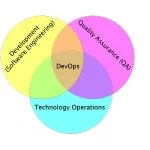
DevOps is a technological and cultural trend that encourages cooperation between IT operations and development teams, with its objective being to offer high-quality software continuously while reducing the software development lifecycle.
DevOps succeeded in accelerating delivery cycles and increasing developer ownership. Organizations implementing DevOps saw dramatic improvements in deployment frequency and mean time to recovery. However, as systems became more complex and teams grew larger, new problems emerged.
The Challenges That DevOps Created
The success of DevOps inadvertently introduced new complexities. As organizations scaled their DevOps practices, several patterns emerged that hindered rather than helped developer productivity.
Cognitive Load Overload
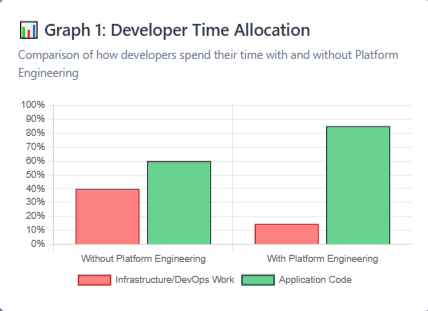
When every development team owns their entire stack—from code to infrastructure to monitoring—the cognitive burden becomes substantial. Developers need expertise in Kubernetes, CI/CD pipelines, observability tools, security scanning, cloud infrastructure, and more. This is before they write a single line of application code.
Research indicates that high cognitive load can decrease productivity by up to 50%. The “you build it, you run it” philosophy, while empowering, often meant “you figure out everything yourself.”
Tool Sprawl and Fragmentation
Different teams within the same organization often solve similar problems independently, leading to:
- Multiple CI/CD solutions across teams
- Different monitoring and logging approaches
- Inconsistent security practices
- Duplicated effort in solving infrastructure problems
This fragmentation can lead to an 88% increase in security risks as inconsistent practices create gaps in organizational defenses.
The Self-Service Gap
DevOps promised self-service capabilities, but in practice, developers still needed to open tickets, wait for provisioning, or spend hours debugging infrastructure issues that fell outside their core expertise. The gap between DevOps philosophy and reality became apparent.
What is Platform Engineering?
Platform Engineering is a discipline focused on building and maintaining internal platforms that serve as foundations for application development teams. Rather than every team managing their own infrastructure, platform teams create self-service capabilities that abstract away complexity while maintaining flexibility.
According to Gartner, platform engineering will become a trusted means of accelerating application delivery by 2026, with the prediction that organizations implementing it will deliver software up to 30% faster.
Core Principles of Platform Engineering
Product Mindset: Internal platforms are treated as products, with application developers as customers. This means understanding user needs, iterating based on feedback, and measuring success through developer satisfaction metrics.
Self-Service with Guardrails: Developers get automated access to resources they need without waiting for tickets, but within boundaries that ensure security, compliance, and cost management.
Golden Paths: Instead of forcing a single way of working, platforms provide recommended paths that are optimized, well-documented, and easy to follow while still allowing deviations when necessary.
Abstraction Without Lock-In: Hide complexity where it doesn’t add value, but allow experienced developers to access lower-level controls when needed.
Platform Engineering vs. DevOps: Key Differences
While Platform Engineering builds on DevOps principles, there are important distinctions in approach, scope, and outcomes.
Philosophy and Focus
DevOps emphasizes cultural change and breaking down silos between development and operations. Its primary goal is collaboration and shared responsibility across the software lifecycle.
Platform Engineering focuses on creating reusable tools and workflows that reduce cognitive load. It’s about building infrastructure as a product that developers consume, rather than asking every developer to become an infrastructure expert.
Team Structure
In traditional DevOps, operations engineers often embed within product teams or work closely alongside them. Every team has responsibility for their own infrastructure and operational concerns.
Platform Engineering introduces dedicated platform teams that build and maintain internal developer platforms. Application teams consume these platforms without needing deep infrastructure knowledge. This creates a clear separation of concerns: platform teams handle infrastructure complexity while application teams focus on business logic.
Scope and Scale
DevOps practices work well for small to medium organizations where teams can manage their own infrastructure. As organizations grow beyond 50-100 developers, the duplication of effort and inconsistency becomes problematic.
Platform Engineering becomes valuable at scale, typically in organizations with multiple product teams that would benefit from standardization. The investment in building a platform team pays dividends when that platform serves dozens or hundreds of developers.
Standardization vs. Flexibility
DevOps cultures often celebrate team autonomy—choosing their own tools and approaches. This works well early but can create integration and maintenance challenges over time.
Platform Engineering provides standardized foundations while maintaining flexibility through golden paths. Teams can follow recommended patterns for speed and ease, but aren’t blocked from customization when requirements demand it.
| Aspect | DevOps | Platform Engineering |
|---|---|---|
| Primary Goal | Break down silos, improve collaboration | Reduce cognitive load, accelerate delivery |
| Team Structure | Embedded ops in product teams | Dedicated platform teams serving app teams |
| Best For | Small to medium orgs (< 50 devs) | Larger organizations (50+ developers) |
| Standardization | Team autonomy emphasized | Golden paths with flexibility |
| Developer Focus | Full-stack ownership (app + infra) | Application code primarily |
| Infrastructure Approach | Teams manage their own | Consumed as self-service product |
| Typical Adoption | Cultural transformation first | Builds on DevOps maturity |
The Internal Developer Platform (IDP)
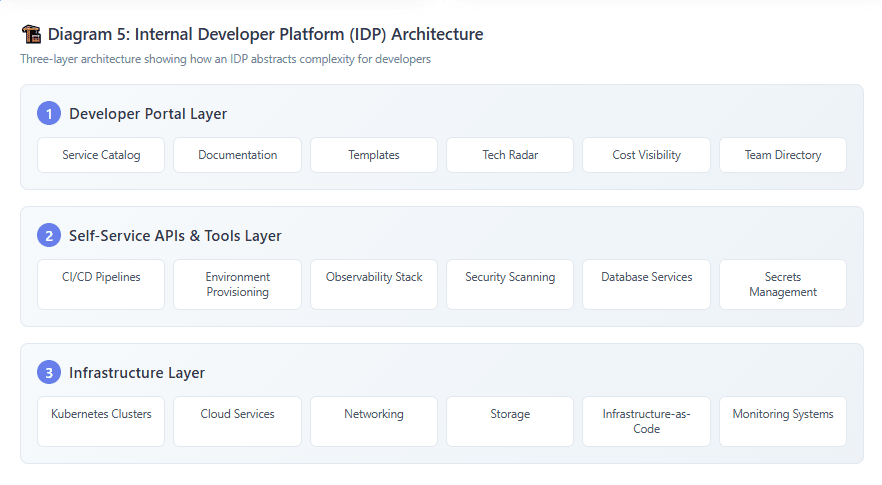
The tangible output of Platform Engineering is the Internal Developer Platform—a curated set of tools, services, and workflows that developers use to build, deploy, and operate applications.
Components of a Modern IDP
Developer Portal: A single pane of glass where developers can discover services, access documentation, create new projects, and monitor their applications. Tools like Backstage (open-sourced by Spotify) have become popular foundations.
Self-Service Infrastructure: Automated provisioning of environments, databases, message queues, and other resources through APIs or UI, typically completing in minutes rather than days.
CI/CD Pipelines: Pre-configured but customizable build and deployment pipelines that handle testing, security scanning, and progressive delivery without manual setup.
Observability Stack: Integrated logging, metrics, and tracing that work out of the box for applications deployed on the platform, often with standardized dashboards and alerting.
Security and Compliance: Built-in security scanning, policy enforcement, and compliance controls that operate automatically rather than as manual gates.
Platform Maturity Levels
Organizations don’t build complete platforms overnight. Platform Engineering typically evolves through stages:
Level 1 – Ad Hoc: Teams manage their own infrastructure with minimal standardization. This is where most organizations start with DevOps.
Level 2 – Foundational: Platform teams emerge, providing basic shared services like CI/CD templates and infrastructure-as-code modules that teams can adopt voluntarily.
Level 3 – Self-Service: A cohesive platform emerges with APIs and portals for self-service provisioning. Most common paths are automated with good documentation.
Level 4 – Product-Led: The platform operates with product management discipline, measuring developer satisfaction, iterating based on feedback, and proactively addressing pain points.
Level 5 – Optimized: The platform enables advanced capabilities like progressive delivery, chaos engineering, and AI-assisted development while maintaining simplicity for common use cases.
Most organizations in 2025 are transitioning between levels 2 and 3, with platform engineering adoption accelerating.
Real-World Impact: What Changes for Teams
The shift to Platform Engineering creates tangible changes in how development organizations operate day-to-day.
For Application Developers
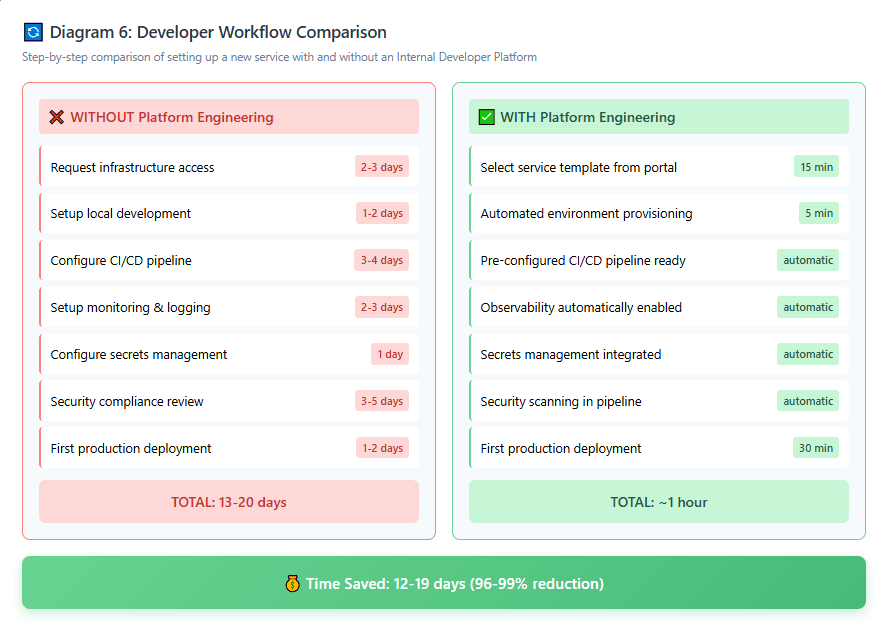
Developers experience reduced time to productivity when joining new projects. Instead of spending days or weeks setting up development environments and understanding infrastructure, they can start with a working application template in hours.
Deployment becomes simpler—often as straightforward as merging to a main branch. The complexity of Kubernetes, service meshes, and cloud configuration is handled by the platform, not by each application team.
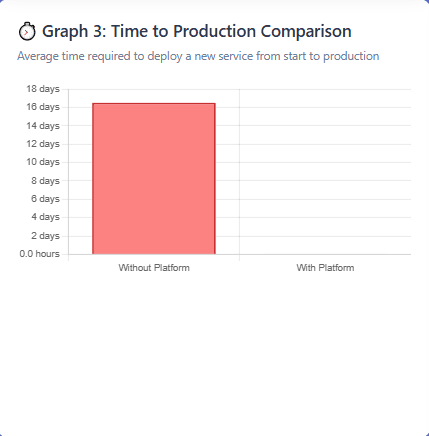
Organizations report that platform engineering reduces the time needed to spin up environments from weeks to minutes, directly impacting developer productivity.
For Platform Engineers
Former operations engineers transition from reactive ticket-based work to proactive platform development. Instead of provisioning individual resources, they build self-service systems that scale.
The role becomes more focused on developer experience, requiring skills in API design, documentation, and understanding developer workflows. Platform engineers need to think like product managers, balancing capabilities with usability.
For Engineering Leadership
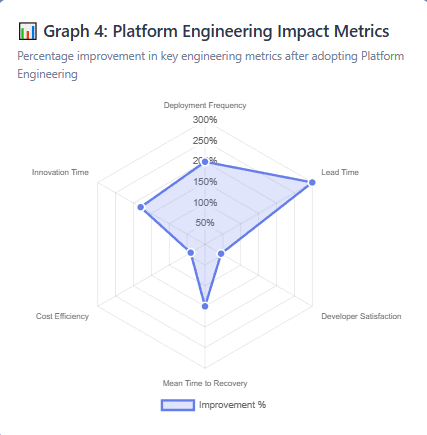
Leadership gains better visibility into engineering metrics across teams. Standardized platforms enable consistent measurement of deployment frequency, lead time, and reliability.
Cost optimization becomes more manageable with centralized infrastructure management. Platform teams can implement organization-wide improvements in efficiency that would be impractical for individual teams to pursue.
Adoption Challenges and Considerations
Platform Engineering isn’t without its challenges. Organizations considering this shift should be aware of common pitfalls.
The Build vs. Adopt Decision
Building a custom platform requires significant investment. Teams need to evaluate whether existing solutions (managed Kubernetes platforms, PaaS offerings, commercial IDPs) meet their needs before committing to custom development.
Many successful platforms combine open-source tools (like Backstage, Crossplane, ArgoCD) with custom integrations rather than building everything from scratch.
Avoiding the “Golden Cage”
Overly restrictive platforms that don’t provide escape hatches frustrate experienced developers and limit innovation. The goal is to make the easy path also the correct path, not to enforce a single way of working.
Successful platforms maintain a balance: strong opinions loosely held. They guide without constraining, accelerate without limiting.
Platform Team Sizing
A common question is how many platform engineers an organization needs. The ratio varies, but a general guideline is one platform engineer for every 20-50 application developers, depending on platform maturity and complexity.
Starting too small—expecting one or two people to build a comprehensive platform—often leads to burnout and incomplete solutions. Platform teams need sufficient capacity to treat their work as product development, not just operational support.
Measuring Success
Platform initiatives fail when they don’t establish clear success metrics. Effective measures include:
- Developer Satisfaction: Regular surveys measuring whether the platform makes work easier
- Time to First Deployment: How quickly can a new service go from idea to production
- Self-Service Ratio: Percentage of requests handled through self-service vs. tickets
- Deployment Frequency: How often teams can safely deploy changes
- Incident Resolution Time: Mean time to recovery when issues occur
The most successful platform teams publish these metrics openly and use them to prioritize improvements.
Industry Adoption and Trends
Platform Engineering has moved from emerging practice to mainstream approach over the past two years.
Current State of Adoption
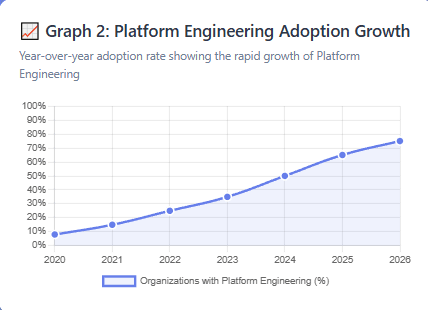
By 2026, 75% of organizations are expected to have adopted platform engineering, up from around 35% in 2023. This rapid growth reflects both the maturity of supporting tools and the pressing need to address developer productivity challenges.
Tech-forward companies like Netflix, Spotify, and Airbnb pioneered internal platforms years ago, but the practice is now spreading to traditional enterprises in finance, healthcare, and manufacturing.
Common Platform Patterns
Several architectural patterns have emerged as common approaches:
Portal-Centric: Built around developer portals like Backstage, providing service catalogs and documentation as the primary interface.
API-First: Emphasizing programmatic access to platform capabilities, allowing teams to integrate platform services into their existing workflows.
GitOps-Driven: Using Git repositories as the source of truth for infrastructure and application configuration, with automated reconciliation.
Hybrid: Combining multiple patterns based on organizational needs and existing tooling investments.
The Role of AI in Platform Engineering
AI is beginning to influence platform capabilities in meaningful ways:
Intelligent Assistance: AI-powered chatbots that help developers navigate platform documentation and troubleshoot issues without opening tickets.
Automated Optimization: Machine learning models that analyze resource usage and automatically right-size infrastructure to balance performance and cost.
Predictive Operations: AI systems that identify potential failures before they occur, enabling proactive remediation.
These capabilities are still emerging but represent a clear direction for platform evolution beyond 2026.
Getting Started with Platform Engineering
For organizations considering Platform Engineering, a pragmatic approach increases chances of success.
Assess Current State
Begin by understanding where pain points exist. Survey developers about what slows them down: environment setup, deployment complexity, debugging production issues, accessing resources, or understanding system dependencies.
Identify areas where teams are duplicating effort. Multiple teams solving the same infrastructure problems independently is a strong signal that platform engineering could add value.
Start Small and Iterative
Don’t attempt to build a complete platform immediately. Start with the highest-impact pain point—often CI/CD standardization or environment provisioning—and deliver value quickly.
Build with real users. Select 2-3 pilot teams to work with closely, gathering feedback and iterating before broader rollout. Early adopters become platform advocates who help with eventual organization-wide adoption.
Staff Appropriately
Platform teams need a mix of skills: infrastructure expertise, software development capabilities, and crucially, product thinking. The best platform engineers are those who empathize with developers and can translate technical capabilities into usable products.
Consider rotating engineers between platform and application teams. This builds empathy in both directions and ensures the platform evolves based on real developer needs.
Governance Without Bureaucracy
Establish light governance that ensures consistency without slowing teams down. Useful mechanisms include:
Architecture Decision Records (ADRs): Documenting key platform choices and their rationale Platform RFCs: Allowing teams to propose platform enhancements through a structured process SLAs for Platform Services: Treating platform capabilities with the same reliability standards as customer-facing services
The goal is enough structure to prevent chaos, but not so much that it recreates the bureaucracy DevOps was meant to eliminate.
Celebrate and Share Wins
Platform adoption often faces resistance from teams comfortable with their current approaches. Sharing success stories—faster deployments, reduced incident response times, improved developer satisfaction—builds momentum.
Make platform improvements visible. When the platform team reduces deployment time or adds new capabilities, communicate it clearly to all engineering teams.
The Future: DevOps and Platform Engineering Together
Platform Engineering doesn’t replace DevOps—it extends it. The most successful organizations maintain DevOps culture while adding platform capabilities.
DevOps principles of collaboration, automation, and shared responsibility remain foundational. Platform Engineering provides the structural layer that allows these principles to scale effectively in larger, more complex organizations.
Looking toward 2026 and beyond, we’re likely to see:
Maturation of Platform Tools: The ecosystem of platform engineering tools will continue evolving, with better integration and more opinionated solutions that reduce the custom building required.
Platform-as-a-Service Evolution: Cloud providers and vendors will offer more sophisticated managed platforms that organizations can customize rather than building from scratch.
AI-Enhanced Platforms: Artificial intelligence will increasingly assist with platform operations, developer support, and optimization decisions.
Standardization of Best Practices: As more organizations adopt platform engineering, common patterns and practices will emerge, reducing the need for each organization to figure everything out independently.
Conclusion
The emergence of Platform Engineering represents a natural evolution in how we build and deliver software. DevOps broke down walls between development and operations; Platform Engineering ensures those collaborative practices can scale beyond small teams.
For developers, platforms reduce cognitive load and enable focus on business value. For organizations, platforms provide the consistency and efficiency needed to move fast without breaking things. For operations engineers, platform work offers a more strategic, product-focused role.
The question isn’t whether to adopt DevOps or Platform Engineering—it’s how to combine both effectively for your organization’s context and scale. Small teams may thrive with pure DevOps practices. Growing organizations will increasingly find value in platform thinking. Large enterprises may need comprehensive internal platforms to maintain velocity.
The shift toward Platform Engineering will continue shaping how we build software through 2026 and beyond. Organizations that embrace this evolution thoughtfully—maintaining DevOps culture while adding platform structure—will find themselves better positioned to deliver value quickly and reliably.