
Amaterasu Aramitama & The Three Sacred Treasures "Atsuta Jingu" Complete Guide! Owari Clan! Yang Guifei Legend? [Owari Series] [Nagoya Series]

Visit the famous and minor spots of "Atsuta Jingu," which has strong ties to the Owari clan!! The main deity is Atsuta-no-Okami, and famous deities from the Kojiki and Nihon Shoki are enshrined in the auxiliary halls. It is an ancient shrine with strong connections to the "Owari clan," a central powerful family in ancient Japan, and houses the "Kusanagi-no-Tsurugi," one of the Three Sacred Treasures. It is one of the "Twenty-Two Shrines" that were specially designated for imperial offerings during prayers for rain, clear weather, or national crises! We will visit all of them, including those spread across a wide area such as Atsuta Ward, Midori Ward, and Mizuho Ward!!
Note
Unvisited shrines are "Kogo-no-ma-sha," "Aofusuma-jinja," "Minami-kusu-sha," "Suzunomiya-sha," and "Ukishima-jinja."
In 2017, it was heavy snow, cold, and driving was scary, so I couldn't visit them all. I tried again in 2023, and it was snowing again... I drove like crazy on the Shin-Meishin Expressway the day after the traffic jam was cleared! And it was snowing again... Then, on the way back, there were weather issues like road closures on the Shin-Meishin... Come to think of it, Yamato Takeru also underestimated Mt. Ibuki and was defeated...
So, as of January 2023, there are some unvisited spots, but I will conquer them next time.
The approach is surrounded by a forest, similar to Omiwa Shrine, Shimogamo Shrine, and Hirose Shrine, and it feels pleasant. If you walk along the path from the left of the worship hall, the Aramitama (rough spirit) of "Amaterasu" is enshrined. It should be rare for Amaterasu's Aramitama to be enshrined. The Aramitama represents the fierce aspect of a deity and is a god that grants personal wishes. Conversely, the Nigimitama prays for world peace.
Recommended Shrines
・Takakura-musubi-miko-jinja... Ancestor of the Owari clan
・Ichinomisaki-jinja... Amaterasu Aramitama
・Hatsurugi-gu... Owari-zukuri style
・Shimizu-sha... Atmosphere and shrine attraction
・Roku-massha... Deities unique to Owari
・Hongu

Atsuta Seven Shrines
Atsuta Jingu
Hatsurugi-gu
Takakura-musubi-miko-jinja
Hiwari-miko-jinja
Hikami-anego-jinja
Kamichikama-jinja
Shimochikama-jinja

Change History
2023/03/05 Nobunaga Wall Koshin (Study Set)
▼HP
▼Access
※See "▼Highlights" below
▼Deity
Atsuta-no-Okami
▼Highlights
▽Miya Kishimen Jingu Branch
I think it's best to make a reservation here first and then go to the shrine grounds. I visited twice, but it's impossible to go after visiting the shrine.
▽Shrine Grounds
It's long, so watching a short video first is also an option.
Atsuta Jingu Shrine Grounds Map (Official) Please take a look while viewing.
From the perspective of Atsuta Jingu being the clan shrine of the Owari clan, there are 28 shrines within the grounds, including the main shrine, one auxiliary shrine, eight sub-shrines, and eighteen minor shrines, where clan deities and others are enshrined. There are also four sub-shrines and thirteen minor shrines outside the grounds, making a total of 45 shrines inside and outside the grounds. Also, Oda Nobunaga prayed for victory at Atsuta Jingu and dedicated the "Nobunaga Wall" to commemorate his great victory, making it a shrine with history and fame. It is an ancient shrine that once had a unique shrine architecture style called Owari-zukuri (unfortunately, it was changed to Shinmei-zukuri in the Meiji era due to a movement to make its shrine rank equal to Ise Jingu).
Now, a little explanation about this shrine. According to the Nihon Shoki, the sword that appeared from the tail when Susanoo defeated Yamata no Orochi is the Kusanagi-no-Tsurugi (also known as Ame-no-Murakumo-no-Tsurugi), which was later passed to Emperor Jimmu during the Jimmu Eastern Expedition. The person who handed it to Emperor Jimmu was Takakuraji, an ancestor of the Owari clan who has ties to this shrine.
Later, it was passed to Yamato Takeru, who went to conquer eastern Japan. On the way, he made Miyasuhime-no-Mikoto, a woman of Owari, his wife. He left the sword at Hikami-yama in Odaka-cho, Midori-ku, Nagoya City, and was cursed by the god of Mt. Ibuki, leading to his death in Kameyama City, Mie Prefecture. It is said that Miyasuhime grieved and enshrined the sacred sword here in Atsuta, which is the origin of the shrine.
So, I will write down the points in bullet points.
Founded in 113 AD, it is a shrine with a prestigious history associated with the Imperial Family, houses the "Kusanagi no Tsurugi" (one of the Three Sacred Treasures), and consists of 45 shrines.
Within the grounds of Atsuta Jingu, there is one main shrine, one auxiliary shrine (betsugu), eight sub-shrines (sessha), and 19 minor shrines (massha).
There are also four auxiliary shrines and 12 minor shrines located outside the main grounds.
It is one of the Twenty-Two Shrines.
The grounds contain many national treasure-level artifacts, and there is also a museum dedicated to Shinto materials.
It receives approximately 7 million visitors annually and has long been affectionately known as "Atsuta-san."
It is a large shrine covering an area of approximately 190,000 square meters.
The enshrined deity is "Atsuta no Okami," which refers to Amaterasu, whose spirit resides in the Kusanagi no Tsurugi, representing her 'aramitama' (rough spirit).
Because the enshrined deity of Atsuta Jingu, Atsuta no Okami, is the divine spirit of Amaterasu within the Kusanagi sword, Ise Jingu and Atsuta Jingu are sometimes considered one and the same.
The main deity is Atsuta no Okami, and other famous figures from the Kojiki and Nihon Shoki are enshrined in the same hall.
Susanoo and Yamato Takeru, who have deep connections to the Kusanagi no Tsurugi, are enshrined in the same hall as the "Five Deities."
The "Five Deities" are Amaterasu Omikami, Susanoo-no-Mikoto, Yamato Takeru-no-Mikoto, Miyazu-hime, and Takeinadane-no-Mikoto.
It has strong ties to the "Owari Clan," a central powerful family in ancient Japan.
According to the Nihon Shoki, the "Kusanagi no Tsurugi" is the sword that emerged from the tail of Yamata no Orochi when Susanoo defeated it (also known as Ame no Murakumo no Tsurugi).
Afterward, it passed from Susanoo to Amaterasu, and descended to earth again during the descent of the heavenly grandson, Ninigi.
It was passed to Emperor Jimmu during his eastern expedition, and the person who handed it over was Takakuraji, an ancestor of the Owari clan who has connections to this shrine.
Later, Yamatohime founded the current Ise Jingu, passed the sword to Yamato Takeru, who used it to conquer eastern Japan, and upon returning home, he entrusted the sacred sword to his wife, "Miyazu-hime-no-Mikoto."
Yamato Takeru went to Mount Ibuki without the sword, was defeated by the mountain god, and passed away.
Miyazu-hime enshrined the sacred sword here in Atsuta (strictly speaking, at Hikami Aneko Shrine).
The Owari clan are descendants of Miyazu-hime's brother.
Consorts of Emperor Sujin and Emperor Keitai also came from the Owari clan, making this a region representing ancient Japan alongside Izumo, Tanba, and Tango.
The Mononobe clan and the Owari clan have strong ties. The ancestor of the Mononobe, Nigihayahi, and the ancestor of the Owari, Amenohiakari, are connected through Mt. Amanokagu.
The Mononobe and Owari clans are also connected through the Mononobe genealogy.
There is a theory that before the Owari clan was in Owari, they were in Katsuragi, Nara, or that a family fleeing from Katsuragi joined the Owari clan.
The massive amount of pottery excavated at the Makimuku ruins, which is also considered a candidate for the tomb of Himiko, was predominantly from Shiga/Omi and Owari, indicating they were a central powerful clan of Yamato.
The ancestral deity of the Owari clan is Amenohiakari, who is connected to Kono Shrine, and this is also recorded in the Kono Shrine genealogy.
During the Jinshin War, they sided with Emperor Tenmu and achieved a great comeback victory, earning them merit.
In my personal opinion, the Izumo transfer of the land was not carried out by the Fujiwara clan's Takemikazuchi and Futsunushi, but by the Owari and Mononobe clans.
I believe it was the winners of history, the Fujiwara clan, who erased the Owari clan from the public stage, or rather, from history itself.
A privilege of the winners of history is the ability to shape history to their own convenience, but perhaps the Owari clan was too popular for them to do that.
The Owari clan also sent consorts to Emperor Keitai and possessed both wealth and power.
This consort of Emperor Keitai was a descendant of Miyazuhime's older brother.
In 686, Emperor Tenmu developed a fever and fell ill; there is an Izumo-style legend that the reason was the curse of the 'Kusanagi no Tsurugi' (Grass-Cutting Sword), and it is said that the sacred sword was sent to Atsuta Shrine because of this.
In 702, the 'Shoku Nihongi' records that a strange phenomenon occurred at the tomb of Yamato Takeru, so it was worshipped with great care.
In the same year, Empress Jito went on an imperial progress similar to the Moto-Ise route and also visited Atsuta Shrine.
Empress Jito passed away after this imperial progress.
Oda Nobunaga donated the 'Nobunaga Wall' to commemorate his great victory, and it still exists today.
It originally had a unique shrine architecture style called 'Owari-zukuri,' but it was changed to 'Shinmei-zukuri' in the Meiji era...
Also, this place used to practice syncretism of Shinto and Buddhism, but it seems that no longer remains.
According to old documents, Atsuta Jingu also had a Jinguji temple, but it seems to have fallen into ruin after burning down. The Yakushi principal image and other Buddhist statues of Atsuta Jinguji were relocated to Nagoya Chokyu-ji Temple, and the wooden 'Standing Statue of the Eleven-Faced Kannon Bodhisattva (formerly stored in the Nyohoin of Atsuta Jinguji, estimated to be from the mid-Fujiwara period)' still exists at Noda Mitsuzoin (the head temple of Nyohoin). Fudoin retains its temple name and was revived in the northern Takakura area in 1903 (Takakura Fudoin). The 'Atsuta Jingu Shuseikai' is performed as the 'Great Yakushi Demon Festival'.
→ Approach (from the main gate to the front approach), 15. Nobunaga Wall

At Shimogamo Shrine, there is Kawai Shrine immediately to the left, and this place also has an important shrine (sub-shrine). In this NOTE, I will visit the main shrine first, but I will mention it later.

This is the Great Camphor Tree. At Atsuta Jingu, there is one to the left from the second torii gate on the approach. There are two more in front of Shimizu-sha to the right of the main hall. Each shows a unique presence.


To the right is the Treasure Hall, and a "chicken" was resting in the tree to the left before the second torii gate. Chickens are creatures with strong ties to Shinto, as festivals often begin with their crowing.

Just like at Isonokami Jingu in Nara and Usa Hachimangu in Oita, there are chickens here too.
There are "Yaoyorozu-sha" shrines on the left and right in front of the worship hall and main hall.


There is a (I forgot to take a picture) earthen wall. It seems this was dedicated by Oda Nobunaga, and it is called the "Nobunaga Wall," remaining as it was at that time. As for the history, it is said that he prayed for victory before the "Battle of Okehazama," which led to the unification of the country, and the "Nobunaga Wall" was what he donated when he visited to give thanks. It seems it was about 400 meters long at the time.

Although it was about 400m long initially, the length has been reduced to about 200m due to construction on the approach, but the structure remains as it was then. It was a very sturdy construction for that time, made by kneading soil and lime with oil and stacking many roof tiles.

It seems this was the main gate at the time, and everything beyond this point is the grounds of Atsuta Jingu. It is explained that such walls were necessary to protect against external enemies, but personally, I wonder if there were many temples on this side. Perhaps those temples (Jinguji) had many warrior monks.
As an aside, there is a theory that Atsuta Jingu had divine soldiers, and that Nobunaga requested reinforcements from them. It is common to hear about warrior monks at Enryaku-ji or Mt. Daisen, but it feels rare for a shrine to have soldiers. Also, while Nobunaga is often thought of as being distant from religion, he was born into a family that served as chief priests at a shrine. Recently, the "Tsurugi Shrine" associated with Nobunaga seems to have been damaged by fire, though...
→1. Main Shrine @ Atsuta Seven Shrines


The enshrined deity is Atsuta Dai-myojin. Amaterasu Omikami, Susanoo-no-Mikoto, Yamato Takeru-no-Mikoto, Miyazu-hime-no-Mikoto, and Takeinadane-no-Mikoto are enshrined as deities in the same hall. Although also enshrined in the six auxiliary shrines mentioned later, "Miyazu-hime-no-Mikoto" was the consort of Yamato Takeru and enshrined the Kusanagi Sword. Takeinadane-no-Mikoto was the older brother of Miyazu-hime-no-Mikoto and appears to have been the deputy commander of Yamato Takeru's conquest of the Emishi.
Genealogy
Ame no Hoakari no Mikoto
↓
Otoyori-no-Mikoto 💛 Mashikutobe-no-Mikoto
↓
Ancestor of the Owari Kuni-no-Miyatsuko "Takeinadane-no-Mikoto"
Ancestor of the Owari Kuni-no-Miyatsuko "Miyazu-hime 💛 Yamato Takeru 💛 Ototachibana-hime-no-Mikoto"
Hinaga-no-Mikoto ↓
↓
Continuing to the present

It seems you couldn't get close to the worship hall in 2017.


Atsuta Okami is Amaterasu, with the Kusanagi-no-Tsurugi, one of the Three Sacred Treasures, as the object of worship. Currently, the Kusanagi Sword is enshrined in the main hall, but there was a time when it was enshrined in the Doyoden Hall. In the "Owari Meisho Zue" (Illustrated Guide to Famous Places in Owari), the main hall was surrounded by a corridor, which seems to have been called the Owari-zukuri style, and the main hall was built separately with a main sanctuary to the west and a Doyoden Hall to the east. The main deity of the main sanctuary was Yamato Takeru, and Amaterasu Omikami, Susanoo-no-Mikoto, Miyazu-hime, and Takeinadane-no-Mikoto were enshrined there. It was rebuilt into the current Shinmei-zukuri style in 1893, and until then, it was in the Owari-zukuri style.


Now, regarding the Kusanagi-no-Tsurugi, I will note that it was enshrined at Hikami-Aneko Shrine in Odaka, Midori-ku, Nagoya, which I will mention later. as a record.

After the worship hall, if you head towards the inner shrine from the left side, there is the "Kokoro no Komichi" (Path of the Heart).


Walking there, you can see the chigi and katsuogi of the main hall. I had assumed that Atsuta Okami was a male deity because of the "Kusanagi Sword," but since the chigi are cut vertically (uchisogi), it is a female deity, isn't it? I learned that for the first time. In the end, is it Amaterasu??
Kusanagi no Tsurugi
The Kusanagi sword is something Susanoo obtained after defeating Yamata no Orochi (*1), which was then presented to Amaterasu and bestowed upon Ninigi when he descended to earth. It was enshrined by Yamatohime at the Ise Grand Shrine and passed on to Yamato Takeru (*2) as he headed out on his eastern expedition.
After the eastern conquest, Yamato Takeru left this Kusanagi sword at Hiokami-yama in Odaka-cho, Midori-ku, Nagoya City, before passing away in Noboto, Mie Prefecture. It is said that the founding of Atsuta Jingu occurred when Miyazu-hime no Mikoto enshrined it in the land of Atsuta.
Since then, it has been enshrined at Atsuta Jingu, but it is a spiritual sword that has been stolen and returned repeatedly, perhaps due to the curses it brought.
*1: A sword that emerged from the tail of the eight-headed serpent in Izumo mythology; its formal name is "Ame no Murakumo no Tsurugi."
*2: During Yamato Takeru's eastern conquest, when he was about to be burned to death by bandits, the divine sword mowed down the grass, allowing him to escape unharmed, which is why it came to be called the "Kusanagi (Grass-Mowing) Sword."
→ 3. Ichinomisaki Shrine
After praying at the worship hall and main hall, you should head to the original shrine, "Ichinomisaki Shrine," located in the back left. If you follow the small path from the left of the worship hall, you will arrive at the auxiliary shrine "Ichinomisaki Shrine" located in the back left of Atsuta Jingu. Both the main shrine and the original shrine enshrine "Amaterasu," but the original shrine enshrines her Aramitama (rough spirit). It is also a shrine of the Owari clan, who are thought to have connections to the Mononobe clan. A special atmosphere drifts from the "Kokoro no Komichi" (Path of the Heart) located to the left of the Atsuta Jingu main hall. Like the Inner Shrine, Outer Shrine, and auxiliary shrines of Ise Jingu, it is monitored by police officers.

The enshrined deity is the Aramitama of "Amaterasu." It should be rare for Amaterasu's Aramitama to be enshrined. The Aramitama represents the fierce aspect of a god and is a deity that grants personal wishes. Conversely, the Nigimitama (gentle spirit) is for praying for world peace.

An atmosphere that makes you feel like you have come to Ise Jingu. According to the shrine's history, "Atsuta Okami uses the Kusanagi sword as a spirit substitute and divine body, and this is Amaterasu Omikami." This makes me understand why the chigi and katsuogi on the main hall are those of a goddess. Personally, I think this is the most important place for the people of the shrine and the parishioners. By the way, it seems it was closed to the public until a few years ago, and it has been possible to visit since December 2012.


So, speaking of Amaterasu's Aramitama, that would be Hirota Shrine.
For those who like the atmosphere of Takihara-no-miya and Izawa-no-miya, I highly recommend it!!
Shall we pass behind the main hall?

There is also a place of worship right behind the shrine.

→ 12. Kokoro no Komichi (Path of the Heart), 4. Shimizu-sha, 5. Doyoden, 6. Mita Shrine, 7. Ryu Shrine
Behind the main hall is the "Kokoro no Komichi" (Path of the Heart). If you pass through the "Ichinomi-mae Shrine" and go behind the main hall, you can see the back of the main sanctuary, and on the left side, there is an air-raid shelter called the Goshinko (Sacred Treasure House). It seems that in May 1945, the sacred Kusanagi no Tsurugi sword was moved there to protect it.


If you keep walking, you will find the "Shimizu-sha Shrine." The enshrined deity is "Mizuhanome no Kami," the god who governs water.
"4. Shimizu-sha Shrine" The deity enshrined is the water god "Mizuhanome no Kami." It is said that when Taira no Kagekiyo of the Taira clan suffered from an eye ailment, he prayed here and washed his eyes with the spring water, which cured his condition. Because of this, it began to be worshipped as a god of the eyes. That is the story, but it has become a shrine attraction, and it is interesting that Yang Guifei suddenly appears here.


There is also a rumor that the Atsuta Okami is Yang Guifei , and there is an "Oshimizu" (sacred water) spring behind the right side of the worship hall. There is a shrine attraction where you can pour water three times onto a rock about 5 meters away for good luck. Its official name is said to be "a part of Yang Guifei's stone pagoda."

There is also a story that this stone pagoda is part of the grave of one of the world's three greatest beauties, "Yang Guifei." There is also a theory that Yang Guifei is an incarnation of the goddess of Atsuta Jingu, and it seems there are many deep connections between the various theories.
The Legend of Yang Guifei
When the Tang Dynasty was about to attack Japan, the Japanese gods gathered and held a council. As a result, the Atsuta Okami was born into the Yang family as Yang Guifei, and she devised a plan to deceive the Emperor and make him abandon the idea of conquering Japan. The plan succeeded, but the Emperor lost Yang Guifei. The Atsuta Okami, who had transformed into Yang Guifei, returned here, and it is said that a stone pagoda was dedicated to Yang Guifei, which is the stone at the "spring behind Shimizu-sha Shrine." It is said that if you pour the spring water over this stone three times, your wishes will be granted, and if you wash your face with this water, you can become as beautiful as Yang Guifei, one of the world's three greatest beauties.
It is the god of water.


There is a large camphor tree right next to Shimizu-sha Shrine.


If you pass by "Shimizu-sha Shrine," there is a sacred tree, and you will arrive at "Mita Shrine." The auxiliary shrine "Mita Shrine" enshrines "O-toshi no Kami," the guardian deity of a bountiful harvest. The character for "toshi" (year) in O-toshi no Kami carries the meaning of grain, especially the ripening of ears of rice, and one can easily infer how important this god was to the Japanese people, who were centered on agriculture.
The enshrined deity is Susanoo's son, Ototoshi-no-kami. He is the guardian deity of the five grains and abundant harvests.

There is no change in the photos taken from the same angle during visits 6 years apart.


This is "5. Doyoden".


This is "7. Ryujinja Shrine". The auxiliary shrine "Ryujinja" enshrines "Kibi no Takehiko no Mikoto" and "Otomo no Takehi no Mikoto", and according to the Nihon Shoki, they are recorded as the gods who accompanied the eastern expedition sent by Emperor Keiko to Yamato Takeru.


→ 8. Kaguraden and surrounding areas of the main shrine

→ 16. Osakida Shrine, 17. Uchiten Shrine, 18. Rokumatsusha Shrines
As mentioned above, it is enshrined near the Higashi-Yaoyorozu Shrine.

The sub-shrine "Osakida Shrine" enshrines "Ukanomitama-no-kami," an Inari deity who governs food, including the five grains. Along with the sub-shrine "Uchiten Shrine" and the "Six Sub-shrines," there are also the "Otogo Shrine, Aneko Shrine, Imahiko Shrine, Mikamuko Shrine, Susanoo Shrine, and Hinaga Shrine," all of which enshrine deities related to Yamato Takeru and the Kuni-no-Miyatsuko of Owari Province. The connection between Owari, Izumo, and Susanoo is fascinating. I believe the Owari clan branched off from the Katsuragi clan of Nara, and since Katsuragi has ties to Izumo, it makes for a thought-provoking combination.
This is "16. Osakida Shrine". It is Ukanomitama, an Inari deity, but it is interesting that it is not vermilion; however, there is only one vermilion shrine building within the Atsuta Jingu grounds. Susanoo is enshrined there, which makes me wonder if it should be the other way around.


Returning to the shrine's main approach, you will find "17. Uchiten Shrine" and "18. Six Sub-shrines." Uchiten Shrine seems to be dedicated to Sukunahiko. Many of the shrines leading up to the main hall are of the Izumo lineage. The Owari clan is also said to have ties to Katsuragi, so this may be a remnant of that. My understanding is that they flowed from Izumo to Katsuragi in Nara, then the Kamo clan went to Kyoto, and the Owari clan went to Aichi.


This is the "18. Six Sub-shrines." Here is the explanation for the six shrines! Actually, I think this is a highlight of Atsuta Jingu. I also thought that perhaps the deities cherished by the Owari clan are here.


I will introduce them starting from the main hall side. The deity of "Otogo Shrine" is "Otohiko-no-Muraji," who is likely a deity I am encountering for the first time. According to the "Sendai Kuji Hongi," he is the 14th-generation descendant of Ame-no-Kagoyama.


Next is "Aneko Shrine," and the deity is Yamato Takeru's consort, "Miyazu-hime-no-Mikoto," the founder of Atsuta Jingu. Yes, Yamato Takeru let his guard down and was defeated by the mountain god without the Kusanagi sword, and it was "Atsuta Jingu" that enshrined the Kusanagi sword. She is also enshrined as a deity in the main hall.


The deity of "Imahiko Shrine" is Miyazu-hime-no-Mikoto's older brother, "Takeinadane-no-Mikoto." He is also enshrined as a deity in the main hall. He was a military commander who pacified the Emishi alongside Yamato Takeru.


The deity enshrined at "Mikajinja Shrine", is the famous "Ototachibana-hime-no-mikoto". She was the daughter of the Mononobe-related Hozumi clan and the wife of Yamato Takeru. Those who know the Kojiki might be familiar with her. She accompanied Yamato Takeru on his eastern expedition, and when the sea became rough and the party's ship could no longer proceed, she threw herself into the sea to calm the raging waters.


The deity enshrined at "Susanoo-jinja Shrine", is Susanoo. I suppose no explanation is needed. However, I feel it is quite rare to enshrine Susanoo and Amaterasu in the same place. I think there should be more places like this.


The deity enshrined at "Hinaga-jinja Shrine", is "Hinaga-no-mikoto", who is said to be the younger brother of Miyazu-hime-no-mikoto.


Now, let's head to the Treasure Hall!
→29. Treasure Hall

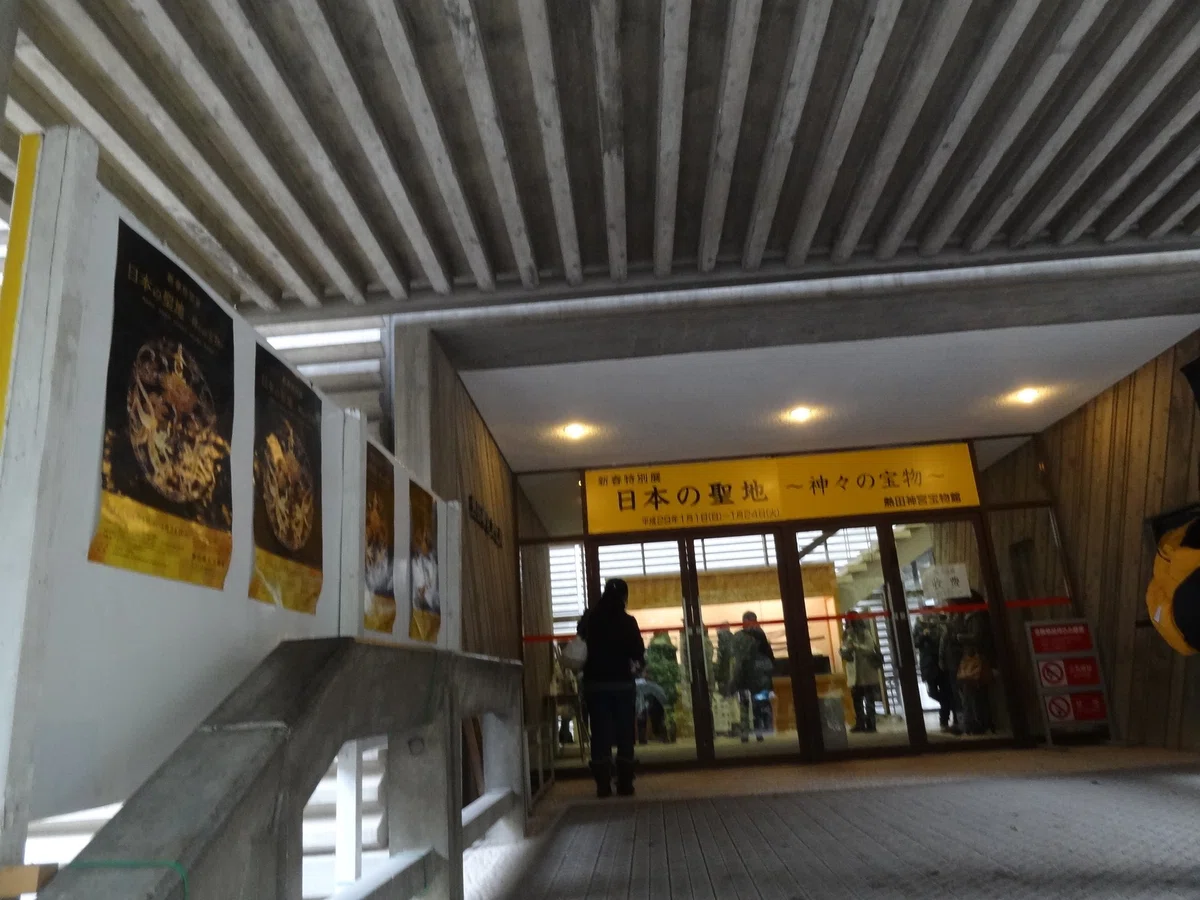
In 2017, national treasures and important cultural properties from famous shrines such as "Itsukushima Shrine", "Akama Jingu", "Oyamazumi Shrine", and "Hofu Tenmangu" are on special display. It was quite impressive for 300 yen, and time flew by.

If you continue south from there...

Even if you continue south, you can go to "40. Kusunoki-no-mi-mae-sha Shrine", "41. Minami-shingu-sha & Yako-sha & Soshimori-sha Shrines", "47. Magowaka-mikomiko-jinja & Hiwaka-mikomiko-jinja Shrines", and "48. Hiwari-mikomiko-jinja Shrine @ Atsuta Nana-sha".

I will head back a little and return to the main approach.
→38. Toru-sha
One might wonder who the deity of the sub-shrine "Toru-sha", is, but surprisingly, it seems to be the gentle spirit (Nigimitama) of Amaterasu Omikami.


→40. Kusunomimae-sha, 41. Minami-shingu-sha & Yako-sha & Soshimori-sha
Walking along the approach to the main hall, there is a sub-shrine called "Kusunomimae-sha", which enshrines the two deities "Izanagi" and "Izanami". Visitors usually walk right past it... Heading north, there is "Toru-sha", which enshrines the gentle spirit of Amaterasu Omikami. It seems to be visited by locals.

↑↓ Can you tell the difference in how new it looks between 2017 and 2023?

I forgot to take a photo in 2023, but there were fewer votive offerings. Is the declining birthrate accelerating!?

Continuing south to return to the South Gate, the auxiliary shrine "Minami-shingu-sha" is enshrined. It enshrines "Susanoo", the deity of Yasaka Shrine, famous for the "Kyoto Gion Festival" which prays for the warding off of epidemics, and it is the only vermilion-lacquered shrine building at Atsuta Jingu.


To repeat, one might think this is the Inari shrine near the main hall. Since Susanoo has a closer relationship to Amaterasu than Ukanomitama does, one might think he should be near the main hall. However, Ukanomitama is also a child deity of Susanoo.


Next to it is "Yako-sha", which enshrines the deities born from the pledge (Ukei) between Amaterasu and Susanoo.
Amenooshihomimi no Mikoto
Kumanokusubi no Mikoto
Amanohohi no Mikoto
Tagorihime no Mikoto
Amatsuhikone no Mikoto
Ichikishimahime no Mikoto
Ikutsuhikone no Mikoto
Tagitsuhime no Mikoto
And there is the sub-shrine "Soshimori-sha." The enshrined deity is "Imori no Okami," who is actually Susanoo.

→47. Magowakamiko Shrine / Hiwakamiko Shrine, 48. Hisakimiko Shrine @ Atsuta Nana-sha
Further south, the auxiliary shrine "Magowakamiko Shrine" is enshrined, and it enshrines Amanohoakari no Mikoto as its deity.


The history states that he is the ancestor of the Owari clan, and I wonder if Kono Shrine @ the Amabe clan and Atsuta Jingu & Kamikura @ the Owari clan are connected?? By the way, this shrine was originally located in a different place within the precincts, but it was moved to its current location in 1874.
Amanohoakari no Mikoto
is the ancestral deity of the Owari clan, who boasted great power in Owari and Mino, is the older brother of Ninigi, and is also the enshrined deity of Amanohashidate and Kono Shrine.

That said, I have seen with my own eyes that the oldest family tree in Japan at Kono Shrine is connected to the Owari clan. I cannot say for sure if that is absolutely correct, but based on the Izumo no Kuniyuzuri (transfer of the land of Izumo) and the history of the shrines, I believe the Mononobe, Owari, and Amabe clans are the key players.
Also, there is a shrine in Ama City where a shrine building from around 1400 was relocated.
Continuing south, there is the auxiliary shrine "Hisakimiko Shrine," which enshrines "Amanooshihomimi no Mikoto."


It is said that this site was called "Hisaki," which faced the sea in ancient times. It feels like they are enshrining the Heavenly Deity lineage at the very end.
Ame no Oshiho-mimi no Mikoto
The eldest son of the five princes born from the pledge between Amaterasu Omikami and Susanoo no Mikoto. His younger brothers include Ame no Hohi no Mikoto, Amatsuhikone no Mikoto, Ikutsuhikone no Mikoto, and Kumanokusubi no Mikoto.
Also, after visiting the auxiliary shrine, don't forget the "Asao-sha" mentioned later!!!
→2. Auxiliary Shrine "Hakkengu @ Atsuta Nana-sha", 42. Kamichikama-jinja, 43. Okuninushi-sha, 44. Kotoshironushi-sha
It is on the left of the main gate, and if you are in the south parking lot, you can enter from the left side of the parking lot.

It is an auxiliary shrine that appears on your left after passing through the grounds. If you are from Kyoto, could I explain it by saying it's like "Kawai-jinja" at Shimogamo Shrine? Or if you are talking about the Inner Shrine of Ise Jingu, maybe Sarutahiko Shrine? Or if you are talking about Kono Shrine, maybe Hashidate Shrine?
First, you will see the sub-shrine "Kamichikama-jinja", but the highlight is "2. Auxiliary Shrine: Hakkengu" on the right.


The auxiliary shrine "Hakkengu" is located on the left side of the first torii gate and the south gate, and it enshrines the same deities as the main shrine. The shrine building is also in the Shinmei-zukuri style, just like the main shrine, and annual rituals are conducted in the same way. Hakkengu has deep faith from the warrior class, and the shrine building has been repaired and constructed by Oda Nobunaga and Tokugawa Tsunayoshi. In addition, the sub-shrines "Okuninushi-sha" and "Kotoshironushi-sha" are also located in the same place.


This is a shrine located on the left side of the first torii gate, built in the Shinmei-zukuri style. It has the next highest rank after the main hall. The main hall of Atsuta Jingu is hidden from view, but I thought the main hall must look something like this. Although Atsuta Jingu is in the "Shinmei-zukuri" style now, it is said that there was originally a unique architectural method called "Owari-zukuri." It seems there are shrines outside the grounds that still retain the "Owari-zukuri" style. I will mention them later.


The main deity is "Atsuta Okami," the same as the main shrine, and it enshrines "Amaterasu Omikami," "Susanoo no Mikoto," "Yamato Takeru no Mikoto," "Miyazu-hime no Mikoto," and "Takeinadane no Mikoto" as enshrined deities in the same hall.


Why is it the same as the main shrine? Actually, the Kusanagi Sword has been stolen many times, and it is said that when Michiyuki stole it from Atsuta Jingu, the people at Atsuta Jingu, fearing that Empress Genmei would find out, had a blacksmith in the land of Tosu make a replacement for the Kusanagi Sword and enshrined it at the Yatsurugi Shrine in Atsuta (lol).
Finally, the shrine building of this shrine from the Meiji era is located at the "Hikami Aneko Shrine" mentioned later!


The cypress bark roof is really nice, isn't it? Now, let's go to the three shrines: "42. Kamichikama Shrine", "43. Okuninushi Shrine", "44. Kotoshironushi Shrine".

〇 "42. Kamichikama Shrine", "43. Okuninushi Shrine", "44. Kotoshironushi Shrine"
Starting from Yatsurugi Shrine, the first one is "43. Okuninushi Shrine". You are familiar with it from Izumo Taisha, right?


Leaving the center for later, if you go to the left first, it's Okuninushi's son, "44. Kotoshironushi Shrine".


So, it's very Izumo-like, isn't it?
The last one is "42. Kamichikama Shrine", and the enshrined deity is Susanoo!!! Or so I thought, but that's wrong...

It enshrines the Owari no Kuni no Miyatsuko "Otoyonomikoto". He is the father of Miyasuhime-no-mikoto and Takainadane-no-mikoto, and seems to be the local deity of Atsuta. He is called the Monju of Wisdom, and it is said that many people visit to pray during exam season for academic success.
Also, in the northwest corner of Atsuta Jingu, there is a sub-shrine called "Shimochikama Shrine", and its enshrined deity is "Mashikitobemikoto", who is the wife of Otoyonomikoto and the mother of Miyasuhime-no-mikoto and Takainadane-no-mikoto.

I wonder if the Izumo-style figures on the left and right were simply the Seven Lucky Gods due to the syncretism of Shinto and Buddhism?

The auxiliary and subordinate shrines of Atsuta Jingu are interesting. I thought they would all be famous gods from the Kojiki and Nihon Shoki, but there are many mysterious gods that I can only assume are local tutelary deities. The deity of this "Kamichikama Shrine" is "Otoyome-no-mikoto," and when I got home and looked it up, I found he was the 10th-generation descendant of Amenohohi-no-mikoto and the father of Miyazu-hime, the last wife of Yamato Takeru who left the Kusanagi sword behind. Since "Amenohohi-no-mikoto" was also another name for the deity of Kono Shrine in the Tango Kingdom, perhaps there is a connection after all. (And later, after seeing the national treasure family tree at the Aoi Festival of Kono Shrine, I became convinced of the connection with Owari.)
Worship finished for 2017!! I thought I'd grab something to eat and went to "Atsuta Houraiken Jingu Branch", but there was a 1 hour and 30 minute wait... I had to cancel this time..
And in 2023, I thought there was no line, but it was around 14:30! It was impossible... It would be better to line up and make a reservation before visiting the shrine.
→ Shrine grounds dining area "Miya Kishimen" & "Kusanagi Plaza"
I had planned on "Atsuta Houraiken Jingu Branch," but since I couldn't wait, I had lunch at a place on the approach to the shrine. I ordered "Kishimen" noodles and "Chimaki" rice dumplings. It was quite cold since it was outdoors, but it warmed me up. Now, please be careful of the crows. A man next to me sat down at a table with his shrimp tempura kishimen. The moment he left his seat to get some tea, a crow grabbed the shrimp tempura and flew off. That crow might have been Yatagarasu... Is there really a connection between Tanba/Tango and this Owari clan region!?

Perhaps there are many victims, as there was a notice posted in 2023 lol

In January 2023, I had kishimen with white shrimp.

In 2021, "Kusanagi Plaza" opened as a place of relaxation for visitors. There are benches and playground equipment around the pond, making it a space that children can also enjoy.
Also, inside the plaza is the "Atsuta Jingu Kusanagi Hall," which exhibits valuable swords.
→ 24. Sugawara Shrine
The subordinate shrine "Sugawara Shrine" enshrines "Sugawara no Michizane," who is worshipped as Tenjin-sama. It is located on the left after passing through the West Gate torii gate and is also called "Soto Tenjin" (Outer Tenjin). In other words, does this mean that when people say Tenjin, they mean either "Amaterasu" or "Sugawara no Michizane," and since the main deity Amaterasu is the inner Tenjin, this is the outer one?

There is a shrine attraction similar to the Shimochikama Shrine mentioned later, Izumo Taisha, and Inasa Beach.

There is a small parking lot for tour buses on the west side, and in January 2023, about four tour buses were lined up. Everyone was saying things like "That was great" and talking about history, but they mostly skipped this spot.
→ 51. Shimochikama Shrine @ Atsuta Seven Shrines
It is enshrined within the grounds, but you cannot reach it without leaving the main precinct once. It is paired with "Kamichikama Shrine," and the enshrined deity is Mashikitobe-no-Mikoto. She is the consort of Otoyono-Mikoto, the deity of Kamichikama Shrine, and the mother of Miyasuhime-no-Mikoto, the consort of Yamato Takeru.

It is called "Gendaifu Shrine" in contrast to the Kidaifu Shrine of Shimochikama Shrine, and has long been considered one of the seven shrines of Atsuta. The origin is unknown, but according to shrine tradition, it is said to have been enshrined in 647, alongside Shimochikama Shrine.
It enshrines the Owari no Kunizo, "Otoyono-Mikoto." He is the father of Miyasuhime-no-Mikoto and Takeinadane-no-Mikoto, and seems to be the local deity of Atsuta. He is called the Manjusri of Wisdom, and it is said that many people visit during exam season to pray for academic success.
Also, there is a sub-shrine, "Shimochikama Shrine," at the northwest corner of Atsuta Jingu, and the enshrined deity is "Mashikitobe-no-Mikoto," the consort of Otoyono-Mikoto and mother of Miyasuhime-no-Mikoto and Takeinadane-no-Mikoto.


The shrine's history also mentions it as a place to pray for safe travels, and it is said that the custom of taking a stone to the aforementioned Sugawara Shrine has been passed down since ancient times.
After visiting "Sugawara Shrine," which enshrines Sugawara no Michizane, the god of learning, and praying at "Shimochikama Shrine," one takes a stone from the grounds home. Once the wish is granted, one returns a stone twice the size of the one received to Sugawara Shrine.
Finally, there is a record that it was built in 1362 and rebuilt in 1692 at the same time as the Kusunomimae Shrine, and it seems it was enshrined in a different location before that. That other location is "Hoshimiya Shrine". Am I the only one who feels a connection to Katano City, the place where Nigihayahi descended? In short, it's Iwafune Shrine and Hoshida Myoken-gu (Komatsu Shrine).
So, from here on, I will introduce the external sub-shrines and auxiliary shrines.
▽ Outside the grounds
# Takakuramusubi-miko Shrine @ Atsuta Seven Shrines & Hokotori Shrine & Shingu Shrine & Mii Shrine & Inari Shrine
# Yogoma Shrine (Atsuta Jingu external auxiliary shrine) 2-11 Shiratori, Atsuta-ku, Nagoya
This is a shrine with deep ties to Atsuta Jingu, especially the Kusanagi Sword. To explain simply, it is a shrine related to the room in the residence of the Owari clan (Tajima clan) that temporarily kept the Kusanagi Sword after it was stolen and returned.
# Aobusuma Shrine (Atsuta Jingu external sub-shrine) 2-6-1 Shiratori, Atsuta-ku, Nagoya, Aichi Prefecture
The Shikinaisha "Aobusuma Shrine" is located in a corner of a residential area, past Shiratori Elementary School, after exiting the west gate of Atsuta Jingu and crossing the pedestrian bridge.
The enshrined deity is "Amanomichihime," who is the mother of Takakuraji-no-mikoto, the deity of Takakurayumiko Shrine, and also the wife of Amenohioakari-no-mikoto, the ancestor of the Amabe clan.
"Aobufusuma" is said to be a guardian deity of the land, meaning a white quilt. Locally, there was a custom of visiting it on the 33rd day after a baby's birth. In the Edo period, there were two sub-shrines of Atsuta Jingu, Aobufusuma and Shirofusuma; Aobufusuma was said to enshrine the "Sun God" and Shirofusuma the "Moon God."
In the Meiji era, Aobufusuma Shrine disappeared, and Shirofusuma Shrine seems to have been renamed Aobufusuma Shrine, which continues to this day. This makes me suspect that the Moon God is Tsukuyomi, or perhaps Toyouke?
Aobufusuma Shrine was destroyed in an air raid in 1945, and the current main hall seems to have been rebuilt in 1968. It appears that the history of hiding the sacred treasures in an air-raid shelter within the Atsuta Jingu grounds was the correct decision.
#Matsugo-sha (Atsuta Jingu Off-site Sub-shrine) Matsugo-sha is the place where Yamato Takeru and Miyasuhime met.
It is read as "Matsugo," and the second character "go" is a rare character combining the woman radical with 'empress,' likely a non-standard character. The shrine entrance is along National Route 1, located at 2-10 Jingu, Atsuta-ku, Nagoya. It is a small shrine sandwiched between buildings, and while I am surprised it survived, it must be an important place that could not be demolished (or merged). It is located about 150 meters from the Atsuta Jingu South Gate parking lot, so please go on foot!

The enshrined deity is "Miyasuhime-no-mikoto," and it is said to be the place where she first met Yamato Takeru. However, it is said that when Yamato Takeru asked Miyasuhime, who was drying cloth by the river, for directions to Hidaka, where the Owari clan's base was, she pretended to be deaf and ignored him. This story will be discussed later at "Hikami Aneko Shrine."


#Minamikusunoki-sha (Atsuta Jingu Off-site Sub-shrine) 1-7 Temma, Atsuta-ku, Nagoya
It is enshrined within the Sasa Shrine grounds. The deity is "Amenouzume," and there is a story that Suzunomimae-sha was once located here, and that it was also a purification site for those going to Atsuta Shrine. By the way, the "Tenno-sha" in the grounds is said to be a sub-shrine of Atsuta Jingu's Minamishingu-sha.
#Suzunomimae-sha (Atsuta Jingu Off-site Sub-shrine) 2-6-7 Temma, Atsuta-ku, Nagoya
The enshrined deity of the off-site sub-shrine "Suzunomimae-sha" is "Amenouzume-no-mikoto." It is affectionately known as "Suzu-no-miya" and is bustling during its annual festival on July 31st and the summer plague-warding ritual of "Chinowa Kuguri" (passing through a reed ring).
#Ukishima Shrine (Atsuta Jingu Off-site Sub-shrine) 6 Ukishima-cho, Mizuho-ku, Nagoya
Located at 6 Ukishima-cho, Mizuho-ku, Nagoya. The enshrined deity is "Ame no Hohi no Mikoto," a god who descended to Izumo during the transfer of the land. A heavenly god who was so comfortable that he forgot his mission to oversee the transfer of the land...
#Atsuta Jingu Motomiya "Hikami Aneko Shrine @ Atsuta Nana-sha" "Motomiya" "Shinmeisha" "Tamane-sha" (Atsuta Jingu Outer Auxiliary Shrine) 1-3 Hikamiyama, Odaka-cho, Midori-ku, Nagoya

Founded during the era of Emperor Chuai, it was relocated to its current site in the fourth year of Emperor Jito (690). The original site is said to be where the mansion of Miyazuhime-no-Mikoto's father god stood. In ancient times, this area was called the Village of Hi-no-ue (Fire Top). In the third year of Eitoku (1382), because the shrine buildings were destroyed by fire, the character for "fire" was avoided and changed to "ice" (Hikami), and "Hidaka" was changed to "Odaka." After Yamato Takeru passed away, the Kusanagi no Mitsurugi (Grass-Cutting Sword), which had been kept in the Village of Hi-no-ue, was moved to Atsuta, the place of worship for the Owari clan. This shrine is the most deeply connected to the founding of the prosperous Atsuta Jingu. The current main hall was moved from the main hall of the Bekku Hakkengu Shrine in the 26th year of Meiji.

According to the history, it is as follows.
Considered the ancestral deity of the Owari clan and affectionately known as "O-Hikami-san".
The development of ancient Owari is attributed to the descendants of Ame no Hoakari.
The site of Otoyo no Mikoto's mansion is on Mt. Hikami, and it is an ancient shrine that enshrined Miyazuhime in 195.
Miyazuhime was the daughter of Otoyo no Mikoto and also the wife of Yamato Takeru.
The fact that she was entrusted with the Kusanagi no Mitsurugi by Yamato Takeru is connected to the current Atsuta Jingu.
Relocated to the current site in 690.
In the Engishiki shrine name list of 927, the first character is written as "fire" rather than "ice."
In the 1364 "Owari no Kuni Shinmeicho," it becomes "ice," the same as it is now.
It is said that because shrines and private houses frequently suffered from fire disasters, they avoided the character for "fire" and changed it to "Hikami" (Ice Top).
There is a record of the ridge-raising ceremony in 1455, which indicates it was relocated.
In 1686, the main hall of the Bekku Hakkengu Shrine was relocated here.
The location is "Odaka-cho Hikami," but in the past, it was called "Hidaka Hikami."
The off-site auxiliary shrine "Hikami-ago Shrine" is enshrined at 1-3 Hikamiyama, Odaka-cho, Midori-ku, Nagoya.


The enshrined deity is "Miyazuhime-no-Mikoto," and the shrine can be called the original shrine of Atsuta Jingu. It is said that Miyazuhime was enshrined on the site of the residence where "Otoyo-no-Mikoto," his son "Takeinadane-no-Mikoto," and his younger sister "Miyazuhime" lived. The auxiliary shrines include the "Motomiya" (Original Shrine), which enshrines the Owari clan's ancestral deity "Miyazuhime-no-Mikoto," the "Shinmeisha" which enshrines Amaterasu, and the "Tamane-sha" which enshrines Sukunahiko.


The main hall is a relocated "Owari-zukuri" style building from Atsuta Jingu's auxiliary shrine, Hakkenden-gu, so I wanted to see it, but it cannot be seen from any angle from the worship hall. Also, since there is an expressway on the right, I noticed that the wind noise from the cars is extremely loud.
Yamato Takeru and Miyazuhime in the "Kojiki," "Nihon Shoki," and "Atsuta Jingu Engi"
▽Kojiki
It states that he "entered the house of Miyazuhime, the ancestor of the Owari no Kuni no Miyatsuko," and although he "thought of marrying her, he thought he would marry her when he returned," so he headed east. After conquering the wild gods and those who would not submit, he returned to Owari, but was disappointed because Miyazuhime was menstruating. However, they exchanged poems, and since Miyazuhime said it was fine, they consummated their relationship. He left the Kusanagi sword with Miyazuhime and headed off to subdue the god of Mount Ibuki.
▽Nihon Shoki
There is no mention of him stopping in Owari on the way there; it states that he visited Owari on his return from the eastern conquest, married Miyazuhime, and stayed for a while. After that, hearing that a wild god was rampaging on Mount Ibuki in Omi, Yamato Takeru headed there on foot, leaving the Kusanagi sword behind. He was struck by the god and returned to Owari, but it is said that he did not visit Miyazuhime and instead headed toward Ise, where he lost his life.
▽Owari no Kuni Atsuta Daijingu EngiIt states that he stopped by Takeinadane's residence on the way there, fell in love with Miyazuhime, and they consummated their relationship. After finishing the eastern conquest, he returned and stayed for a while. Afterward, while on his way back to Yamato after leaving the Kusanagi sword behind, he became ill on Mount Ibuki and died in Nobono.
"Atsuta Kyuki"
It is said that Miyazuhime, who saw off Yamato Takeru as he departed for the eastern conquest, closed the gates, shut herself in the residence, and spoke to no one, praying earnestly to the heavenly and earthly deities for his safe return from the eastern conquest. The residence is now the Matsuko-sha, a 5-minute walk from the south gate of Atsuta Jingu, but since Yamato Takeru headed toward Mount Hikami after the eastern conquest, it is said that Miyazuhime's residence was on Mount Hikami.
There was a destination guide at the shrine office.

It is said that in 690, Hikami-ago Shrine was moved from Mount Hikami to its current location to the east, down the mountain, and there is still a "Motomiya" on Mount Hikami.Now, to the Motomiya. On the way to the Motomiya, which is the site of Miyazuhime-no-Mikoto's residence, there is a Shinmeisha.


You can reach Shinmeisha by going down to the first torii gate, crossing the road, and walking a little further through the torii gate on the other side.


It seems the Motomiya (original shrine) is even further up... I missed it in 2023... or rather, my wife said it was cold because of the snow, so we retreated. I'll go next time. I suppose that's what the gods are saying (or so I tell myself).
Now, the year 690, when the shrine was moved from the Motomiya to its current location, was the year Empress Jito, a female emperor, ascended to the throne. She was the emperor who established Amaterasu as the deity of the Imperial Family and organized Ise Jingu, and some people say there is something hidden behind this.
There is a story that Empress Jito planned to move the Kusanagi Sword from Atsuta to Hikami Aneko Shrine, and there is also a tradition that she stopped by Owari on her way back from the "Mikawa Imperial Visit" in 702, the year she passed away, and made offerings to Atsuta Jingu and Hikami Aneko Shrine.
In other words, since the "Sun God" is Amaterasu, it was changed to "Hikami" (Fire Mountain), and one can feel a connection to the "Fire God = Izumo," and perhaps it was changed to "Hikami" (Ice Mountain) due to a fire?? It is a shrine full of mysteries where it is understandable that there are various fantasy stories like this.
At Owashi Shrine in Owase City, there is a shrine that enshrines an "Ancient Sun God" separate from Amaterasu, and it is explained that there is a sun god other than Amaterasu. I suspect that the Owari clan's sun god might be Sarutahiko, and that it was changed due to the unification of Amaterasu by the Yamato power, but what is the truth...
However, the Owari clan was strong and could not be ignored, so perhaps that is why it became one of the Three Sacred Treasures.
↑ I will post about Owashi Shrine around July 2023, so if you are interested in the "Ancient Sun God," please check my Jalan travelogue.
Behind a large camphor tree, the "oldest sun god in Japan" is enshrined. It hit me that this refers to something before Amaterasu!! In terms of location, it is said to be the tutelary deity of Ise, and it is a labyrinthine mystery whether it is "Sarutahiko," who is also suspected of being a sun god, "Nigihayahi (Amateru)," who is involved with the Mononobe-lineage Owari, or the Hinata God (Omononushi (the same deity as Okuninushi)) at the summit of Mt. Miwa?? There are many enshrined deities, and it's a dead end. A ritual was being held at the main hall, so I couldn't ask, and I ran out of time. The first day was a crazy schedule...
Finally, on the north side, there is Atsuta Jingu's sacred rice field and the "Tamane Shrine".
# Asao Shrine (Atsuta Jingu outer shrine, Hikami Aneko Shrine outer sub-shrine) Higashiobagami, Odaka-cho, Midori-ku, Nagoya
It is read as "Asao" and is enshrined in Higashiobagami, Odaka-cho, Midori-ku, Nagoya. The enshrined deity is a mysterious god called "Hikami Uba no Mitama" (Spirit of the Old Woman of Hikami), but it seems to be a god of breast milk and granting wishes.
Please read the office of the Atsuta Jingu Motomiya "Hikami Aneko Shrine @ Atsuta Seven Shrines" before you go! I parked my car at Hikami Aneko Shrine. From there, you have to walk.

According to the history, it is also called "Moto-Atsuta" (Original Atsuta) because the sword was placed at Mt. Hikami from the time Yamato Takeru handed the Kusanagi Sword to Miyazu-hime no Mikoto until it was enshrined and guarded at Atsuta.

Oh my, walking on a muddy road while holding an umbrella in the snow... I should stop if it snows.


We'll be there soon. It has quite an atmospheric feel to it.


I'm heading down. Well, I didn't climb a mountain, but it seems more slippery going down.


If we head back from here, we'll reach the parking lot.

# Kotoseyama Shrine (Kotoseyama, Higashisonome, Toei-cho, Kitashitara-gun)
It is a restricted area and cannot be entered, but there is a place for remote worship. The enshrined deities are Atsuta no Okami, Oyamatsumi-no-kami, and the tree god, Kukunochi-no-kami.
▼ Summary Video (Relying on others)
▼ Festivals
▽ O-harae (Great Purification) to New Year
On the 31st, New Year's Eve, the "O-harae" ritual was held at Atsuta Jingu to cleanse away mistakes committed unknowingly.
The annual offering of large kagami-mochi (mirror rice cakes) took place at Atsuta Jingu in Nagoya.
The offering of the large kagami-mochi is a prayer for a bountiful harvest and good health in the coming year.
Approximately 150 members of the "Hounen-ko," an organization of farmers in Aichi Prefecture, carried five large and small mirror rice cakes and paraded along the approach to the shrine.
▽ Suishonin Shinji (Laughing Ritual)
▽ Busha Shinji (Archery Ritual)
There is a festival during the Busha Shinji where people dash to snatch the "amulet chigi," similar to the one at Nishinomiya Shrine in Hyogo.
▽ Review (Video)
▽ Mikoshi Togyo Shinji (Portable Shrine Procession)
▽ Kinensai (Prayer for Harvest Festival)
▽ Reisai (Annual Festival)
▽ Otaue-sai (Rice Planting Festival)
▽ Atsuta Jingu Toka Shinji (Stamping Song Ritual)
▽ Commemoration of His Majesty the Emperor's Enthronement
▼ Travelogue
▼ Places to visit together
#ShrinesAndTemples
#Shrine
#TwentyTwoShrines
#Chokusaisha
#NationalTreasure
#Three Sacred Treasures
#Atsuta Jingu
#Owari Clan
#Yang Guifei
#Owari Series
#Nagoya Series
#Atsuta-no-Okami
#Owari
#Kusanagi-no-Tsurugi
#Twenty-Two Shrine System
#Nagoya City
#Atsuta Ward
#Midori Ward
#Mizuho Ward
#Yogo-no-ma Shrine
#Aobusuma Shrine
#Minamikusunoki Shrine
#Suzunomiya Shrine
#Ukishima Shrine
#Amaterasu
#Aramitama
#Takakura-musubi-miko Shrine
#Atsuta Seven Shrines
#Hatsukami-no-Miya
#Takakura-musubi-miko Shrine
#Hiwari-miko Shrine
#Hikami-anego Shrine
#Kamichikama Shrine
#Shimochikama Shrine
#Atsuta-no-Okami
#Nihon Shoki
#Susanoo
#Yamata no Orochi
#Ame-no-Murakumo-no-Tsurugi
#Emperor Jimmu
#Takakuraji
#Miyazu-hime
#Miyazuhime
#Mount Ibuki
#Atsuta-san
#Yamato Takeru
#Takeinadane-no-Mikoto
#Emperor Sujin
#Emperor Keitai
#Nigihayahi
#Ame-no-Hoakari
#Ame-no-Hoakari
#Shoku Nihongi
#Oda Nobunaga
#Nobunaga Wall
#Owari-zukuri
#Atsuta Jingu-ji
#Yakushi Honzon
#Great Camphor Tree
#Shimizu Shrine
#Kokoro-no-Komi-michi
#Ichinomisaki Shrine
#Doyoden
#Mita Shrine
#Ryu Shrine
#Mizuhanome-no-Mikoto
#Mizuhanome
#Yang Guifei
#Mita Shrine
#Otoshi-no-Kami
#Otoshi
#Kibi no Takehiko
#Otomo no Takehi
#Emperor Keiko
#Daiko-da Shrine
#Uchi-Tenjin Shrine
#Six Sessha
#Higashi-Yaoyorozu Shrine
#Ukanomitama
#Sukunahiko
#Otsuko Shrine
#Otohiko-no-Muraji
#Anego Shrine
#Imahiko Shrine
#Mizumuki Shrine
#Ototachibana-hime
#Susanoo Shrine
#Hinaga Shrine
#Hinaga-no-Mikoto
#Kusunoki-no-miya Shrine
#Minami-Shingu Shrine
#Yako Shrine
#Soshimori Shrine
#Magowaka-miko Shrine
#Hiwaka-miko Shrine
#Hiwari-miko Shrine
#Tetsu Shrine
#Izanagi
#Izanami
#Ame-no-Oshihomimi
#Kumanokusubi
#Asao Shrine
#Kamichikama Shrine
#Okuninushi Shrine
#Kotoshironushi Shrine
##Yamashiro Fudoki