
Question 3 - Image Shiritori has begun (#96)

(#95) Zodiac sign → 'To' → Question 3
Question: What is the name of the bread-like food eaten in India and the Middle East, made by adding yogurt, milk, sugar, etc., to wheat flour dough?
Ding-dong! 🎵
Yes, Amiba-san!

Correct. Amiba-san, you have earned 1 point. 👏

-----------------------------------(3,142 characters from here on)
By the way, here is the image of the correct answer.

It looks delicious, doesn't it? (*´∇`*)♪
However, to be precise, in India, the authentic home of the dish, few households have a tandoor oven capable of producing the high heat required, so what is eaten daily is not naan, but whole wheat (*1) which can be baked quickly with little heat, known as chapati.
*1: Tawa: An Indian cooking utensil. Roughly speaking, it is a frying pan.
And here is the chapati.

......I wonder. I don't really understand the difference between naan and chapati (・_・)?
Even with the help of Wikipedia, the encyclopedia for the lazy, I still don't quite get it. Naan-sense, right? ( ̄∀ ̄) grin ← Hey! 💢
Summarizing what I have managed to understand:
・Naan uses wheat flour, while chapati uses whole wheat flour.
・Naan is stuck to the inside of a tandoor and baked with high-output heat.
・Chapati is baked on a tawa that only requires a little heat.
Based on the above, I have reached the conclusion that:
Naan is a thick bread made using refined wheat flour,
and chapati is a thin bread made using whole wheat flour.
......That is my conclusion.
However, in restaurants that serve naan, there is little point in intentionally switching to whole wheat flour to make chapati, so they seem to make chapati using wheat flour instead.
Hmm... when someone who doesn't usually cook gets involved in a field they know nothing about, let alone something foreign, it never ends well...💦

As an aside, watching how to make chapati reminded me of when I was in my 20s, long ago, and made something similar called luobing myself.
It was a holiday evening, and the company housing I lived in at the time was on such a ridiculously steep hill that even just going to the nearby convenience store and back was exhausting, so I decided to just make something to eat myself.
Deciding to make something was fine, but the fridge was completely empty, leaving me at a total loss (*´Д`)
So, I ended up making luobing.
Back then, there was no convenient site like Cookpad, so I made it while looking at a volume of 'Oishinbo' ^m^
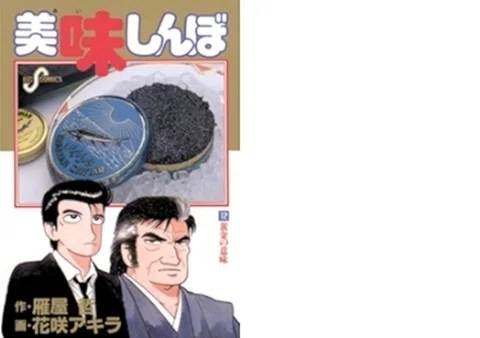
By the way, luobing is like a scallion pancake made with flour.
It was simple enough to make while holding 'Oishinbo' in one hand, and I remember it being surprisingly tasty when fresh, with the flavor of the sesame oil.

the texture was generally like this
I checked Cookpad, and it's actually on there lol
As expected of Cookpad.
And what made me laugh was that the person who posted this recipe had also read 'Oishinbo' (lol).
Come to think of it, this luobing might have been the first and last time reading 'Oishinbo' was actually useful in my real life ( ̄∀ ̄)♪

From the perspective of whether something is useful or not, an example of things that are a bit similar like naan and chapati, but where you wonder what the actual difference is, would be
rinse, treatment, and conditioner.
Just like with cooking, I'm not well-versed in hair care or beauty; in fact, I'm not just not well-versed, I'm as clueless as if I were in the middle of a black hole, so for me, these three are just:
“Things you use after shampoo to make your hair smooth”
and nothing more.
However!
Since the words are different, there must be clear differences in their meaning and function. It's not good to ignore that just because of the weak excuse that it's a field I'm not interested in or not good at.
With that reflection in mind, I decided to properly research the differences between those three things so that I can explain them to anyone who asks, whenever they ask.\(^o^)/
That was what I decided on a Tuesday night.
First, rinse. Literally, it means "to rinse" in English. However, using it with just this literal meaning might not be appropriate in terms of its name today.
The reason is that shampoos in the past were alkaline, similar to soap, so if that alkaline component remained on the hair after washing, the cuticles would remain open. To neutralize this, it was necessary to
rinse the hair with an acidic solution. This was the original purpose of a rinse.
However, the purpose of a rinse today, where the quality of shampoo has changed so much that even rinse-in shampoos have appeared, is to protect the hair by coating the surface of the squeaky hair with an oil-based film.
Next, treatment. Looking at its direct literal meaning, it means "care" or "remedy" in English.
The role of a treatment, in contrast to a rinse that cares for the surface of the hair, is to penetrate the inside of the hair and replenish nutrients to damaged areas. Therefore, a point to keep in mind is that you need to let a treatment sit after applying it to your hair.
Finally, conditioner. Looking at its literal meaning, it means "to adjust the condition (of the hair)."
Shampooing can disrupt the cuticles covering the surface of the hair, which can cause frizz. The role of a conditioner is to resolve this.
To be honest, it overlaps quite a bit with the role of a rinse (^^ゞ
In fact, it seems many manufacturers are calling rinses conditioners.
If I had to point out a clear difference from a rinse, it would be the pH adjustment function. Many conditioners have the function of adjusting the pH level of the hair and also have a high moisturizing effect.
—To summarize the above,
Rinses and conditioners act on the surface of the hair.
The two are often equated as hair conditioners.
And treatments act on the inside of the hair.
Phew.
It was a rush, but I feel like I managed to grasp the basic knowledge.
(I hope I'm not just imagining it...)
By the way, at the beginning of this section, I wrote "from the perspective of whether it is useful or not." And although I have researched this far and arrived at my own summary, the result is "not useful" in terms of whether it is useful or not.
Because—
I am bald.👨🦲✨
For me, shampoo, rinse, and of course conditioner are just an extension of washing my body with Dove body soap ( ̄∀ ̄).
Ahem.

Now, today's song. The keyword is... "skinhead" (lol)

The second song of the week, DJ OZMA with "Spiderman"
(4 minutes 34 seconds)
...The only word related to "skinhead" in the song is in the first B-melody:
If you go bald, that's right, hey! Monk
Splendidly Lonely night
The real face is a Kyushu man
Dancing buaiyaaiyaai
It's just that one spot ( ̄o ̄)
Well, instead of bald guys, there are tons of naked guys appearing, so let's call it good ^m^

Oops, it's already this late tonight.
I must pull out a quiz book and study hard enough not to lose to Amiba.
With that said,
I hope that tomorrow, as many people as possible
will spend a wonderful day as men (or women) who can tell the difference, taking a strong interest in things that are a little similar but different ✨

#WhatAreYouTalkingAbout
#Whatever
#LivelyBand
■ Bonus
This is the car before the current picture shiritori train (96th car). If anyone felt curious about the title "Zodiac" and the joke image in the bottom right, please take a look when you have some time to spare.
Amiba might visit your house with some naan.
■ Bonus Part 2
"Question" series - Past exams lol
いいなと思ったら応援しよう!
 こんなダラダラと長ったらしい記事に最後まで目を通していただき、その忍耐強さと博愛の御心にひたすら感謝☆です
ありがとうございます
ご覧いただけただけで幸甚この上なっしんぐなので
サポートは、私なんかではなくぜひぜひ他の優れたnoteクリエイターさんへプリーズ\(^o^)/♪
こんなダラダラと長ったらしい記事に最後まで目を通していただき、その忍耐強さと博愛の御心にひたすら感謝☆です
ありがとうございます
ご覧いただけただけで幸甚この上なっしんぐなので
サポートは、私なんかではなくぜひぜひ他の優れたnoteクリエイターさんへプリーズ\(^o^)/♪