
Ulterior Motive — Started an image word chain (#109)

(#108) Zui Zui Zukkorobashi → 'Shi' → Ulterior Motive
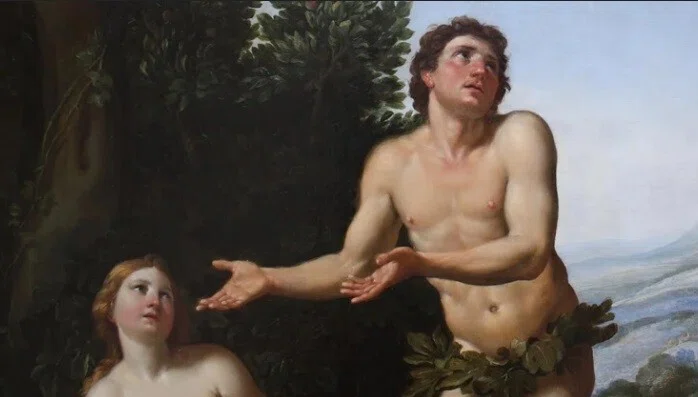
"Oh, looks like rain."
"Why don't we take shelter from the rain at a hotel for a bit? -- I heard that one last week."
"..." (・_・)💦💦
Adam (pseudonym), too bad ( ̄∀ ̄)
I mean, that cheap trick two weeks in a row is a no-go, lol
◇◆◇◆◇◆◇◆◇◆
When I hear "ulterior motive", for some reason, this song automatically starts playing in my head.
The first song this week, T.M.Revolution with "Aoi Hekireki (Blue Thunderbolt)"
The beginning of the lyrics in the head chorus
The blind spot within love is an ulterior motive
I can't simply dance
"The blind spot within love is an ulterior motive", I can understand that, but my honest impression when I first heard it was that it didn't quite click.
However, when I checked the lyrics of the last chorus with my eyes,
The four strokes within the character for love are an ulterior motive
I can't simply dance
only then did I think, 'Ah, I see' 🙆♂️
So it was referring to the radical 'shitagokoro (heart at the bottom)' in the character for 'love' (koi)♪
Of course, it also plays on the meaning of the illicit "ulterior motive" in the heart of Adam (pseudonym) as he says 'Oh, looks like rain' so transparently (⌒~⌒).
But, back when I was listening to this song, I remember thinking that while most people probably know that the radical for 'love' is 'heart', perhaps surprisingly few people remember the name of the radical, 'shitagokoro'... that's the kind of thing I thought.
And what's more.
In many kanji dictionaries, this 'shitagokoro' is grouped together with 'risshinben' under the radical 'kokoro (heart)'.
Of course, only kanji with '忄' are gathered under the 3-stroke radical index for '忄 (risshinben)'.
So, one would naturally think that kanji with 'a heart at the bottom' like 'love', 'thought', 'forget', and 'anger' are all grouped together under 'shitagokoro' -- that's the normal way to think (I myself thought that for quite a long time (^^ゞ💦))
The 4-stroke radical for searching 'shitagokoro' is not '心' but '⺗', and there are only four kanji that belong to '⺗': '忝', '㤗', '恭', and '慕'!
( ゚Д゚)!
In other words, the radicals for '念', '忘', and '怒' are not 'shitagokoro' but simply (though that's a bit of a way to put it, lol) '心'. Of course, '恋' is the same.
Yes,
the radical for '恋' is
not 'shitagokoro' but 'kokoro'
that is.
“Love (koi) has an ulterior motive (shitagokoro), but love (ai) does not” ( ̄∀ ̄) If you ever see some wannabe dandy at your local bar saying that while trying to pick up a random woman with a smug look on his face, you should quietly tell him—
“
Both koi and ai only have a heart (kokoro)” (o^-')b♪

As you read this far, some of you might be wondering:
“But isn't it fine to say that, generally speaking, the radical for '恋' is 'shitagokoro'? After all, it's the heart (kokoro) under the kanji for '恋'.”
—you might ask.
The answer to this question is both yes and no.
?(・_・)?Huh?
Even if a tough-looking detective were to intimidate you by asking, “Yes or no, which is it?”, the answer would still be yes and no.

…Well, I'm not actually Akutsu, though ( ̄∀ ̄)
This is becausethere is no officially established name for radicals.
We are just continuing to use names that have been used idiomatically. So, the reality is that there is no such thing as 'official' or 'unofficial'. It sounds like a lie, but...
Well, for that reason, if you search through all the kanji dictionaries sold across Japan, you might just find one that categorizes '恋' under the radical '心'... maybe. (I don't know for sure^m^)
◇◆◇◆◇◆◇◆◇◆
When Adam (pseudonym) says, “Oops, is it raining?”, and refers to an “ulterior motive”, the meaning is, of course, nothing other than the raw, lustful desire of a male wanting to do something or other with Eve (pseudonym). In modern terminology, when we say “ulterior motive”, it is almost 100% about these kinds of sex-related schemes.
But you know, I want to note at the end that this word “ulterior motive” was originally a beautiful Japanese word used to mean pure, hidden feelings or one's true heart.
Amakumo no Tanabiku yama no Komoritaru Aga shitagokoro Konoha shiru ramu
Like the mountains hidden by trailing clouds, I wonder if these leaves know of my secret feelings—
This is poem number 1304 from Volume 7 of the Man'yoshu, and the author isKakinomoto no Hitomaro.

I always wonder, why is it that Kakinomoto no Hitomaro, a great poet who is called a 'poet saint' along with Yamabe no Akahito and is counted as one of the Thirty-Six Immortals of Poetry, is depicted in such a lazy, relaxed pose in his most famous portrait? ( ̄∀ ̄)?
◇◆◇◆◇◆◇◆◇◆
Now, for today's song... or rather, two songs. The keyword is 'ulterior motive,' so I've decided to pick two songs that contain the word 'ulterior motive' in their lyrics, as the contrast between them is quite interesting.
First up, the first song. Sukima Switch with 'Kakera Honoka'
The 'ulterior motive' appears in the second verse's B-melody.
You in a yukata at the fireworks festival, camping by the sea, a test of courage with an
ulterior motive
Perhaps it's the melody, but even with the line 'a test of courage with an ulterior motive,' it doesn't feel particularly lewd.
It's more like, 'I hope she gets scared during the test of courage and maybe, just maybe, she'll cling to me...' It's definitely an 'ulterior motive,' but the sentiment is still quite pure (*´∇`*)♪
Next, the second song.
Southern All Stars with 'Nijiiro THE NIGHT CLUB'
The 'ulterior motive' appears in the second verse's A-melody.
A flashy secret in a glamorous hall, a Monday where my heart feels like it's bursting with an
ulterior motive Stop the music, a number where she laments the past, helpless, can't dance, can't sweet-talk
I don't know, just hearing the name Southern All Stars makes me think it's going to be erotic before I even listen to it ww
( ̄∀ ̄) or so I think ← what a terrible prejudice and preconception w
Well, compared to Sukima Switch, which captures a bittersweet moment of youth, this is definitely a 'THE ulterior motive' song that is overtly erotic, though not particularly grotesque ^m^.
However, this song doesn't quite reach the level of lyrics that would have been banned in another era—the hallmark of Southern's true essence—but even with such suggestive eroticism woven into the lyrics, Southern's songs mysteriously never become vulgar.
Whether it's because of Keisuke Kuwata's voice and singing style, the power of the music itself, or the fact that there's a woman in the band, I don't know the definitive reason, but the fact that their songs don't end up being vulgar is a strength of Southern All Stars.
Oops, it's already this late tonight.
It's actually raining outside, and here I am at the hotel—what exactly am I supposed to do all by myself?
(・_・)?
With that said,
I hope that tomorrow, for as many people as possible, it will be a day where they can project their dreams and wishes not onto the 'ulterior motives' of the
present, but onto the 'ulterior motives' of the Man'yo era✨
■ Bonus
This is the car preceding the current image shiritori train (car 109). If the title "Zui Zui Zukkorobashi" and the joke image in the bottom right caught your eye and made you wonder what it was, please feel free to take a look when you have some spare time.
いいなと思ったら応援しよう!
 こんなダラダラと長ったらしい記事に最後まで目を通していただき、その忍耐強さと博愛の御心にひたすら感謝☆です
ありがとうございます
ご覧いただけただけで幸甚この上なっしんぐなので
サポートは、私なんかではなくぜひぜひ他の優れたnoteクリエイターさんへプリーズ\(^o^)/♪
こんなダラダラと長ったらしい記事に最後まで目を通していただき、その忍耐強さと博愛の御心にひたすら感謝☆です
ありがとうございます
ご覧いただけただけで幸甚この上なっしんぐなので
サポートは、私なんかではなくぜひぜひ他の優れたnoteクリエイターさんへプリーズ\(^o^)/♪