
Declaration of "Manga Original Art Exhibition Tourism"! - A "Journey to Those Days" that is Different from Fandom Activities or Pilgrimages to Sacred Sites!

"Content Tourism" within "New Tourism"
There is a tourism term called "New Tourism."
Unlike traditional travel, it refers to a new type of travel that emphasizes interaction with people and nature at the destination. However, "New Tourism" has also been subdivided, and terms like "Sports Tourism" and "Content Tourism" have become common.
"Sports Tourism" refers to various types of travel related to sports, such as traveling to watch sports, associated local sightseeing, and interacting with the people who support the sports.
In professional baseball, a clear example is enthusiastic Hanshin Tigers fans following the team's games, traveling all over the country, sightseeing in the local areas where the games are held, and engaging in consumer activities. I believe that traveling to the U.S. to follow Shohei Ohtani and watching Major League games at the venue also falls under this category.
Supporting a team, athlete, singer, actor, or character you love enough to want to follow them is called "Oshi-katsu" (fandom activity). Until a little while ago, this was an activity only for otaku, but now that "otaku" has become a mainstream and positive word, the number of adults who openly declare their "Oshi-katsu" has increased overwhelmingly.
"Subdivision of "Content Tourism"
"Content Tourism" has several types.
1. Location Tourism (sightseeing at movie or drama filming locations, pilgrimages to sacred sites, etc.)
2. Food Tourism (touring local ramen shops, B-grade gourmet, local ingredient gourmet tourism, etc.)
3. Industrial Tourism (visiting industrial heritage sites, industrial cultural properties, or corporate manufacturing plants, etc.)
4. Anime Tourism (pilgrimages to sacred sites that served as the setting for anime or manga, etc.)
5. Michikusa (Strolling) Tourism (photography, collections, and events by manhole cover enthusiasts as introduced by the Michikusa Society)

What I want to pinpoint and promote this time is the category of "Manga Original Art Exhibition Tourism". While terms containing "anime" and "manga" already exist, a single term combining "manga original art exhibition" and "tourism" has not yet hit in search results (as of July 2024).
Let's dig a little deeper into the term mentioned in 4.
I believe the "manga" included in 4 refers to pilgrimages to sacred sites of "manga that have been adapted into anime." Furthermore, it refers to exhibitions of manga that are currently achieving global hits.
"The Issue of Manga Work Eras and Target Age Groups
As you know, the history of manga after the war has exceeded 70 years (counting from 1947, when the long-form manga book "New Treasure Island" by the God of Manga, Osamu Tezuka, was published).
And the genres of Japanese "manga" are quite subdivided. The population of manga artists has increased, and the number of works is enormous.

Japanese manga has become a hugely popular content globally, but outside of Japan, the categorization of "shonen manga," "shojo manga," and "seinen manga" is not known or understood. Especially in Europe, Japanese manga is treated not as "entertainment" but as "art." When manga magazines were born in Japan, they started as "shonen magazines" and "shojo magazines," divided by the age and gender of the readers. This is proof that marketing divided by the age and gender of the target audience had already begun. The fact that it was marketed means it is entertainment, not art.
This categorization by age and gender has become less meaningful in recent years, but for "readers" who have grown up with Japanese manga since the late 1960s, it is still an important matter.
In fact, the age of visitors who go to manga original art exhibitions is centered on those in their 50s to early 70s (as of June 2024). Depending on the environment, people in their late 40s (around 50) might also be included.
And these age groups have entered a period where they have settled down in terms of work and child-rearing, and they have more time, money, and mental space. They are finding opportunities to look back on the past through manga, recall the manga they read when they were children to high school students (or university students) as "nostalgic," and return to the person they were back then.

Because of the atmosphere of society at the time, this generation felt that anime was something you graduated from in elementary school (the borderline was whether or not you were hooked on "Gundam"), so they are not at the level of taking tourism actions based on anime (I will leave the story of getting hooked together on anime or special effects shows that children are watching while raising children for another time).
Also, they will go to exhibitions of manga they "read after becoming an adult," such as those currently hitting, if they are held in the neighborhood, but it is rare for them to travel to other regions.
That's right! The age group of people who visit "manga original art exhibitions" is overwhelmingly different from the aforementioned "(4) Anime Tourism (such as 'pilgrimages to sacred sites' that served as the setting for anime or manga)."
■ Differences from "Fan Activities"
Also, even for the same popular manga, the age and type of readers vary widely, ranging from "have read it," "have never read it," "know it exists," "love it," "am a fan of it," "actually engage in fan activities for it," to "hardcore anime otaku."
In other words, the purpose of visiting is also different.
While the customers of traditional "anime/manga pilgrimages and manga exhibitions" are mainly focused on current "fan activities" and social media posting, the customers of manga original art exhibitions are on a journey to trace memories, thinking things like "how nostalgic," "my former self," or "returning to the roots because I can't keep up with recent manga."
Please see here for a report article on manga original art exhibitions.
"Akemi Matsunae, Sho Kitagawa... What is the reason for the great popularity of gallery-style manga original art exhibitions and the Kitakyushu Manga Museum [Kyoko Fumizuki Exhibition]?"

Furthermore, among the former customer base, those who pride themselves on being "hardcore otaku" dislike being marketed to using the term "anime tourism." They do not hide their disgust, feeling it is "cunning" when the business purpose is visible from the start, even though they are "visiting purely because they like it."
On the other hand, the latter customer base (those in their 50s to early 70s) do not really care if the business aspect is visible, if it seems cunning, or if it is categorized as "XX Tourism."
The way they spend money is also different. The items they purchase are different. The former group buys general merchandise, while the latter group spends money on items that are somewhat more expensive than merchandise, such as art books, original color manuscripts, and color shikishi (autograph boards). If there is an auction, they seem to get quite heated and do not want to lose.
Therefore, I think it is better to think of "anime tourism" and "manga original art exhibition tourism" separately rather than lumping them together.
■ Concrete examples of "Manga Original Art Exhibition Tourism"
To give a personal example, the "Motoka Murakami Exhibition: Commemorating the Collection of Original Art" (now closed) held in the spring of 2024 at the "Yokote City Masuda Manga Museum" in Yokote City, Akita Prefecture, was something I really wanted to go to if my schedule had allowed it. The drama was good, but the original manga is excellent. If you were to see this original art exhibition, then eat your fill of delicious local Akita Yokote yakisoba and Inaniwa udon, and buy iburigakko (smoked pickled radish) and Hinai-jidori chicken as souvenirs on your way home, that would be "manga original art exhibition tourism."

Also, since I read Takumi Nagayasu's "Ai to Makoto" (original story by Ikki Kajiwara) in real-time while it was being serialized, the "Takumi Nagayasu 'World of Ai to Makoto' Exhibition" currently being held at the Former Ozaki Theodora Residence from 7/5 to 8/20 is personally right up my alley.
"That grandiose worldview!" "In the live-action movie, Hideki Saijo played Makoto, right?" or "I thought she was a beautiful girl who loved literature, but she's the secret boss of the sukeban group, Yuki Kogen!" "Wasn't the book she was always holding Turgenev's 'First Love'?" or "Iwa Shimizu Hiroshi's famous line, 'I would die for you!'"—for some reason, I start getting excited.
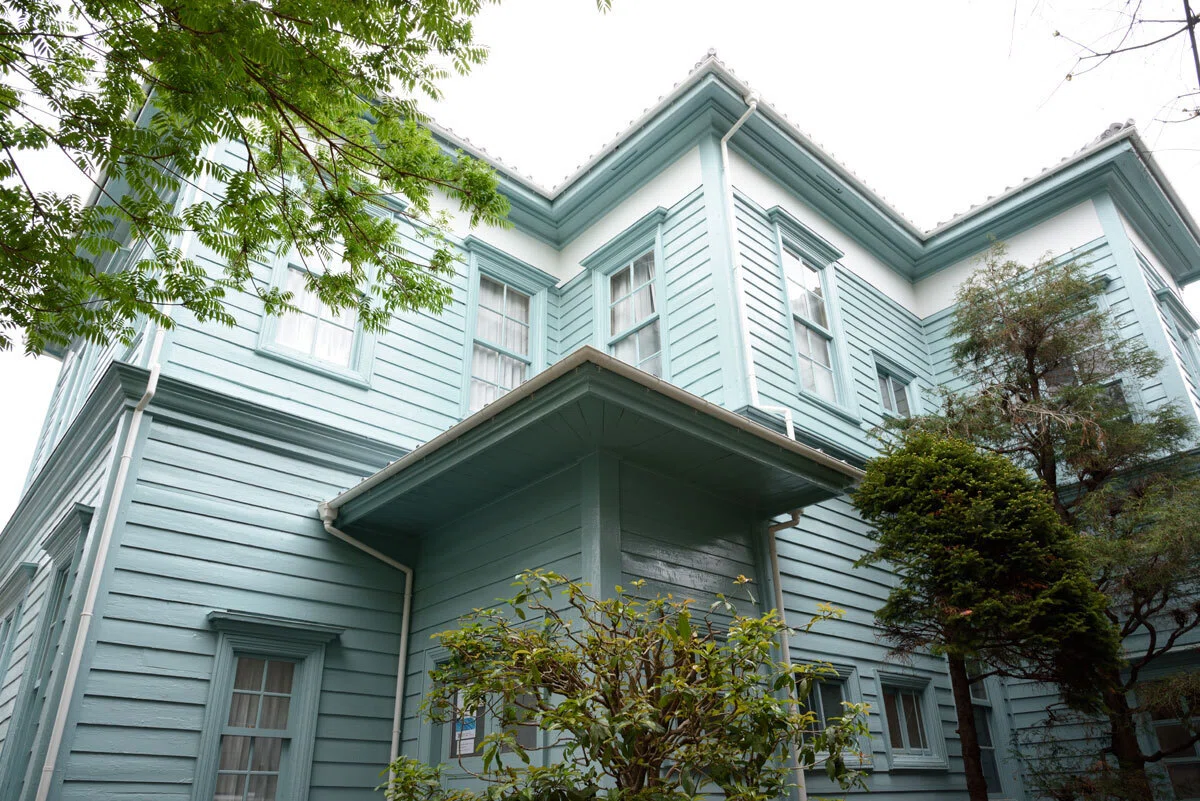
If you came to Tokyo from another region to see this original art exhibition, and while you were at it, went to see the Godzilla head in Kabukicho or climbed Tokyo Tower, that is "manga original art exhibition tourism."
However, I don't think it is "anime tourism." The age group and purpose are definitely different.
I would like to properly distinguish between those things.
From the perspective of someone introducing this kind of information, if it is apparent that the organizers and operators are not well-versed in anime or manga, I feel a little put off.
However, when young staff members at the former Teodora Ozaki residence enthusiastically say, 'Since the original art exhibition is starting, I took this opportunity to read all the volumes of "Ai to Makoto." It was incredibly interesting!', the senior generation also finds it very appealing.
When "anime" and "manga" are lumped together or categorized with the assumption that "customers will come if we just put together a project like this," the purpose becomes unclear. The venue tends to end up feeling lackluster.
If they are distinguished from the beginning, the senior generation interested in "Manga Original Art Exhibition Tourism" will definitely visit, but if it is ambiguous, they will anticipate that the venue will be chaotic, and seniors who dislike crowds will stay away.
To clarify that point, I would like to propose "Manga Original Art Exhibition Tourism" as a new term and use it from now on.
Next, please take a look at the development plan for "Manga Original Art Exhibition Tourism."
★ "Manga Original Art Exhibition Tourism" Development Strategy
The objectives of "Manga Original Art Exhibition Tourism" are as follows:
・Encouraging domestic (individual/middle-aged and older) travel by creating new travel plans・Organizing tourism developed through manga・Suppressing and preventing the holding of rip-off or fraudulent original art exhibitions・New projects and triggers for regional revitalization・Revitalization of tourist destinations・Satisfying the desires of middle-aged and older manga fans who think, "I want to revisit the manga I loved," or "I want to meet the manga artist I was a fan of," by combining their "might as well" + "traveled this far" + "while I'm at it" + "want to go sightseeing" needs.・Protection of original manga art: Original manga art is an asset that can attract people. From the perspective of "cultural property protection," holding original art exhibitions will strengthen their storage and protection.
Through the success of this "Manga Original Art Exhibition Tourism," the ultimate goal is to create a world where the latest volumes by manga artists who have worked hard from the Showa to Heisei eras are published one after another.
Ultimately, I want to create a world where manga artists do not despair in their old age and can continue to draw freely!
● Market Research
Identifying the target audience: Since it will mainly focus on manga lovers aged 50 and over, we will delve deeply into their interests and concerns.Manga artist requests: We will ask each manga artist about their "worries regarding their work and activities," "hopes for what they want to do in the future," and "requests for what they want us to do."Competitor analysis: Investigate the current status and success stories of other content tourism and manga-related exhibitions. Analyze attendance data from past manga original art exhibitions.
● Building Partnerships
① Local governments and tourism associations... Collaborate with regions where manga original art exhibitions are held and propose plans that combine them with tourism resources.② Manga-related museums and galleries... Collaboration from the planning stage with facilities where manga original art exhibitions are held.③ Publishers... Cooperate with publishers to plan unique original art exhibitions.④ Manga artist organizations... Collaborate with manga artist organizations and manga artists belonging to those organizations. Also, plan and hold unique original art exhibitions.⑤ Manga artists... Collaborate with individual manga artists (including collaborations with publishers acting as intermediaries).⑥ Travel agencies and railway companies... Collaborate on tour plans and joint projects with manga original art exhibitions.
● Publication and Dissemination of Preparatory Content
・Publish the "Manga Original Art Exhibition Tourism Declaration" on "note" (executed via entry in the "note Creative Awards 2024" Business Category (this article)).・Publication... "Manga Original Art Exhibition Tourism Declaration" series (travel experience coverage and introduction)① Produce one book per original art exhibition facility② Produce one book per specific region③ Produce one book for various locations nationwide (one writer executes, covers, and writes about Manga Original Art Exhibition Tourism)④ Produce one book for various locations nationwide (multiple people execute, cover, and write about Manga Original Art Exhibition Tourism, and one person edits)・Video production... Produce about 3 videos (by 3 people) of under 10 minutes each and publish them on YouTube.
● Holding Original Art Exhibitions and Event Planning
・Theme setting... Clarify the theme, such as "Original Art Exhibition Commemorating a New Book Publication," "Showa Masterpiece Manga Original Art Exhibition," or "Retrospective Exhibition of a Specific Manga Artist." This will narrow down the target and make it easier to highlight.・Holding original art exhibitions... Actually plan, hold, and operate original art exhibitions while identifying challenges. Determine reactions, opinions, and requests from various fields to connect to the future.・Related events... Hold talk shows, autograph sessions, workshops, etc., in conjunction with the original art exhibitions.
● Promotion Strategy
・SNS utilization: Create official accounts mainly on platforms frequently used by the senior generation, such as Facebook, Instagram, and X, and develop promotions.・Publish news in press releases. Request article coverage in local newspapers and trade journals, and features on local television and radio stations.
● Development of tourism packages
・Collaboration with surrounding tourism: Develop tour packages that combine exhibition venues with local landmarks and gourmet food.
・Accommodation plans: Propose accommodation plans for attending exhibitions and collaborate with local lodging facilities.
・Transportation plans: Collaborate with railway companies and local governments to plan sightseeing for exhibition venues and local landmarks.
(Example: Kasukabe City + Tobu Railway + Futabasha -> Crayon Shin-chan train to the exhibition venue in Kasukabe)
● Evaluation and improvement after the event
・Questionnaire surveys: Conduct surveys for exhibition attendees to understand satisfaction levels and areas for improvement.
・Reflection for future events: Use the feedback obtained to improve future exhibition planning.

Moving forward, "Manga Original Art Exhibition Tourism" will gradually begin to take shape.
First, we plan to communicate with various parties and conduct market research while building partnerships.
Thank you very much for reading this far.
Photography for photos in the article: Ryoichi Shimizu, Yumi Tamura,Hinata Uozumi(Uozumi Hinata)
いいなと思ったら応援しよう!
 星の数ほどいるクリエイターの中から私を見つけて、読んでくれて、ありがとう。一人暮らしで、還暦を超えたクリエイター。まだ何も成し遂げていません。でも、将来の目標ができました。そのためにこれから芸大生(通信教育部)になります。「才能」なんてこれから創り出してみます(笑)。