
Koji Hayashi 'Biographies of Zainichi Korean Writers' 04: Jeong Seung-bak (Part 7, Final Episode)

Jeong Seung-bak first appeared as a novelist under this pen name in the novel 'Sodo' (School), which began serialization in the November 1970 issue of 'Senryu Awaji' No. 65. His activities... are finally reaching the final episode.
Jeong Seung-bak: A Witness to History Who Overcame Discrimination and Lived as a Cultural Figure on Awaji Island (Part 7)
Koji Hayashi
→(Part 6) continued from
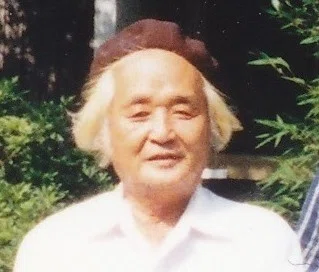
7) Novelist Jeong Seung-bak
Around 1970, 'Nomin Bungaku' (Peasant Literature) editor-in-chief Shinsuke Fujita frequently visited Awaji Island, staying at Jeong Seung-bak's residence to check his novel manuscripts. However, it is said that he did not perform any editing, but instead repeatedly pointed out flaws. Jeong Seung-bak, who interacted closely with
Shinsuke Fujita and Aya Ichinose, a winner of the Peasant Literature Prize who would later win the Toshiko Tamura Prize, joined the Peasant Literature Society.
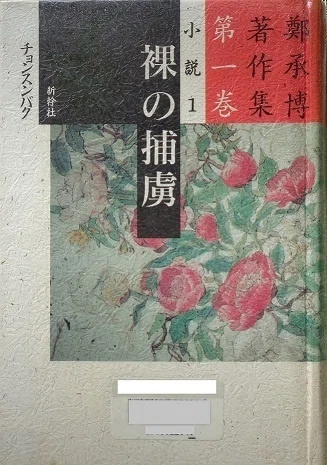
In the June 1971 issue of 'Nomin Bungaku', 'Hadaka no Horyo' (The Naked Prisoner) was published, depicting the events leading up to 'Owareru Hibi' (Chased Days). Subsequently, in the November issue, he published 'Hadaka no Horyo' (The Naked Prisoner), which was reviewed by Masafumi Kubota in the 'Coterie Magazine Scoring' column of the 'Mainichi Shimbun'. Furthermore, it was reprinted in the February 1972 issue of
'Bungakukai', praised by Shoichi Saeki in the February 2nd literary review of the Mainichi Shimbun, and discussed by Saiichi Maruya and Takeshi Kaiko in the March issue's dialogue review of 'Bungakukai'.
Then, in March, he won the 15th Peasant Literature Prize. In July, he became a candidate for the 67th Akutagawa Prize, and there were expectations that he would follow in the footsteps of the previous winner,
Lee Hoe-sung, but as expected, a Zainichi Korean writer did not win twice in a row, and the award went to Akio Miyahara and Hiroshi Hatayama.
In February 1973, 'Hadaka no Horyo' (The Naked Prisoner) was published by Bungeishunju, but this was the first and last time it was published by a major publisher.

That year, Jeong, who had been hospitalized and operated on for a stomach ulcer and had prepared himself for death, built a new separate house on a hill in Ohno, Sumoto City, to concentrate on his writing. Three days after being discharged in October, he ignored his family's opposition and moved in alone. It was a decision made at the age of 50.
It was not just about writing. Although it overlaps, in April of the same year, he established the 'Dan' society with Shinsuke Fujita, Aya Ichinose, and Koji Yamanaka to publish the magazine 'Dan', and as a member, he wrote essays and other works.
In January 1974, he established the Bungei Awaji Coterie Association as a founding member with Fumio Kitahara, Yoichiro Kitahara, and 13 others, and in May, he launched 'Bungei Awaji'. Furthermore, in April 1976, he became a founding member of the Awaji Cultural Association and was appointed as a standing director.
'Dan'When 'Garbage Dump', published in issue 33 (January 1976), was reprinted in the comprehensive cultural magazine for Zainichi Korean intellectuals 'Quarterly Sanzenri' issue 6 (May 1976), he began interacting with Zainichi Korean intellectuals. He published works such as '
After the Crack' (issue 10, May 1977) and 'Log Bridge' (issue 18, May 1979) in the same magazine and also attended roundtable discussions.
Chong Sung-bak greatly expanded his venues for publishing prose to minor and local newspapers and magazines such as 'Bungei Awaji', 'Dan', 'Quarterly Sanzenri', the Awaji Cultural Association's 'Awaji Culture', and 'Kobekko', 'Kobe Shimbun', 'MY BOOK''.
In May 1980, he established the Awaji Korean Culture Research Society, where he organized Korean language study groups, screenings of the film 'Joseon Tongsinsa' (Korean Embassy), and field trips to Korean cultural heritage sites. He continued to expand his circle of people by connecting his birthplace, Korea, with Awaji Island, where he had settled.
Chong Sung-bak sought his place on Awaji Island and lived as an Awaji intellectual. The publication of the '
Collected Works of Chong Sung-bak' (Shinkansha), a six-volume set, began in March 1993. Even after its completion in December 1997, he remained active in writing and lecturing, was loved by his family and many friends, and passed away from a cerebral infarction in January 2001. He was 77 years old.
(End)
→ Return to the very beginning (Part 1) → Return to the magazine
Koji Hayashi 'Biographies of Zainichi Korean Writers' Top
* (The copyright of this text belongs to the author. Please refrain from reprinting it on blogs, etc. For other matters, please contact Keikousya https://www.keikousyaweb.com/)
.................................................................
◆ References
Chong Sung-bak, 'The Naked Prisoner', February 1973, Bungeishunju
Chong Sung-bak, 'Collected Works of Chong Sung-bak Vol. 1: The Naked Prisoner', October 1993, Shinkansha
Chong Sung-bak, 'Collected Works of Chong Sung-bak Vol. 2: The Pine Needle Seller', June 1994, Shinkansha
Chong Sung-bak, 'Collected Works of Chong Sung-bak Vol. 3: A Certain Day at the Strait', June 1993, Shinkansha
Chong Sung-bak, 'Collected Works of Chong Sung-bak Vol. 4: People I Met', June 1993, Shinkansha
Chong Sung-bak, 'Collected Works of Chong Sung-bak Vol. 5: Stolen Words', December 1997, Shinkansha
Chong Sung-bak, 'Collected Works of Chong Sung-bak Vol. 6: Garbage Dump', December 1994, Shinkansha
Chong Sung-bak, 'The Horizontal Person: Mr. Shichiro Kurisu and I', March 2001, Mizukawa Shuppan
Chong Sung-bak, 'I've Had Many Experiences in Life', February 2002, Shinkansha
Fumio Kitahara, 'Letters from the Island', February 2001, Matsukado FSS
..................................................................
◆ Author Profile
Koji Hayashi (Hayashi Koji). Literary critic. Born in Saitama Prefecture in 1956. Former member of the New Japan Literature Society. His latest book, 'Zainichi Korean Literature: Beyond the Literature of Antithesis' (Shinkansha, published November 2019), has been featured in media such as the Tosho Shimbun and has been well received. Other works include 'Theory of Zainichi Korean Japanese Literature' (1991, Shinkansha), 'Theory of Postwar Non-Japanese Literature' (1997, ibid.), and 'Mani Mani' (2001, New Japan Literature Society Publishing Department). In addition, he has written numerous papers. He also had a friendship with Chong Sung-bak. 'Gugin's Blog', which he has been keeping since 2011,
http://kghayashi.cocolog-nifty.com/blog/ is a treasure trove! → 'Memories of Mr. Chong Sung-bak' is a masterpiece.
(Editorial Department)