
Congratulations on the Academy Award! I watched the movie 'The Boy and the Heron' and thought about how to live from now on.

Congratulations on the Academy Award!
Now, away from the hustle and bustle of the world, what is Hayao Miyazaki thinking about all alone?
And what exactly did we receive from this work?
That question continues to shake my heart even now.
On March 11, 2024, at the 96th Academy Awards, 'The Boy and the Heron' (directed by Hayao Miyazaki) won the Best Animated Feature Film award. This is the second time a Japanese film has won this award since 'Spirited Away' in 2003.
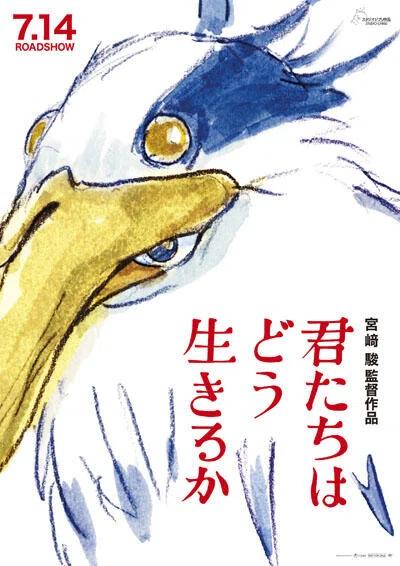
I watched it for the first time in IMAX the day after it won the Academy Award.
'The Boy and the Heron' is said to be an autobiographical fantasy in which director Hayao Miyazaki borrowed the title from the novel 'How Do You Live?' (by Genzaburo Yoshino), which he was given by his mother when he was a boy, and layered it with his own childhood.
The story is set in the Japan that remains in director Hayao Miyazaki's memories.
11-year-old Mahito, who lost his mother in a fire, leaves Tokyo with his father and moves to a house with a garden that is a blend of Japanese and Western styles.
Mahito, who harbors complex feelings toward his boisterous father and Natsuko, his late mother's younger sister who has become his new mother, is recuperating at home after self-inflicting a wound while keeping his heart closed, when he meets the Grey Heron, a man who shifts between the forms of a heron and a human.
As if lured by the Grey Heron, who declares, 'Your dead mother is alive,' he wanders into a tower in the annex of the mansion and enters another world where life and death are intertwined.
There, mysterious encounters and connections are woven with Kiriko, a woman who has the same scar on her head as Mahito; the Warawara, symbols of life and death; pelicans that soar into the sky while being wounded; the Parakeet King, who leads parakeets that act like the masses; Himi, a girl who controls fire; and the Great Uncle, the master of the Aoyagi mansion who disappeared long ago.
Why was Mahito led to the world of life and death? Is his dead mother alive? What are the true identities of the mysterious girl Himi and the Great Uncle who maintains the balance of the world...?
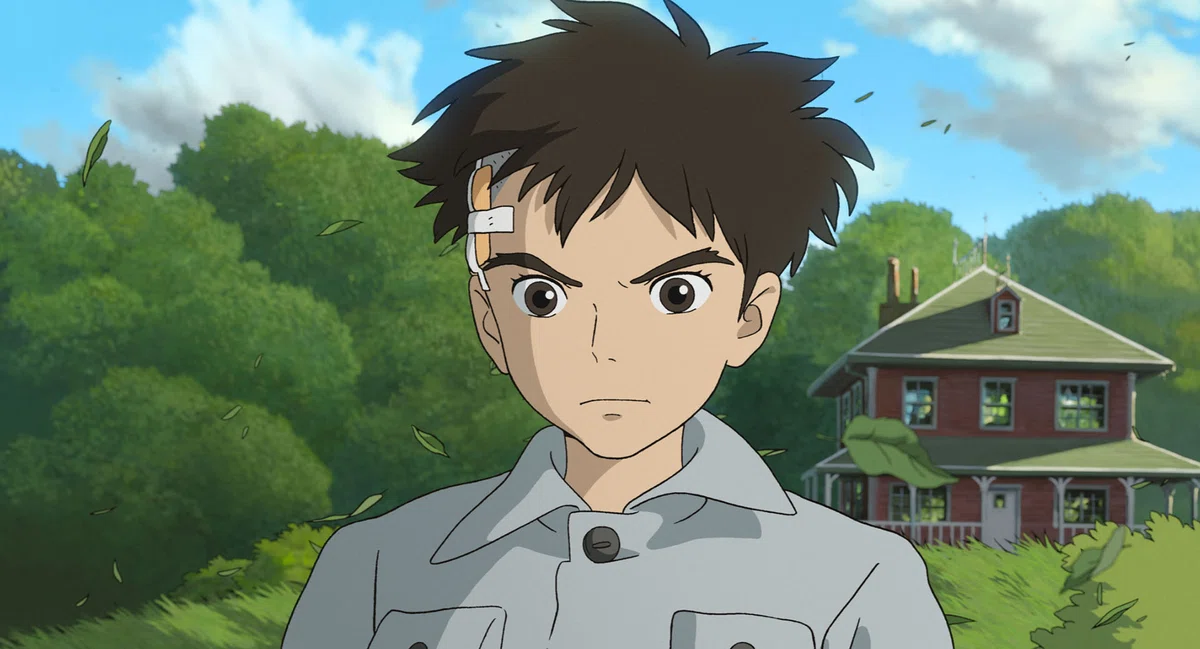
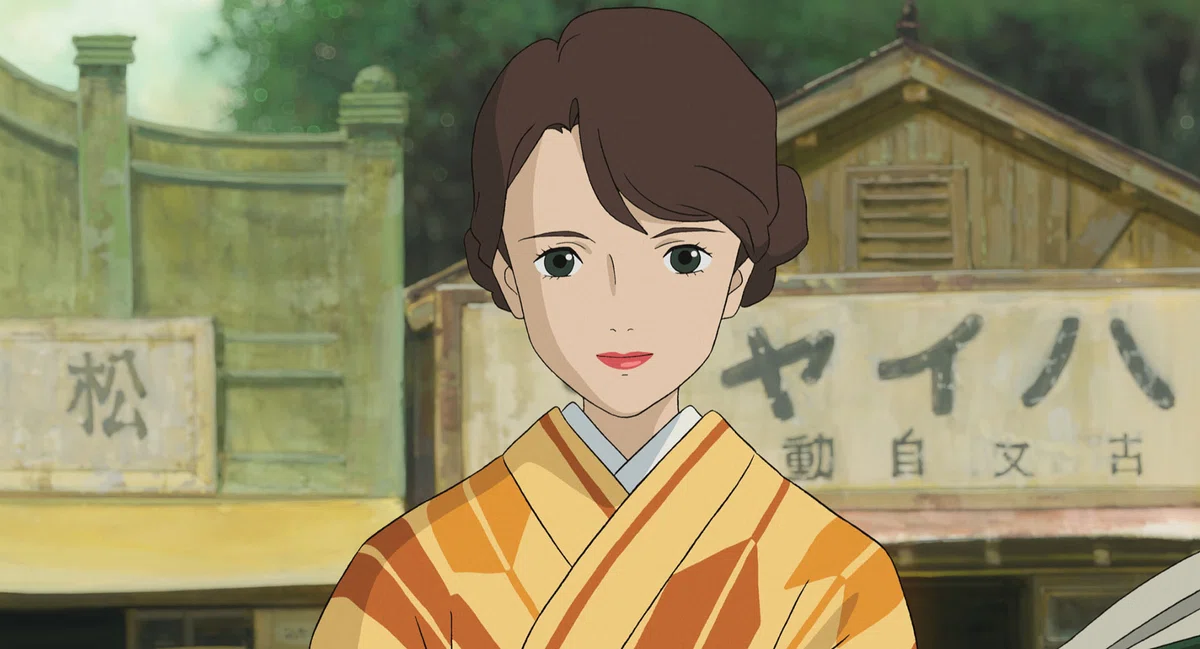

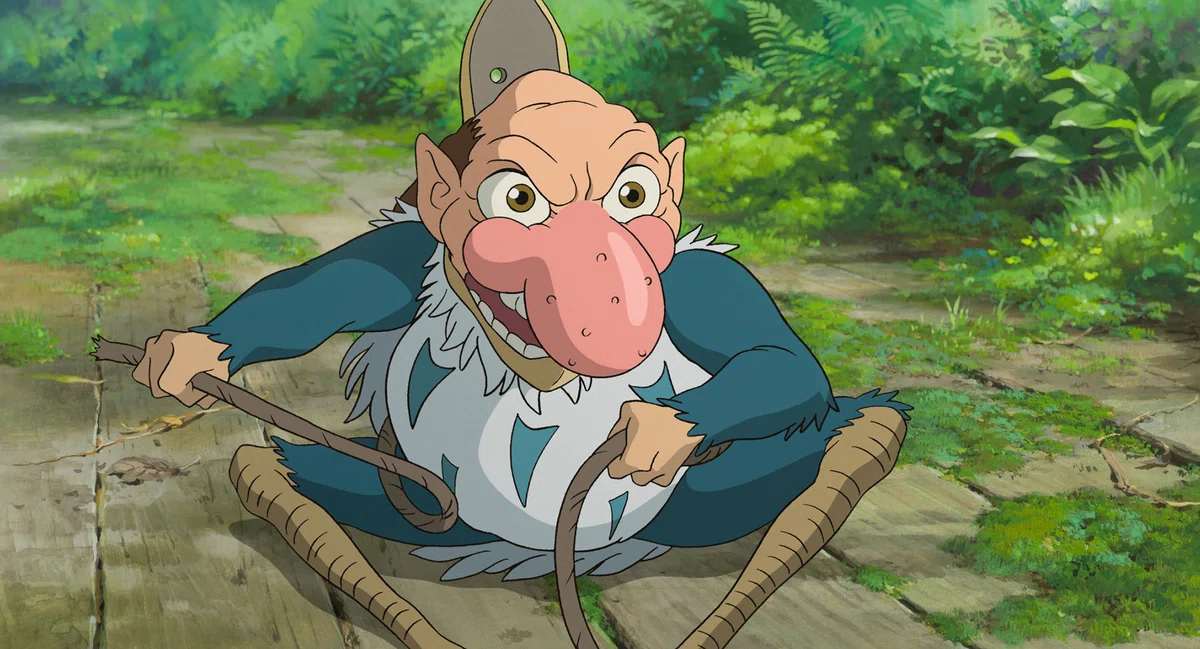

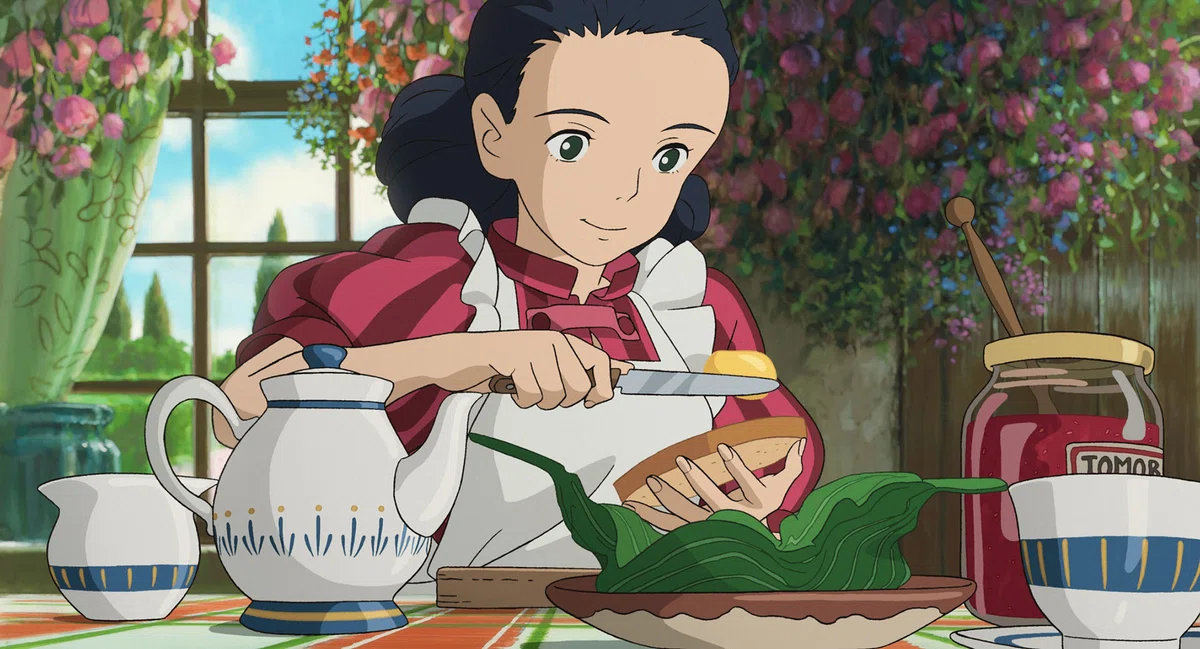
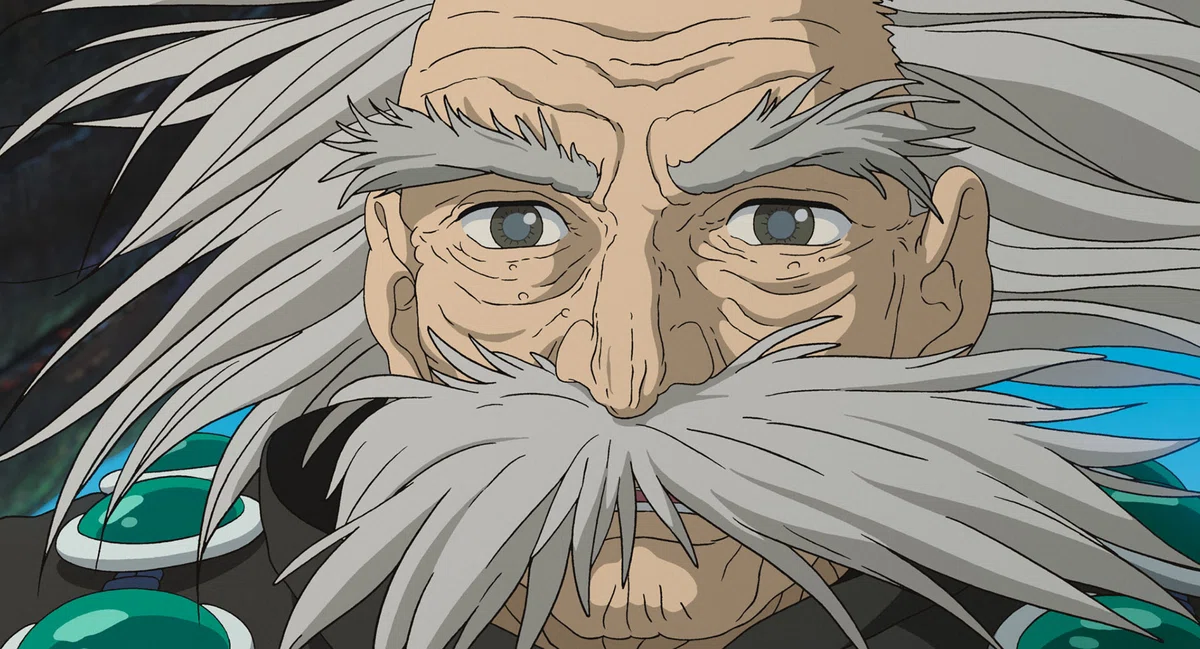
Simply put, director Hayao Miyazaki's soul overflows onto the screen throughout the entire film
It felt like I was being bathed in overwhelming visual imagery.
This film is certainly a universal adventure story, and it is also a story of a boy's growth.
However, there was some mysterious, fundamental power that transcended the framework of such a story.
Talking about the plot, the setting, or the characters
felt so nonsensical that
I was truly, right then and there, inside the world of Hayao Miyazaki.
That sense of bliss was something I
felt strongly from beginning to end.
In the midst of the Pacific War, twelve-year-old Mahito was struggling to live, wavering as he asked himself how he should live from now on.
Having lost his beloved mother, he was grappling with the urgent questions of why he was alive and how he should live.
But he reached out to a new door, stepping forward, deeper in, and into an unknown world.
His figure seems to embody the will of Hayao Miyazaki, who continues to take on insatiable challenges.
He shows no signs of aging at all, and is filled with an overwhelmingly youthful energy.
For Hayao Miyazaki, the heart of a boy is surely not something of the past.
It is truly alive, right here, right now.
If asked what the theme of this movie is, it is difficult to put into words, but
'Believe in yourself'
'Live strongly'
'Have the courage to step forward'
are words that, at first glance, seem commonplace
It felt as if it were filling every cell and drop of blood in my body.
Leaving the theater, I felt a surge of vitality.
The 'will' of this film now resides within my own 'will'.
No matter what crises or difficulties may lie ahead,
a spirit of challenge wells up, urging me to move forward, ever forward.
At the same time, there was a pleasure in being completely swallowed up
by a dazzling, kaleidoscopic flood of animation.
I was captivated by the intensity of the fire scene during the air raid right at the beginning; it was the first time I had ever seen such a terrifying yet beautiful depiction of fire.
The fantastical scene where the Warawara float up into the air in the other world, only to be pecked at by pelicans, was also impressive.
The scenery of the peninsula by day and the waxing moon at night were both beautiful.
Furthermore, the scene transitions in this film are incredibly bold, giving the entire work a sense of speed that surges and drives even harder in the second half.
From the scene where the Grey Heron flies into the tower upside down at high speed, to the moment a massive swarm of parakeets bursts out from the door, the film shows us one world after another beyond new doors. The two-hour-plus runtime didn't feel long at all.
It truly shows us a world that can only be realized through animation.
There is such an immense amount of detail that I couldn't take it all in at once. As soon as I finished watching it, I wanted to see it again.
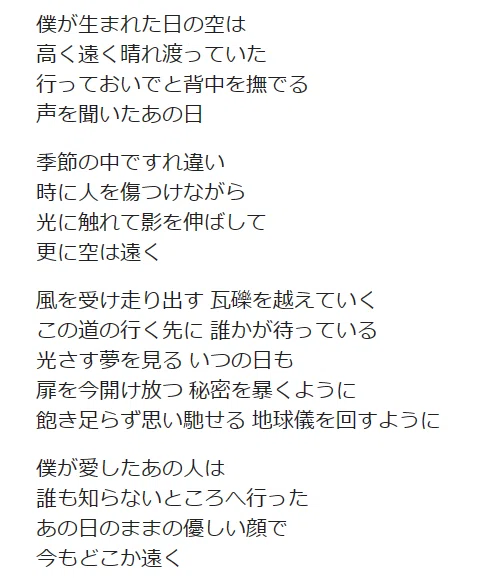
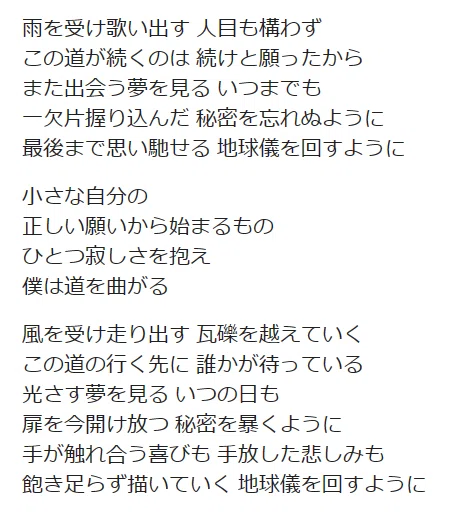
Kenshi Yonezu's 'Spinning Globe' in the ending was also wonderful.
It was a masterpiece where the world of the film, the lyrics, the melody, and his voice allowed me to re-experience the movie all over again.
It is said that Hayao Miyazaki shed tears upon hearing the demo for this song.
And, he reportedly said this to Kenshi Yonezu:
'I want to keep conveying to children through my films that this world is worth living in.'
I highly recommend that after watching this film, you take the time to read the lyrics of 'Spinning Globe' and listen to it once more.
Even so, how is it possible to create a film so overflowing with vitality?
Hayao Miyazaki was born on January 5, 1941 (Showa 16) and is 83 years old.
It is hard to believe he is only one school year younger than my parents.
That completely unflagging,
abundant imagination, stubborn conviction, and extraordinary madness.
And the strength and universality of a work born from the continuous, overwhelming effort to create it,
being recognized by the world in this way makes me happy.
It is more than just a film; it is the depth, breadth, and strength of a human being.
Yes, unless a human being themselves exists strongly at the center,
a state that can never be reached is brilliantly embodied here.
Many talented animators take that,
and crystallize it over a dizzyingly long period of time.
The happiness of being able to fully enjoy that work in a movie theater,
there is nothing more irreplaceable than this.
Asked by this film and Hayao Miyazaki, 'How do you live?',
what did I think?
It is this:
Simply, without making excuses or complaining,
I will live while holding my true feelings in my heart.
I will live this one-time life without lying to myself.
Director Hayao Miyazaki was not on stage
at the moment of that glorious Academy Award win.
Perhaps it remained seated deep, deep within his own heart,
quietly and passionately savoring the joy.
In this world rampant with vanity, fame, self-display, and the desire for self-approval,
while wrapped in the vast, ever-changing information radiated by the second,
as we are danced about, bewildered, elated, and swept away by the days, losing ourselves,
Hayao Miyazaki created this film even before the COVID-19 pandemic and the war in Ukraine began,
as if he had foreseen what was to come, remaining deep at the bottom of a well,
creating a universally strong work that would not be crushed by the changes of the era and the world.
It was July 1, 2016, seven and a half years ago,
that Director Hayao Miyazaki faced the subject matter of this film and left behind a planning memorandum.
In it, the following is written:
“A feature film takes at least three years (*it actually took seven years). The question is what the world will be like in the next three years. What kind of people in what kind of situation will our film encounter?Hasn't the current era, where things seem to be drifting vaguely and without clear shape, come to an end? Is the whole world shaking more? There is a possibility of war, a major disaster, or both.If we were to create a three-year film in such an era, what kind of film would be desirable... (omitted) A film set during wartime.A film that anticipates the era, prepared to be caught up by the times while making it. We must not create a film that panders to the times.”
A film strongly backed by this conviction
was born into this world seven years later,
and appeared before us.
Let us savor that happiness to the fullest, from corner to corner.
Without saying this or that, without making excuses,
simply, in this era, just as I thought,
grit my teeth and live strongly.
Do not give up. Never.
That is what I swore in my heart.
I truly hope you will experience this film with your whole being at the cinema.
I believe that from the bottom of my heart.
いいなと思ったら応援しよう!
 もし、私を応援してくださる方がおられましたら、サポートしていただけるととても励みになります☆彡 いただいたものは、クリエイター活動で使わせていただきます!