
Cat person? Dog person? We're talking about sharks, not pets

Shark enthusiast Mekabu (@shark0037) has poured their heart and soul into creating the shark encyclopedia, 'The Complete Guide to Sharks of the World.' This book features illustrations of all 125 shark species and is packed with shark trivia. In this series, we will introduce a selection of these sharks one by one. For our first installment, in celebration of the book's release, we are introducing two sharks: the bullhead shark and the brownbanded bamboo shark!
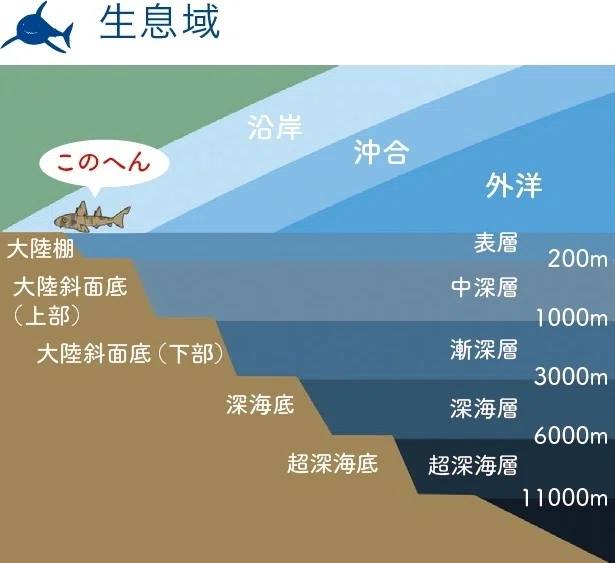
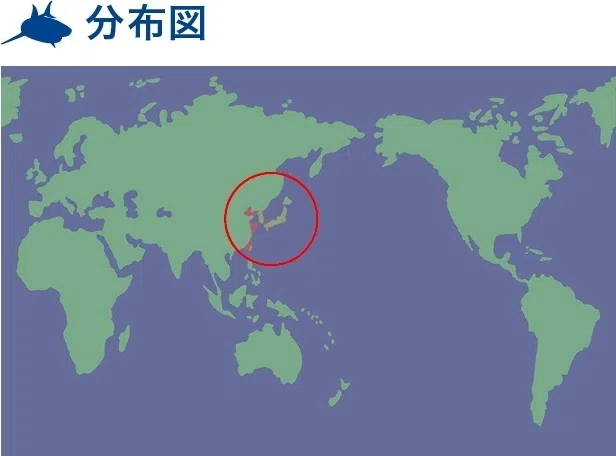
Bullhead Shark (Neko-zame)
The egg has a tough 'drill-like' shape
The bullhead shark (known as 'Neko-zame' or 'cat shark' in Japanese) gets its name because the area above its eyes is raised, making its head look like a cat's when viewed from the front. It is also known as the 'sazae-wari' (turban shell cracker) because its sturdy, molar-like teeth can crush hard shellfish. Its English name, 'bullhead,' refers to the shape of its head.
The body shape of the bullhead shark retains characteristics that are intermediate between primitive sharks and modern sharks.

A word from Mekabu
Despite its cute face, it has the incredible strength to crush hard shells with its jaw power. This shark, which has both a 'cat' name (in Japanese) and a 'bull' name (in English), is often found resting on the bottom of aquarium tanks.
Trivia
Its characteristic tooth shape is specialized for crushing hard objects.
■DATA
Order: Heterodontiformes, Family: Heterodontidae
Scientific name: Heterodontus japonicus
Total length: Up to about 1.2m
Diet: Shellfish, crustaceans such as shrimp and crabs, sea urchins, etc.
Reproduction: Oviparous (single-egg laying). Lays 2 eggs.
Brownbanded Bamboo Shark (Inu-zame)
Actually very popular as a pet!
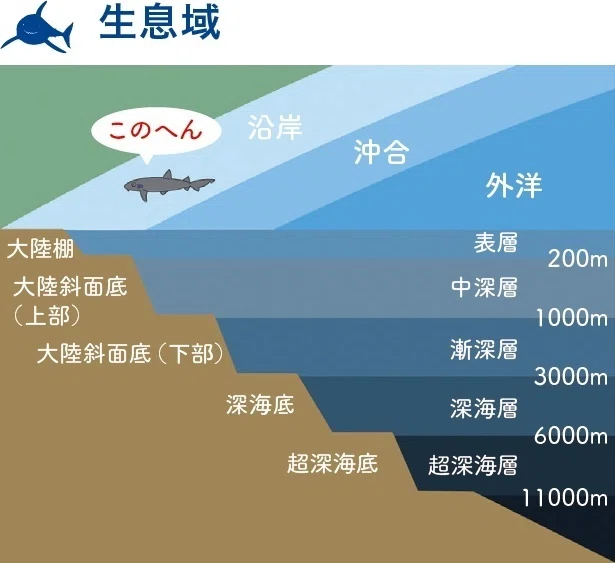
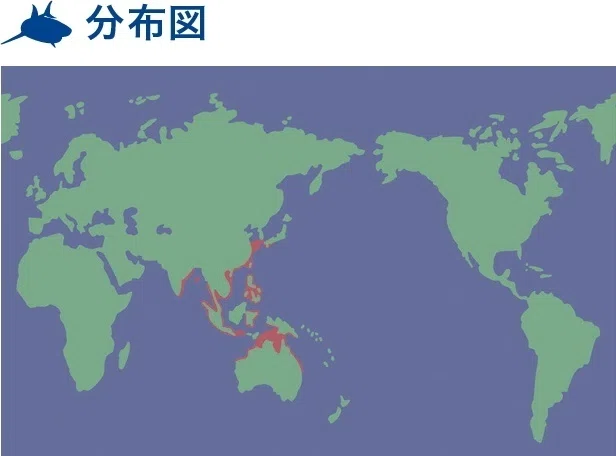
The name 'Inu-zame' (dog shark) is said to come from the fact that it moves by crawling along the ground rather than swimming, and uses its snout to probe for prey on the seabed, which resembles a dog. The juveniles have black and white stripes and look like sea snakes, but as they mature, the stripes gradually disappear and they turn a dark brown color.
During the day, they stay still in crevices in coral reefs or on the seabed, but they become active at night to search for prey.

A word from Mekabu
In large aquariums, they are often seen piled up with whitetip reef sharks or bullhead sharks, which is a very cute sight.
Trivia
There is a hypothesis that the striped pattern of the juveniles serves as mimicry to protect them by resembling highly venomous sea snakes.
■DATA
Order: Orectolobiformes, Family: Hemiscylliidae
Scientific name: Chiloscyllium punctatum
Total length: About 90cm to just under 1m
Diet: Bony fish, cephalopods, crustaceans, etc.
Reproduction: Oviparous. Lays 2 eggs.
[Shark Trivia] Fish that have 'shark' in their name but are 'not' sharks
Sharks and rays belong to a group called 'cartilaginous fish,' which have skeletons made of soft cartilage. In contrast, general fish belong to a group called 'bony fish,' which have skeletons made of hard bone.
Sharks have existed for over 400 million years, and to date, around 600 species have been identified, categorized into '9 orders, 37 families, and 106 genera' based on their characteristics.
Even today, about 5 to 10 new species of shark are identified each year, and the number of species is steadily increasing.
Occasionally, there are fish that have the name 'shark' but are 'not sharks.' For example, the following fish.
● Guitarfish
● Chimaera (Ghost shark)
● Remora
● Sturgeon
Guitarfish are classified as a type of ray. Rays and sharks can be distinguished by the position of their gill slits. Sharks have gill slits on the sides of their bodies, while rays have them on their undersides.
Chimaeras are classified as cartilaginous fish, just like sharks and rays, but sharks and rays are classified as 'elasmobranchs.' On the other hand, chimaeras are classified as 'holocephalans.'
Remoras are members of the jack family and are classified as bony fish, not cartilaginous fish.
Sturgeon are famous for their eggs, known as caviar. Caviar is sometimes called 'shark eggs,' but like remoras, sturgeon are classified as bony fish and are not members of the shark family. Sturgeon were named 'shark' because their body shape resembles a shark, but they are a type of ancient fish.
These fish have the word 'shark' in their names, but they are not sharks.

SB Creative Corp.
Contact: https://www.sbcr.jp/contact/
Company Profile: https://www.softbankcr.co.jp/ja/info/profile/
Author: Mekabu
Born in Osaka Prefecture. Graduated from the Graphic Design course at Nara College of Arts. Majored in design since high school and is currently a freelance illustrator. After stumbling upon an article about the 'extinct' Megalodon (a type of shark), she became interested in ancient sharks and fell in love with them. She has loved aquariums since she was a child and is the type of person who still stands in front of a shark tank without moving, watching them the whole time. She is also weak for shark goods and related items, often buying them on impulse. Her favorite shark is the sand tiger shark (because of its fierce look). In 2019, she was in charge of designing posters and flyers for the 'Shark Festival,' an event commemorating the 25th anniversary of the opening of the Sea and Living History Museum (Tottori Prefecture).
Supervisor: Sho Tanaka
Born in Kanagawa Prefecture in 1952. Graduated from the Department of Fisheries, School of Marine Science and Technology, Tokai University in 1975. Completed his doctoral program at the Graduate School of Agricultural and Life Sciences, The University of Tokyo in 1980. Began working in the Department of Fisheries at the same university that year, becoming a professor in 1994 and Dean of the Graduate School of Biological Sciences in 2014. From 1990 to 1991, he conducted behavioral research on marine animals as a visiting researcher at the Woods Hole Oceanographic Institution in the United States. He specializes in marine zoology and conservation ecology, particularly in the study of the ecology and life history of high-level predators such as sharks. Leveraging the advantages of the School of Marine Science and Technology, which faces Suruga Bay, he has made the study of deep-sea sharks his life's work, and has also conducted research on freshwater sharks and rays inhabiting tropical rivers in unexplored regions around the world. He is a member of the IUCN Shark Specialist Group, the Japanese Society of Fisheries Science, the Ichthyological Society of Japan, and the Japanese Society for Elasmobranch Studies. His books include 'Beautiful Predators: A Shark Guide' (Jitsugyo no Nihon Sha) and 'Chasing Deep-Sea Sharks' (Takarajimasha).