
Description of Quantum States via Wigner Functions

The July 2025 issue of Mathematical Sciences is a special feature titled "Development and Future of Quantum Physics" to commemorate the 100th anniversary of quantum mechanics. I have also contributed a short essay titled "Quantum Information, Energy, and the Arrow of Time: Perspectives on the Next 100 Years of Quantum Physics."

In Chapter 6, I discuss the relationship between quantum entanglement and the arrow of time, and I use the Wigner function to explain it. However, for those who are not familiar with the Wigner function, I would like to provide a supplementary explanation here.
First, in Chapter 6, I begin by touching upon the time-reversal symmetry of the Schrödinger equation shown below.

This equation is invariant under the following transformation.


By direct substitution, it can be confirmed that the transformed Schrödinger equation takes the same form as the original.

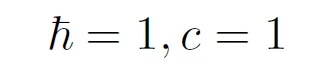
In the following, I will explain using natural units where the reduced Planck constant and the speed of light are set to 1.
For a state vector corresponding to a wave function, the density matrix is defined as follows.

If written in position coordinate representation, it becomes:

At time t=0, the time reversal is

Therefore, the density matrix after time reversal is

as follows.
Next, let us define the Wigner function, which has a one-to-one correspondence with this density matrix, as follows.

Using this function, the original density matrix can be

uniquely recovered, so quantum states can be described by either the density matrix or the Wigner function.
Time reversal can also be easily performed using the Wigner function. The Wigner function for the time-reversed density matrix is

given by the following. Since time reversal is a transpose transformation in the density matrix, expressing the time-reversed Wigner function in terms of the original density matrix yields

By replacing the integration variable u with -u' here, we obtain

This relationship is obtained. In other words, time reversal corresponds to keeping the position coordinates of the Wigner function's arguments as they are while flipping the sign of the momentum coordinates.
Incidentally, let us also introduce the relational expressions for quantum state tomography with respect to wave functions and density matrices. For details, please refer to Appendix A of "Physics of Quantum Information and Spacetime [2nd Edition]" (Saiensu-sha).

First, we experimentally measure the physical quantity written as a linear combination of the position operator and the momentum operator below.

Here, θ is a continuous parameter taking values from 0 to π. The positive constant l in the second term on the right-hand side can be any value as long as it has the dimension of length. For example, in the case of charged particles, as described in the article below, this physical quantity can be measured by applying a uniform magnetic field to the particles.
Once this θ is fixed and the physical quantity to be observed is determined, its probability density distribution is

given by the following. Using this relationship and the Wigner function, we get

the following relationship.

This relationship can be demonstrated. (For a detailed derivation, please refer to Appendix A of my book.)
And after some calculation,

The quantum state tomography relation is thus proven. By using this, it becomes possible to determine the wave function, which is an element of an infinite-dimensional complex vector space, by measuring this probability distribution P(θ,a) experimentally, up to an overall phase factor.
いいなと思ったら応援しよう!
 サポートありがとうございます。