
5月:草と戦わない草刈り Grass Cutting Without Fighting It

(English follows Japanese)
5月の外作業。
それはもう「草刈り」に尽きますよね、全国のみなさん。
今月は川沿いの作業は雨で中止になったので遊水池のみの作業でしたが、約1ヶ月ぶりに行ってみると、4月のふんわりとした春のエネルギーは何処へ。
ジャングルと化していた、、、💧
植物が教えてくれる土の状態
生えている草は、予想通りに真っ直ぐ生えるヒメジオンなどのキク科やイネ科植物がメイン。
「ヒメジオン」は「ヒメ」と言うラブリーな名前とは裏腹に、
「こんなハードなところ、とても生きられない、、、?
みんなが尻込みして出てこないなら、私が先陣切って出てくわよっ!」
とばかりに、乾燥して固くなっている土を突き破って強く真っ直ぐに出てきてくれる強く美しいお姫さま。


作った土留めが効いているかどうか
「土留めが効いているかどうか」も植物が教えてくれます。
小さなやわらかい草や実生が育っていれば、それは「土に安定性や保水力がある」と言うこと。
その視点で観察してみると、場所により
・「土留めの上も下もヒメジオンonly」で「あ〜、ぜんぜん効いてない、、、😢」と涙目になってしまうところ
・小さな植物の芽がちらほら出ているところ
・小さな植物がバラエティ豊かに育っているところ
など、いろいろ。
これは斜面の傾斜の角度や日当たり、近くに木があるかどうか(根の働きの助け)などの理由によるのかと想像します。


草と戦わない草刈り
草がどんどん伸びる時期の草刈りは、世間では「戦い」「バトル」と捉えられていて、ホームセンターに行くと「根こそぎ絶やす!」みたいなコワい除草剤がバーっと並んでいてドン引いてしまうのですが😰、この活動の基本的な考えとして大きな影響を受けている「大地の再生®」で知られる造園技師・矢野智徳氏が教えられている「風に倣う草刈り」は、地際で刈ったり根こそぎ抜き取るのではなく、
「風でしなる・揺れるポイントで高刈りする」。
そうすると「草が再生するときに、根から分岐がたくさん出て、地中には細根が発達し、地上の草もおとなしくなる」そう。
もう10年近く前に初めて「大地の再生®」の講座でこの話を聞いた時は、正直よく理解できず半信半疑でしたが、これまで「大地の再生®」講座や施工のオーガナイズのお手伝いなどをさせて頂いた敷地や自宅の敷地などでやってきて、
「これは本当だ」
と実感しています。
ひとことで言えば「その場や風景がやさしく落ち着く」感じ。
そして、
「子育てや人間関係と同じだな」
とも思う。
こちらが「排除しよう」とか「言うことを聞かせよう」と強い力をかけると、作用反作用で同じ力で反発される。
なので、
「相手にとって納得できるポイントでちょっと手を入れることによって、相手が自然に最適解を見つけてくれる道筋をつける」
ような感じなのかなと。
風の通り道をつくる
そして広い場所では全面的に刈るのではなく、獣道のような蛇行の曲線を描いて風の通り道を作り、その場に立体感を残す。
私の説明よりも「大地の再生®」マニュアル本も出されたイラストレーターの大内正伸さんが雑誌「現代農業」に書かれた説明とイラストがわかりやすいのでリンクを貼っておきます。
草マルチ
そして、刈った草はその場に置いて、少し踏んで草マルチにすることで、
「土がむき出しになることを防いで土の乾燥・硬化を防ぎ、微生物が分解するために集まることによって土壌も豊かにしてくれる」
のだそうです。
斜面地の上から下にかけてゆるいカーブで草を刈り、獣道のような風の通り道をつくり、刈った草を地面に置いたところ、数分後にかわいいニャンコちゃんが草のクッションの上にちょこんと座って「なんか、見通しよくなってるね」とばかりに、そしてあくびしながら気持ちよさそうに辺りを見回していました🐈

地域内資源循環
ただ「葛」のような強い蔓は土に置いてもなかなか分解されず、人の導線上では足に引っかかるため、どう処分するか悩むところ。
大きなコンポストを作って時間をかけて自然に分解させる土地もなく、かと言って「ゴミとして出して化石燃料使って燃やすこともしたくない」と考えていて、ひらめいた💡「ヤギが食べてくれるかも!?」
ヤギを飼っている知り合いの有機農家さんに聞いてみたところ、
「葛はヤギのタマちゃんの大好物! もらえたら助かる!」
とのことで、トラックいっぱい持って行ってもらいました🐐
今日のタマちゃんのごはんになったことでしょう。
(それにしても、こんな固い蔓を咀嚼・消化できるヤギさんたち、すごい。どれだけ胃液が強いのか、、、)


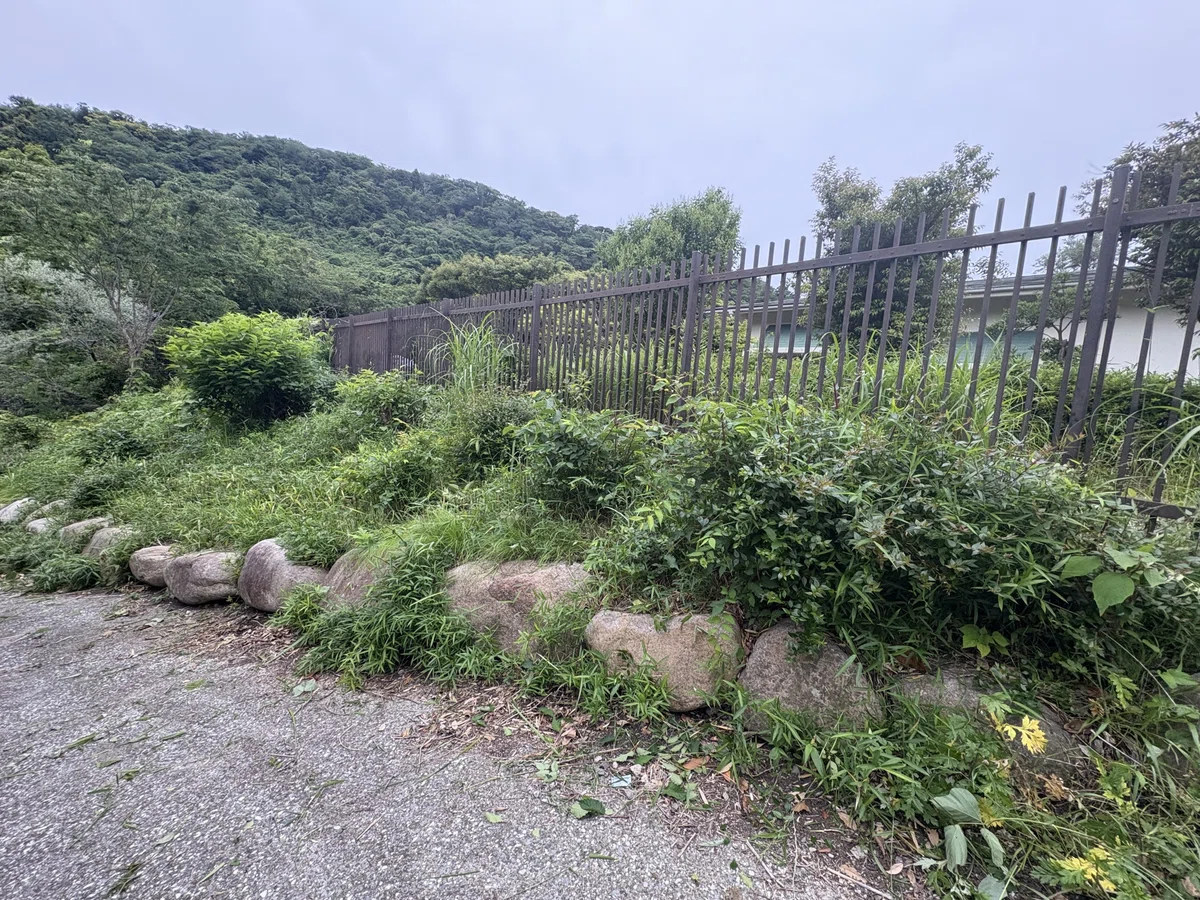
池の中、奥のエリア、反対側斜面は、まだまだ手付かず。
先は長い、、、、💧
6月の作業予定
これからの梅雨〜台風シーズンは天候により中止になる日が多く、猛暑のシーズンは早朝しか作業できないため、新規の参加者の募集はお休みさせて頂きますが、活動にご興味を持って頂ける方は下記へメールでご連絡をお願いします。
email: chottojapan@icloud.com
SNS: Bluesky
(テキスト:三木真理子/ 水の環つなぎchotto 代表)
Outdoor Work in May: It’s All About Cutting grass
When it comes to outdoor work in May, it really just comes down to one thing—mowing or cutting grass…
This month, our work along the riverside was canceled due to rain, so we only worked at Shonan Village Reservoir.
But when we visited for the first time in about a month, we found that the soft spring energy of April had completely vanished, and it had turned into a jungle... 💧
The Plants Reveal the State of the Soil
As expected, most of the plants growing there were upright species from the aster and grass families, like Erigeron annuus (daisy fleabane).
Despite the sweet-sounding Japanese name "Hime-jion" ("hime" meaning "princess" in Japanese), this plant boldly pushes up through dry, compacted soil as if saying, "This is no place for the weak, huh? If no one else dares to come out, I’ll take the lead!"
She is a strong and beautiful princess.
It’s said that the shape of a plant above ground mirrors the shape of its roots underground—so you can imagine the roots drilling straight down through the hard soil.
Plants also tell us whether "Shigara-do-dome" (retaining fence made with organic materials) we made are working or not.
If you see small, soft grasses or seedlings taking root, it means the soil is stable and has good water retention. Observing from this perspective, we noticed various conditions:
Some areas had only Hime-jion (Erigeron annuus) growing both above and below the retaining fence —“Ah… it’s not working at all…” 😢
Some spots had tiny new sprouts popping up
Others were full of a diverse variety of small plants
Not a Battle Way to Cut Grass
This time of year, when grass grows rapidly, cutting grass is often treated as a "battle."
At gardening stores, you see rows of terrifying herbicides with slogans like “Wipe it all out!” 😰 …..
However, the core idea of our activity has been deeply influenced by landscape architect Tomonori Yano, known for his work on 'Daichi no Saisei® (Regeneration of the Earth)'.
One of his key teachings is “Cut or trim grass as wind does”—instead of cutting at the base or ripping plants out by the roots, you cut high, at the natural sway point of the stems.
When grass regenerates after being cut this way, it branches out more from the roots, and finer roots develop underground.
When I first heard about this method at a 'Daichi no Saisei® (Regeneration of the Earth)' workshop nearly 10 years ago, I didn’t fully understand it—I was skeptical.
But after attending more workshops, organizing and helping with workshops and projects at various locations, including my own property, I’ve come to realize: It really works.
If I were to sum it up in one phrase:
“The place and the landscape begin to feel calm and gentle.”
And it also made me think: It’s just like parenting or human relationships.
When you try to force someone to change or suppress them, they push back with equal force—action and reaction.
Instead, if you step in gently at a point where the other side can agree, they’ll naturally find their own best path forward.
Creating Paths for the Wind
In wide-open areas, rather than cutting or mowing everything down flat, we create winding, meandering paths—like animal trails—to allow wind to flow through and give the area a sense of three-dimensional depth which bring the flow of wind then it will regenerate both above and underground conditions.
Illustrator Masanobu Ouchi, who wrote the manual book for 'Daichi no Saisei®', explained this beautifully with illustrations in the Japanese magazine 'Gendai Nogyo (Modern Agriculture)'.
He describes how factors like the slope, sun exposure, and nearby trees (which support root function) affect how these techniques should be applied. I’ve included a link below for reference. (It's in Japanese but you might get the text translated to your language or at least looking at the illustrations might help)
https://gn.nbkbooks.com/?p=20842
After cutting in gentle curves from the top to the bottom of a slope and leaving the cut grass on the ground, a few minutes later a cute kitty came and sat right on the soft grass cushion, looking around as if to say, “Hey, it’s more open now and I can feel gentle breeze” 🐈.
Leaving the cut grass in place and lightly stepping on it creates a grass mulch, which prevents the soil from being exposed and attracts microorganisms that help enrich the soil.
Local Resource Circulation: The Kudzu Dilemma
However, strong vines like kudzu don’t break down easily when left on the soil and can trip people walking nearby. This raises a disposal challenge.
We don’t have the land to build a large composting site for long-term decomposition, and we don’t want to burn it using fossil fuels either.
Then a good idea came to me 💡— Goats 🐐!
I asked an organic farmer I know who keeps a goat whose name is Tama-chan, and the farmer said, “Kudzu is Tama-chan's favorite! So I'd love to take it!”
Then he came to get a pile of kudzu for Tama-chan 🐐
June Work Plans
With the rainy season and typhoon season approaching, many days may be canceled due to weather in the next few months.
And during the intense summer heat, we can only work early in the morning—
So we’re pausing recruitment of new participants for now until fall.
However, if you’re interested in our activity, feel free to send us an email at the address below.
email: chottojapan@icloud.com
Social media: https://bsky.app/profile/chotto-river-ocean.bsky.social
(Text: Mariko Miki, organizer)
#草刈り #風の草刈り #草マルチ #大地の再生 #矢野智徳 #大内正伸 #現代農業 #しがら土留め #獣道 #葛 #地域内資源循環 #湘南国際村 #遊水池 #横須賀市 #三浦半島 #相模湾 #関根川 #環境再生 #流域再生 #海中再生 #水の循環 #水のつながり #水の環つなぎ #chotto #CutGrassLikeWindDoes #DaichinoSaisei #RegenerationoftheEarth #TomonoriYano #MasanobuOuchi #GendaiNougyo #kudzu #ShonanVillage #reservoir #Yokosuka #MiuraPeninsula #SagamiBay #Regeneration #watershed #NaturalWaterCycle #EcologicalConnectivity