
The Day the 'Physical AI Market' Born in Japan Began with FANUC x NVIDIA

Why did the stock price move so much?
The moment FANUC announced its collaboration with NVIDIA, its stock price surged, and a group of stocks known as "Physical AI-related" also rose due to association.
The official explanation is very simple.
“Partnering with NVIDIA to turn robots into Physical AI. That's why it went up”
Of course, this is a fact. However, behind the reason why the stock price reacted so strongly, there are several deeper stories, such as:
The "Physical World OS Strategy" from NVIDIA's perspective
The "Reincarnation from a Closed Company" from FANUC's perspective
Supply and demand factors in the battle for AI theme positioning in Japanese stocks
In this article, I will organize and summarize:
1. What happened (organizing the facts)
1. What happened (organizing the facts)
2. The positive story being told publicly
3. Deep analysis from NVIDIA's and FANUC's perspectives
4. Behind-the-scenes analysis as a theme supply and demand for Japanese stocks
5. What investors should be looking at
I will organize and summarize these points.
What happened with this announcement?
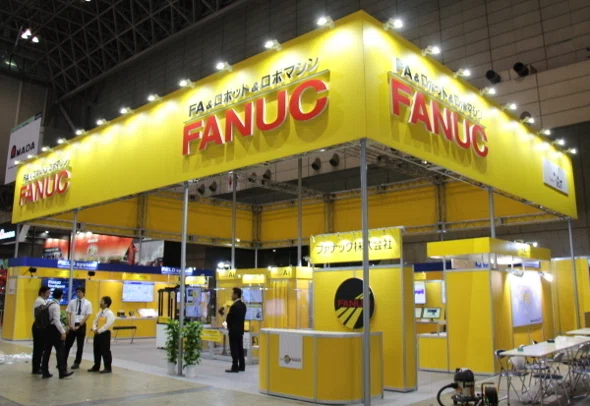
First, let's put emotions aside and briefly organize the "facts".
FANUC has roughly announced the following this time:
-
Full-scale adoption of NVIDIA hardware and software
Adopting "Jetson" as the brain for robots
Utilizing "Isaac Sim" and "Omniverse" as a digital twin/simulation foundation
-
Implementation concept for Physical AI
Evolving robots into entities that can see, understand, judge, and act independently
-
A major shift in software and development environments
Providing ROS 2 drivers for the entire robot lineup
Supporting Python to lower the barrier for AI and vision development
Announcing a policy to release source code on GitHub
Following this announcement,
FANUC stock rose significantly in the short term
It became the spark for a Japanese version of the Physical AI thematic market, as speculative buying spread to stocks categorized as 'Physical AI-related,' including industrial robots, FA (factory automation), and sensors.The spark for a Japanese version of the Physical AI thematic market.
Surface story: A straightforward positive interpretation

Next, I will organize a positive story at a level that 'anyone could think of'.
Robot brains become significantly smarter all at once
By loading Jetson + NVIDIA AI models onto robots,
we are getting closer to a world where robots recognize their surroundings and move flexibly according to the situation.It will also become easier to handle high-mix, low-volume production and line changes through software updates on the robot side.
As a result, it is easier for adopting companies to increase their return on investment (ROI).
Digital twins will make 'virtual factory to production' the standard workflow
-
With the combination of Omniverse and Isaac Sim,
first building a factory line in a virtual space (digital twin)
and then reflecting it onto the actual factory line
becomes a more realistic workflow.
-
This makes it possible to
increase the unit price of the robots themselves
and also envision arecurring revenue model
based onmore growth-oriented revenue structuresthrough software and optimization services.
Physical AI as a 'Safe Haven' from Labor Shortages and Wage Hike Pressures
Japan is facing structural labor shortages and pressure to raise wages.
An environment is being created where the idea that 'it is better to automate with AI robots than to increase headcount' is easily accepted by both society and companies.
As a solution to this, Physical AI x Industrial Robots is a very clear theme.
This is the 'official story' often told in news and commentary articles.
Deep Dive 1: NVIDIA's Perspective - Aiming to Become the 'OS for the Physical World'

When looking at this collaboration from the perspective of NVIDIA's long-term strategy, a different picture emerges.
NVIDIA has already
established a position in the data center/generative AI field similar to an
'OS for the information space' through 'GPU + CUDA + AI framework'.-
As the next target,
Omniverse (a foundation for 3D virtual spaces)
through tools for robotics such as Isaac
it is attempting to become the 'OS for the physical world (real space)'
has created a trend.
Looking at the Japanese market here,
an industrial robot manufacturer with a global market share
deeply embedded in the factories of Japanese automotive, electronics, and machinery manufacturers
a name that comes to mind first when thinking of robots
FANUC is the one that meets all these conditions.
From NVIDIA's perspective,
'Following cloud and generative AI, we want to put factories and robots entirely onto the NVIDIA stack next. We went after FANUC as the 'gateway' on the Japanese side.'
This is the composition.
In other words,
Cloud/Data Center: Already an NVIDIA kingdom
Next Frontier: Automation of factories, robots, and real space
Selected FANUC as its Japanese gateway
is the 'long-term significance' of this partnership.
Deep Reading 2: FANUC's perspective 'Reincarnation from closed to open'

On the other hand, the change in FANUC's stance is also a very significant point.
Until now, FANUC has had:
Controllers and software that were intensely closed
Development environments with a strong unique character, creating high barriers to entry for external engineers
A long-established manufacturer that makes money through 'lock-in + stability'
was the image I had.
However, this time, they are making a sudden change in direction.
Providing ROS 2 drivers for the entire lineup
Putting control and development in Python at the forefront
Releasing source code on GitHub
This is at a level that can almost be called an open platform declaration.
Behind this, it is believed that there is at least the following awareness.
A sense of crisis regarding Chinese companies and emerging robot firms
Centered in China, robot companies armed with NVIDIA + open software stacks are emerging.
-
If they remain closed,
robot developers around the world
startups
might end up outside the center of the ecosystem where they gather.
From 'FANUC Village' to the global community
Until now, collaborations with domestic AI ventures also had a strong impression of being closed within the 'FANUC World'.
-
This time,
by adopting the global standard stack of NVIDIA
and globally common development tools like ROS 2, Python, and GitHub,
it can be said that they have steered toward opening their doors to engineers around the world.
Wanting to raise the status of their valuation
Not wanting to end up as just a 'company of steel and motors',
they want to be evaluated as a 'robot platform company equipped with the NVIDIA stack'.
If that happens, it will become easier for AI premiums to be applied to their P/E and P/S ratios.
With this collaboration, FANUC is
From a closed-off veteran to a pillar of the NVIDIA camp's open platform
This can be interpreted as a major shift in their own positioning.
Deep Insight 3: The initial movement of the 'Physical AI market' as a theme-based demand for Japanese stocks

The structure of the Japanese stock market is also significantly amplifying this movement.
In Japan, there are almost no 'AI pure-play mega-cap stocks' like NVIDIA
-
Instead, there are
companies on the side of utilizing AI
and companies on the side of increasing productivity with AI
in abundance.
-
Into that environment,
'a solid partnership with NVIDIA'
the new buzzword 'Physical AI'
and the easy-to-understand narrative of 'robots'
were brought to the table by FANUC.
With these three elements in place, it is a natural progression for them to be instantly upgraded to the 'center of the Japanese AI theme'.
As a result,
Institutional investors
→ It is easy for the movement to become 'If you are going to buy AI x Manufacturing in Japan, start with FANUC'Individual investors
→ A straightforward association works, such as 'Robots teaming up with NVIDIA must be the real deal for the AI market'
The result of this overlap of 'theme buying and association games' is this current explosive rise.
To express the sense of the cycle quite roughly,
The 'real demand cycle' of Physical AI
→ Still atthe entrance of (2) recovery to (3) expansionIn contrast, the 'valuation cycle' as a stock market theme
→ Alreadyhas one foot in (3) expansion to (4) overheating
It can be said that this is a phase where a gap between real demand and valuation is beginning to emerge.
What is 'already priced in' and what will be 'tested from here on'?

From here, I will break down the 'degree of pricing in' with a slightly calmer perspective.
Things that are already quite priced in
The label of 'the real deal for Physical AI from Japan'
Technical sense of security and expectations from adopting the NVIDIA stack
The narrative of robot demand as a solution to labor shortages and wage hike pressures
These can be seen as parts that were almost entirely priced into the stock price along with the recent news.
Areas that will be tested from here on (things not yet fully factored in)
This is actually what is important.
1. Actual number of projects and impact on earnings
It inevitably takes several years to go through the steps of
PoC (proof of concept)
→ part of a line
→ entire factory
→ multi-factory deployment.-
In that process,
'ROI is not as high as expected'
'Lack of SIer personnel, preventing faster implementation'
—such 'on-site bottlenecks' will also emerge.
In other words, full-scale contribution to sales and profits is still close to the narrative stage and is in a phase that will be verified from here on.
2. 'Developer popularity' as an open platform
The configuration of ROS 2 + Python + GitHub itself is familiar to robot developers around the world.
-
However,
how many engineers will actually choose 'for FANUC robots'
and whether the activity on GitHub and the excitement of the community will be sustained
depends on future support systems and ecosystem building.
This is a part that will be gradually evaluated over a 2-3 year span.
3. Moves by competitors and other companies
Chinese players and emerging robot companies will also attack using various AI stacks, including NVIDIA, as weapons.
It is highly likely that other robot and FA manufacturers in Japan will also put forward similar 'AI x Robot' concepts.
-
As that happens,
the premium of 'FANUC being special' will fade.
Even if the theme as a whole grows, the evaluation of individual company advantages will become more severe.
It would be wise to anticipate such a development.
Practical Watch Points to Keep in Mind from an Investor's Perspective

Finally, rather than individual trading decisions, I will organize a framework of thinking and checkpoints.
Be Aware of Typical Price Movement Patterns for Thematic Stocks
There are common patterns for thematic stocks with strong narratives.
-
Sudden surge immediately after news
A phase where it spreads all at once through press releases, breaking news, and social media.
-
Two-stage rise over several weeks to months
A phase where late-arriving capital jumps in after 'waiting for a dip,' and reports and commentary articles increase, leading to follow-up buying.
-
Subsequent sideways to gradual decline phase
As it takes time for results to appear, short-term capital exits.
The atmosphere becomes, 'When will it actually show up in the numbers?'
Regarding FANUC this time as well, my impression is that it has just entered the space between recovery and the beginning of expansion.
Quantitative and Qualitative Indicators to Watch
Key points to watch on the FANUC side
Trends in order backlogs and robot shipment volumes
-
Within the financial results presentation materials,
how concretely 'Physical AI' and 'collaboration with NVIDIA'
begin to be discussed in terms of the number of projects and revenue scale
Key points to watch on the NVIDIA side
Frequency of updates for Isaac, Omniverse, and Physical AI-related products
Whether customer use cases for the manufacturing industry are expanding
from 'one-off projects' to 'entire factories' and 'multi-site deployments'
Key points to watch in peripheral sectors
-
Beyond just the robots themselves,
3D vision cameras and various sensors,
servo motors and speed reducers,
edge GPU servers for factories,
and system integrators (SIers),
how capital is flowing to parts and service companies that are easy to integrate with the NVIDIA stack.
By tracking these as a set,
whether the theme is running ahead of itself
whether growth on the actual demand side is catching up to the valuation
it becomes easier to judge.
Summary: The story has just begun; this is where the real testing period starts.
To reiterate, to summarize this FANUC x NVIDIA collaboration in one phrase,
-
This is not merely a case of 'putting GPUs into robots,' but rather
an 'entry point for transforming Japanese manufacturing into Physical AI'
and a 'Japanese gateway for NVIDIA to capture the OS of the physical world,'
making this a partnership with significant implications.
-
On the other hand, regarding stock prices,
the actual demand cycle is still at thebeginning of (2) recovery to (3) expansion,
whereas the valuation cycle is in a state that hasstepped into (3) expansion to (4) overheating,leading to quite story-driven movements.
-
For the next few years,
we will enter a true testing period where it will be questioned
how far actual projects, sales, and the ecosystem will expand,
and how FANUC will maintain its competitive advantage amidst the battle for position with rivals.
Physical AI has only just opened its 'prologue'.
The sense of overheating as a theme
The growth speed as actual demand
Discerning this gap will be where investors show their true skill moving forward.
