
The Surgery That Changed Humanity (Part 1) | The Birth and Spread of Lobotomy

Do you remember the final scene of the movie "One Flew Over the Cuckoo's Nest"? McMurphy, the man admitted to the hospital as a troublemaker, was a symbol of rebellion.

However, his head is eventually wrapped in bandages, his eyes become vacant, and he loses his ability to speak. This was not a metaphor. In the middle of the twentieth century, the same thing was actually happening in hospitals all over the world.
There is a surgery called "lobotomy."
It was a surgical procedure performed under the pretext of cutting into the human frontal lobe to "calm" the workings of the mind. Countless people lay on operating tables for the purpose of suppressing hallucinations, depression, and violent impulses.
Doctors called it a "miracle cure," and the mass media praised it as the "dawn of the age of the mind."
However, the patients who became quiet also stopped laughing, stopped getting angry, and stopped loving.
In the 1930s, a time when neither drug therapy nor psychotherapy existed, mental illness was an "incurable disease." Isolation, restraint, and electroshock were the entirety of treatment.
Amidst such despair, the idea of "curing by cutting the brain" was born. The surgery performed for the first time in the world by Portuguese neurologist Egas Moniz was the lobotomy.
He named this a "leucotomy" and attempted to alleviate the patient's suffering by severing the brain circuits that caused abnormal behavior.
The first surgery was reported as a success. It was recorded that the patient regained composure and even returned to society. The world applauded. In 1949, Moniz received the Nobel Prize in Physiology or Medicine,
and newspapers reported that "humanity has finally conquered mental illness." At that moment of glory, the warning for the future reached no one's ears.
After that, the personalities of countless people were lost. In exchange for becoming calm, their emotions and willpower also vanished. The girls, soldiers, housewives, and intellectually disabled people who underwent the surgery. Many of them spent the rest of their lives in hospital beds.
Doctors recorded "successes," and society remained silent.
Lobotomy was human modification performed in the name of science. It is the most vivid and saddest record of an era where good intentions and madness intersected.
And what "One Flew Over the Cuckoo's Nest" left behind was not fiction, but this dark memory of humanity that actually occurred.
▽ Recommended note
▼ Stanley Kubrick 4-Film Collection
A collection of masterpieces by the legendary Stanley Kubrick! The 4-film collection is now available as a 4K Ultra HD & Blu-ray set, complete with a deluxe paper premium!

▼ Orb: On the Movements of the Earth Deluxe Edition
A deluxe set of all 8 volumes of "Orb: On the Movements of the Earth," which has won numerous awards including the Grand Prize at the 26th Tezuka Osamu Cultural Prize and is generating buzz for its anime adaptation scheduled to begin airing in October 2024!

▼ Edward Hopper Collection
An art book containing nearly 100 works by the master of American art, Edward Hopper. To assist in appreciation, an up-and-coming author who studies American visual culture breathes fresh perspective into Hopper, who is often discussed from the viewpoints of "alienation" and "loneliness."

Chapter 1: The Prison Known as the Mental Hospital

In the early 20th century, mental hospitals in Europe and America were not "places of treatment." They were detention centers for those abandoned by society.
Violence, confusion, autism, hallucinations. Some screamed for no reason, while others stared silently at the walls. Nurses chained patients up, and the nights passed within ward-like cages.
The concept that mental illness could be "cured" did not even exist, and doctors had no choice but to observe and suppress in despair.
In that era, psychiatry was a newly born discipline.
Mental illness was called a "disease of the soul," and its causes were considered to be spiritual, moral, or genetic "defects."
Entering the 20th century, Freud proposed the world of the unconscious and attempted to verbalize the "mechanisms of the mind," but what the doctors on the front lines needed was not theory, but "immediate treatment." If it couldn't be cured with words, the only option was to physically change the brain. Such an atmosphere was emerging.
In America, the "mental hygiene movement" spread, and many people were institutionalized.
The targets included soldiers returning from war, those unable to adapt to labor, and those who were difficult to handle within the family. Patients increased rapidly, doctors were in short supply, and the state chose "management." The outer walls of the hospitals were high, and inside, violence between patients and infectious diseases were constant. Restraints, cold water baths, and electroconvulsive therapy were all called "treatment."
Amidst this, doctors faced an incomprehensible phenomenon. There were reports that patients whose personalities had collapsed somehow calmed down due to brain damage.
Examples of soldiers who suffered head injuries becoming calm. Examples of violence subsiding after surgery for epileptic seizures. They took these observations as "hints for treatment." Could mental abnormality be a problem with some "circuit" in the brain?
If so, couldn't the mind be stabilized by severing that circuit?
That idea, while appearing like madness, was logical to the scientists of the time. Electricity, physiology, and neuroscience were advancing rapidly, and the idea that "the brain equals the mind" was spreading.
Viewing mental illness not as a "moral problem" but as a "biological phenomenon" was itself a revolutionary perspective. The problem was that this "revolution" was rushed far too much.
In the name of science, doctors justified "tinkering with the structure of the brain." To remove suffering, they cut away a part of the mind. The boundary between treatment and destruction eventually became indistinguishable to anyone.
Eventually, a neurologist appeared in Lisbon, the capital of Portugal. His name was Egas Moniz.
He was the first person to put the idea of physically altering the human mind into practice as an actual surgical procedure.
Chapter 2 Moniz's Concept: The Idea of Physically Altering the Mind

In the 1930s, in Lisbon, the capital of Portugal. In a room at a university hospital, Egas Moniz stood before a brain diagram. He was a neurologist and also a politician.

After World War I, Europe was filled with soldiers suffering from what was called war neurosis, and doctors had no way to cure their "wounds of the mind." Moniz was also one of those who felt a sense of helplessness in the face of mental illness. What he believed in was the conviction that the human spirit resides in the physiological mechanisms of the brain.
In the brain science of that time, it was thought that the frontal lobe was deeply involved in "personality," "decision-making," and "social behavior." He hypothesized that the cause of the illness lay hidden there.
In other words, the white matter of the frontal lobe, the bundles of nerve fibers, were overstimulating emotions and thoughts, causing abnormal behavior. If that circuit were severed, he believed, the runaway excess of emotions could be suppressed.
Moniz, along with his assistant Pedro Almeida Lima, began experiments using dogs and monkeys. They severed the fibers connecting the frontal lobe of the brain to the hypothalamus and observed behavioral changes.

As a result, some individuals showed reduced aggression and became calmer. Moniz felt that moment was a "breakthrough." In 1935, he finally decided to apply it to humans.
The first patient was a woman diagnosed with schizophrenia.
Plagued by hallucinations and repeated violent seizures, Moniz drilled two small holes in the patient's skull and injected alcohol to burn the nerve fibers of the frontal lobe. The surgery was completed in a few tens of minutes, and it is reported that a few days later, the patient regained her composure. Moniz named this surgery "leucotomy" and announced it to the world.

At the time, there was almost no light in psychiatric medicine. That is precisely why the report attracted explosive attention. Newspapers reported it as a "miracle surgery to cure madness," and doctors rushed to imitate the paper. Within a few months, similar surgeries were attempted in Italy, France, and the UK, and Moniz suddenly became a "hero of the era."
However, his theory was never scientifically verified. While some patients who underwent the surgery became calmer, many lost their emotions and suffered a significant decline in cognitive ability.
Losing the ability to speak, no longer laughing, just sitting quietly. Such "improvements" were considered a success.
Moniz still insisted on the legitimacy of the surgery. What was important to him was "stopping the violence and giving peace of mind to the family." He argued that personality changes were merely side effects and a small price to pay.
In 1949, he was awarded the Nobel Prize in Physiology or Medicine. The reason for the award was "the discovery of the therapeutic value of leucotomy in certain psychoses."
It is said that Moniz spoke as follows on the podium.
“We have unlocked the prison of the mind.”
However, a neurosurgeon who heard those words whispered, “He broke the prison, but he killed the prisoners.”
Moniz's theory would eventually spread across the world. In America in particular, one man transformed this surgery into a “mass-produced” procedure.
Walter Freeman—the moment his name appears, lobotomy ceases to be medicine and transforms into a social phenomenon.
Chapter 3: Glory and the Nobel Prize
December 10, 1949, Stockholm. An old man appeared in a wheelchair at the Nobel Prize ceremony venue, where winter light streamed in. Egas Moniz, then 74 years old. Although he was already paralyzed on one side due to the effects of his own surgery, he accepted the medal on stage with a gentle smile.

The reason for the award was the “discovery of the therapeutic value of leucotomy in certain psychoses.” The world applauded, and newspapers praised him as “the surgeon who saved the human mind.”
The news shocked not only the medical community but society at large. The news that mental illness could be “cured by surgery” captured the hopes of families. Reports arrived one after another that a son who had been violent for years, a husband who had constantly berated his wife, or a soldier who had returned from war with a broken mind had become “calm.” Families wept, and hospitals were filled with people waiting in line. Moniz became a hero to the world.
However, this “success” was not science, but an illusion created by the desires of society.
Moniz's clinical data had fatal flaws. The “70% improvement rate” figure after surgery was based on short-term observation and subjective evaluation, and almost no long-term follow-up studies were conducted.
Furthermore, the mortality rate was several times higher than the figures initially published, and there were cases where patients developed severe cognitive impairment or epilepsy after the surgery. Yet, the medical community of the time dismissed these as “side effects.” Above all, those who criticized Moniz's theory were silenced as “conservatives hindering progress.”
It is said that there was also a political background to the Nobel Committee's selection. In the atmosphere of the era after World War II, where the goal was to rebuild humanity through the power of science, lobotomy was treated as a “symbol of science overcoming human suffering.” The world of psychiatry was shrouded in darkness. That is precisely why they wanted to see any light at all.
However, within a few years of the award, that light began to cast an eerie shadow. The number of surgeries surged in various countries, and it began to be applied even to minors and patients with mild depression.
In some cases, consent was obtained solely based on the “wishes of the family.” To suppress violence, to make a personality gentler. It was no longer treatment, but had transformed into a means of creating “socially manageable humans.”
Even so, Moniz himself defended the surgery until the end. He said, “It is not a perfect method, but it is better than leaving mental illness untreated.” For him, “practical results” were more important than the ethical horror of cutting into the human mind. His logic was cold and bordered on a kind of faith.
Eventually, a figure would emerge to carry on that faith.

American neurologist Walter Freeman. He expanded Moniz's theory into a “treatment for everyone,” simplified the surgery, and performed it on thousands of people. His methods were closer to an industry than to medicine.
The legitimacy granted by the authority of the Nobel Prize. No one knew what a tragedy that would later cause.
When Freeman took the stage, lobotomy changed from "science" to "faith."
Chapter 4 Walter Freeman: The Day America Went Mad
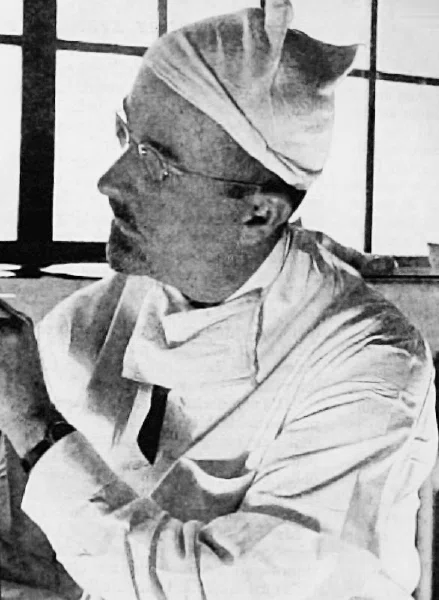
In the 1940s, America became the second home of the lobotomy. The country was vast, and the number of psychiatric patients was staggering. State hospitals were housing hundreds of thousands of people, doctors were in short supply, and treatments had reached a dead end.
It was in this chaos that neurologist Walter Freeman appeared. He was one of those shocked by Moniz's paper, and at the same time, he was a man who thought to spread that theory "more easily" and to "more people."
Freeman was not a surgeon. He was a neurologist, and the actual surgery was performed by his colleague, James Watts. But his charisma and flair for performance were extraordinarily strong. He wore his white coat well in front of television cameras and exaggerated the "dramatic effects" of the lobotomy.
Eventually, he would change the surgical method itself.
He skipped the cumbersome procedure of opening the skull, inserted an ice pick-like instrument through the eye socket above the eye, and severed the nerves of the frontal lobe. This was the so-called "ice-pick lobotomy."

This method was unbelievably simple and was completed in about 10 minutes. Sometimes, anesthesia was not even necessary. The patient would temporarily lose consciousness from an electric shock, and the instrument would be inserted during that time. The sound was dull, and it is said that a small "crack" of bone breaking echoed through the hospital room.
Freeman called this surgery a "lunch-break treatment" and toured hospitals across the United States, performing demonstrations.
His beloved Cadillac was nicknamed the "Lobotomy Van." Instruments were lined up in the passenger seat, and a full set of surgical tools was packed in the trunk. Freeman traveled thousands of kilometers, performing one surgery after another at local hospitals.
It is estimated that more than 40,000 people in the United States alone underwent a lobotomy in the few years between 1949 and 1953. The patients included not only those with schizophrenia and manic depression, but also rebellious housewives, problem children, and veterans. The targets of the surgery expanded to include "difficult people."
Freeman was treated like a rock star in the medical world. He graced the covers of magazines, appeared on television, and received support from government officials.
His philosophy was simple at first glance: "Treatment to return society to normal."
But in reality, it was nothing more than an act of eliminating different personalities and creating obedient humans. After the surgery, patients became calm, and violence disappeared. But at the same time, their smiles also disappeared. Their intelligence and individuality were stripped away, and the contours of their humanity dissolved.

The most symbolic victim was Rosemary Kennedy. She was the sister of U.S. President John F. Kennedy. She was diagnosed with emotional instability and underwent Freeman's surgery with the consent of her family.
But after the surgery, she lost her ability to speak, could no longer walk, and spent the rest of her life in an institution. The Kennedy family did not make this fact public for a long time, but this incident later became a turning point in public opinion regarding lobotomy.
Even after receiving criticism, Freeman continued to perform the surgery. Instead, he took the criticism as a "misunderstood belief" and considered himself an "misunderstood genius." By the 1950s, the total number of his surgeries had exceeded 3,500.
There is a record that one day, during a demonstration, he drove the instrument in too deeply and the patient died on the spot. But Freeman was unfazed. He said, "Sacrifice is the price of progress."
This chain of madness would also come to an end.

In 1954, chlorpromazine, the world's first antipsychotic drug, appeared. The moment symptoms could be controlled with medication, lobotomy lost its reason for existence.
Freeman's reputation plummeted rapidly, and he was expelled from hospitals. Although he continued to justify his treatment until his later years, American society had already begun to forget him.
"Madness to cure madness"—that was the life of Walter Freeman.
When science runs wild, human dignity is sacrificed all too easily. And as symbolized by the film "One Flew Over the Cuckoo's Nest," those scars remained forever in the cultural memory.
Chapter 5: The Memory Left Behind by "One Flew Over the Cuckoo's Nest"

In 1975, the American film "One Flew Over the Cuckoo's Nest" was released. The original work is a novel of the same name written by author Ken Kesey based on his experience working in a psychiatric hospital.
The director was Miloš Forman, and the lead actor was Jack Nicholson. The story depicts McMurphy, a man sent to a psychiatric hospital instead of prison, as he continues to rebel against the closed order.

Toward the end of the story, McMurphy receives a lobotomy as punishment for disrupting the rules. After the surgery, he loses focus in his eyes, cannot speak, and becomes a being who just sits in a chair. The film kept that image on screen for a long time. In that moment of silence, the audience saw the instant when human dignity is stolen.
This work depicted lobotomy not merely as a medical procedure, but as a symbol of control. Within the small society of the hospital, the administrators erase individuality in the name of "order" and force obedience. The pinnacle of this treatment was the lobotomy. Patients stripped of emotion and rebellion are transformed into "safe beings."
This composition was the very anxiety that postwar America held. The Vietnam War, the Cold War, a surveillance society. While advocating for freedom, society sought to align individuals into obedience. Lobotomy was the act that most cruelly visualized the "mental reality" of that era.
Within just a few years of the film's release, the history of lobotomy became known to the general public. For the first time, people learned the fact that the state and the medical establishment had once joined forces to perform surgery on tens of thousands of "ordinary people." The film swept the five major Academy Awards, and McMurphy's tragedy became a cultural trauma.
Many critics say, "Without 'One Flew Over the Cuckoo's Nest,' lobotomy would have remained a footnote in medical history."
Fiction had summoned history.

However, the impact of the film was not just because of its cruelty. What McMurphy was robbed of was not his life, but his "self." The power to freely laugh, get angry, and cry. In other words, the core of being human. There, the audience is confronted with how ambiguous the boundary between treatment and destruction is.
The progress of medicine is always described as "saving people." But how much "silence" is that claim built upon? The film quietly accused it of this.
One Flew Over the Cuckoo's Nest turned the word "lobotomy" into a symbol.
It was no longer a surgery, but a metaphor for power over the human mind.
When science attempts to save people, human freedom is lost.
The film continues to exist to pass on the horror of that reality.
Chapter 6: The Overture to Collapse: Pharmacotherapy and Social Awakening
In the mid-1950s, the era of the lobotomy was quietly coming to an end. The catalyst was a single small pill. Developed by the French pharmaceutical company Rhône-Poulenc,chlorpromazine (brand name: Thorazine). It was the world's first antipsychotic drug.
This drug dramatically suppressed hallucinations, delusions, and manic states, calming the patient's agitation. Moreover, it lacked the irreversible side effects of surgery. Doctors called it a "chemical lobotomy," but it was truly a revolution that "changed the mind without cutting it."
Within just a few years, this drug spread throughout the world, changing the very structure of psychiatric care.
Hospitals began to transform from closed isolation facilities into places of treatment through medication and counseling.
In 1955, the number of lobotomies in the United States peaked, and after that year, it declined rapidly. In 1956, many state hospitals stopped performing new surgeries, and the following year, the medical community issued an opinion that "drug therapy should be prioritized over surgical procedures."
As if waking from a long dream, society finally began to notice its "abnormality."
However, the reason lobotomy fell out of favor was not simply because a drug had appeared. There was a more fundamental "awakening of ethics."

After the war, human experimentation by Nazi Germany was internationally condemned, and the Nuremberg Code was established. It explicitly stated that the free will and consent of the subject are essential for medical research involving humans.
This directly contradicted the reality of lobotomy (surgeries performed without the patient's own consent). Moreover, many of the patients were from the impoverished, women, or people with disabilities. In other words, they were "people without a voice."
In the late 1950s, lobotomy investigation committees were established in the UK and Sweden, and the reality of deaths and personality changes was reported. In Sweden, it is said that 15% of all surgeries involved serious aftereffects, and the mortality rate reached 3-5%.
Once these data were made public, public opinion shifted all at once.
Newspapers retracted their former praise and condemned it as "human rights violations under the guise of medicine." The media, which had once reported it as a "miracle cure," now exposed it as a "dark history of medicine."
Even seeing this movement, Freeman continued to believe in himself. In an interview in his later years, he said, "The patients were not unhappy. They lived peacefully. It was society that rejected them."
In those words, goodwill and madness coexisted. To him, the silence of the patients was the "salvation." But what was actually there was silence, emptiness, and the deprivation of human will.
The end of the lobotomy was not a defeat for medicine, but a victory for human ethics. It is a lesson that science is not omnipotent and is sometimes a hair's breadth away from madness. It is the reality of how much "goodwill" from a doctor can produce cruel results.
This turning point in the 1950s was not merely a change in treatment methods, but a moment that redefined "what is science" and "what does it mean to save people."
And so, a movement to break the "curse of justification" brought about by the authority of the Nobel Prize was quietly beginning.
In the next chapter, we will move on to the story of that contradiction, "Prize and Sin," which the world finally realized.
▽ Part 2 (2026.1.31)
References
Egas Moniz, Tentatives opératoires... (1936)
NobelPrize.org, The Nobel Prize in Physiology or Medicine 1949
Elliot S. Valenstein, Great and Desperate Cures (1986)
Jack El-Hai, The Lobotomist (2005)
Pressman, J. D., Last Resort (1998)
Freeman & Watts, Psychosurgery (1942)
One Flew Over the Cuckoo’s Nest (1975, Dir. Milos Forman)
Tidsskriftet.no, Lessons to be learnt from the history of lobotomy (2022)
Includes some AI-generated images. Includes Amazon advertisements.
いいなと思ったら応援しよう!
 Beyond Timesの執筆活動は、すべて自主運営によって行っています。執筆の継続には、多くの時間と労力を要します。もし本記事に価値を感じていただけましたら、ご支援を賜れますと幸いです。いただいた応援は、今後の制作活動の糧として大切に活用させていただきます。