
George Harrison, a Melody Dedicated to Unprecedented Famine

August 1, 1971. Madison Square Garden, New York. A man stood in a sanctuary filled with humid heat. Dressed in a white suit, his beard grown down to his chest, he had shed the image of his former pop-star self.

George Harrison.
A little over a year after dismantling the massive myth of The Beatles with his own hands, he stood before a microphone again—not for his own glory, nor for wealth. It was simply to stop the tears of a friend.
The previous year, the world had remained silent as a nation faced the brink of extinction. East Pakistan, now Bangladesh. There, the Bhola cyclone, said to be the worst in history, had raged, swallowing half a million lives, and immediately after, a civil war over independence had broken out.
Massacres, looting, and ten million refugees flooding across the border into India. Ravi Shankar, a master of the sitar and a soul brother to George, was exhausted by the devastation of his homeland.
"George, we have to do something."
Ravi's desperate plea pierced George's heart. Initially, Ravi had only envisioned a small charity concert to raise a few tens of thousands of dollars.
However, George's perspective was already fixed on something beyond that.
Music, the strum of a guitar, has the power to move the hearts of the people in ways politics cannot. He immediately picked up the phone. To the companions with whom he had once raced through the frenzy. And to the spokespeople of an era that had remained silent.
The clock of destiny began to tick. It was the moment rock music ceased to be mere entertainment and, for the first time, shouldered the massive burden of the "world."
▼Concert for Bangladesh
▼George Harrison Interviews

▼Living in the Material World (50th Anniversary)(Deluxe)
▽Recommended note
Lament of Bengal

Source: https://www.imdb.com/name/nm0788170/
It was not statistical figures that moved George's heart. It was the presence of one man, Ravi Shankar, who was on the verge of collapsing right before his eyes.
Ravi was the most well-known Indian musician in the world at the time, and also the mentor who infused the Beatles with Eastern spirituality. When he spoke of the tragedy in his homeland of Bengal, his hands were trembling.

November 1970. The Bhola cyclone that struck Bangladesh swallowed entire islands with its storm surge, claiming hundreds of thousands of lives in a single night. To make matters worse, the military intervention by the Pakistani army began. Villages were burned, the intelligentsia were executed, and women were violated.
As hunger and disease spread, those driven from their homes fled to neighboring India, their feet sinking into the mud. It is said that the number reached tens of thousands a day, eventually totaling ten million.
Ravi initially scrambled to raise funds through his own concerts. However, children were dying of starvation faster than the melodies played by a single musician could save them.
George took Ravi's anguish and made it his own, as if looking into a mirror. He flew to Los Angeles and wrote a song in one go.
The title is "Bangla Desh"
"My friend came to me with sadness in his eyes, telling me that his country was dying."
The lyrics were incredibly direct. There were no metaphors, no embellishments. What was there was the impatience of a single human being who felt he had to convey his friend's pain to the world.
As soon as George recorded the song, he sent telegrams one after another to his former bandmates and friends. The responses were surprisingly fast. Ringo Starr, Eric Clapton, and Billy Preston began to gather under the banner George had raised.
However, the whereabouts of one man remained shrouded in mystery until the very end. George's wish was to have that "prophet of the era" stand on stage.
The Frenzy and Prayer at Madison Square Garden

On August 1, 1971, the dressing room just before the show was filled with an eerie tension. George's greatest concern was whether Bob Dylan would actually show up.
Dylan had been living in seclusion since his motorcycle accident in 1966. Although he appeared at rehearsals, he had refused until the very last moment to stand on a grand stage in front of tens of thousands of people. "What can I do?"
However, George replied quietly but with conviction: "Just being there is enough."
At 2:30 PM, the first performance began. The first to appear on stage was Ravi Shankar. He quietly cautioned the foreign audience.

"We are not politicians. We are artists. But through our music, I want you to feel the suffering of the people."
The intense, rapid-fire playing of the sitar transformed the atmosphere of Madison Square Garden. It was the beginning of a massive prayer, disguised as a concert.

Next, George appeared with his friends. Ringo Starr on drums, Leon Russell on piano, and Eric Clapton, who answered George's call despite struggling with drug addiction. The gods who built the golden age of rock had gathered under the command of one man.
And then, the moment arrived. George turned to the side and introduced, "Bob Dylan!", and Dylan, dressed in a denim jacket, wandered onto the stage.

A roar like an earthquake shook the venue. Dylan picked up his guitar and began to sing "A Hard Rain's A-Gonna Fall." The lyrics, which seemed to have prophesied the blood and tears shed in Bangladesh, resonated with even greater weight after five years of silence.
Two performances, a total audience of 80,000. What was there was a more urgent and pure energy, different from the frenzy of the Beatles era.
Everyone believed that music could save the world.
Or, they wanted to believe it.
The melody that crossed borders

While the excitement of the concert had not yet cooled, George immediately threw himself into the next battle. His goal was to convert the energy generated that night into tangible aid as quickly as possible.
He rushed the production of a three-LP record set containing the live performance and the film "The Concert for Bangladesh."
However, reality was cruel.
Despite being an activity aimed at humanitarian aid, complex tax systems and national borders stood in the way. It took a vast amount of time, several years, before the proceeds from the records actually reached the refugees.
In later years, George did not hide his frustration at this time.
"When children are dying at this very moment, why must we wait for paperwork to be processed?"
Even so, the value of what he accomplished remains unshaken.
At the time, almost no one in the West knew the name of the country Bangladesh. However, because George sang, Dylan shouted, and the footage traveled around the world, this nameless tragedy became a common awareness for the entire world.
Music ignited people's conscience faster and deeper than the news. At this time, the total amount of donations sent to UNICEF exceeded 12 million dollars. It was the moment when the "butterfly effect" that began from the friendship of one musician became a massive tide that moved history.
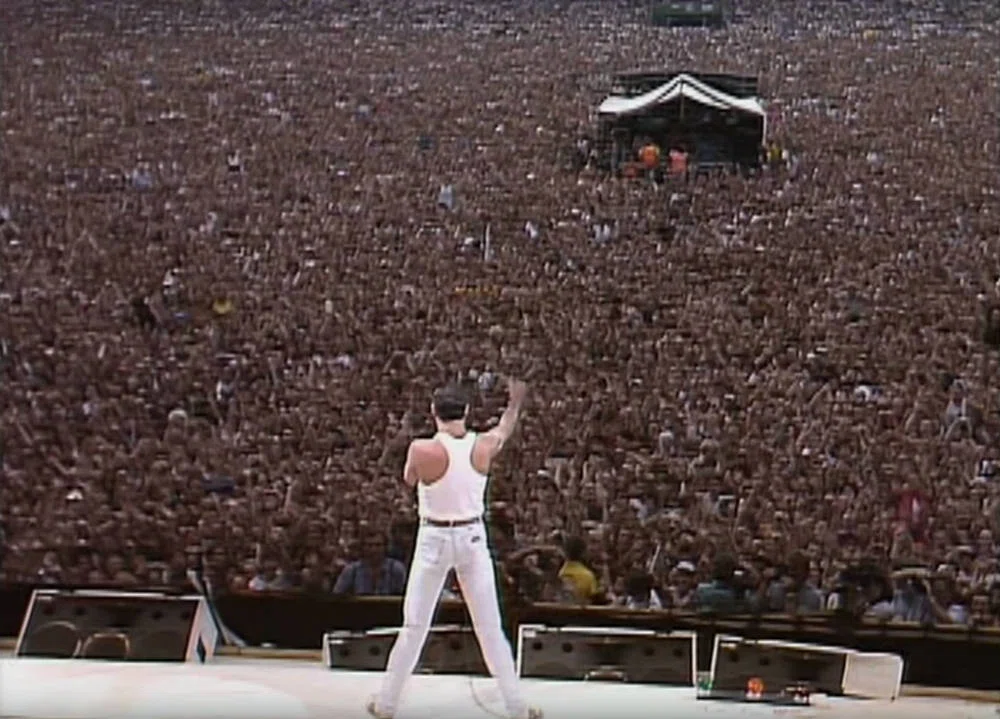
Furthermore, what is worth noting is that this attempt became the "template" for later charity concerts. At the root of Live Aid in 1985 and the large-scale support activities that continue to this day, the memory of this 1971 New York event always flows.
George proved it with his own life: musicians have not only the responsibility but also the power to push the world back in the right direction, rather than just playing beautiful melodies.
The Butterfly Effect That Lives On
George Harrison left behind more than just a collection of masterpieces. The wedge he drove into the stage at Madison Square Garden, named "humanitarianism," continues to support the world even half a century later.
Back in 1971, the attempt by a mere musician to save a nation was, in some quarters, even met with ridicule. However, what George demonstrated was the fact that an individual's "care for a friend," unbound by vested interests, is the only weapon capable of piercing the walls of cold international politics.
The "George Harrison Fund for UNICEF" that he established has been continued by his wife Olivia after his passing, and even at this very moment, it continues to deliver education and medical care to children in Bangladesh and other difficult situations around the world.
His sitar teacher, Ravi Shankar, once said:

"George understood the pain of Bangladesh sooner than I did, and he made it his own."
For George, this concert was not a decoration to crown the peak of his career. It was a prayer called "salvation," which he chose of his own free will for the first time after being liberated from the overwhelming fame of the Beatles.
In the modern era, it is no longer rare for music and social contribution to be linked. However, if you trace the source, you will inevitably encounter the profile of that man in the white suit.
A melody strummed by a guitar player to answer the tears of his best friend. Its faint vibration has crossed oceans and eras, and still holds someone's despair at bay today.
The butterfly effect.
Just as the flapping of a butterfly's wings can cause a storm, George Harrison's compassion will continue to fall like rain in the name of music, moistening a parched world.
Main References
"I, Me, Mine: The George Harrison Autobiography" (Kawade Shobo Shinsha)
Film "George Harrison: Living in the Material World" (Director: Martin Scorsese)
Film "The Concert for Bangladesh" (Director: Saul Swimmer)
"George Harrison: The Reluctant Beatle" (by Philip Norman)
UNICEF Official Website "George Harrison Fund for UNICEF"
Includes Amazon affiliate links.
Header image (Photo by Icon and Image/Getty Images)
いいなと思ったら応援しよう!
 Beyond Timesの執筆活動は、すべて自主運営によって行っています。執筆の継続には、多くの時間と労力を要します。もし本記事に価値を感じていただけましたら、ご支援を賜れますと幸いです。いただいた応援は、今後の制作活動の糧として大切に活用させていただきます。