
[Recommendation for 'Savoring'] Longing for 'Play' and Savoring Books


The things we secretly hold dear.
Even though they certainly exist.
They cannot be pointed to.
They are not just things that can be seen with the eyes.
Deciphering them one by one.
Expressing them with care.
And then, savoring the collection of words created in this way.
・
・
・
■ Text
"[Expanded Edition] Knowledge Editing Engineering" (Asahi Bunko) by Seigo Matsuoka

Revealing the historical background at the time of the book's publication, the thoughts behind its writing, and the production process of this expanded edition, the message that was intended to be questioned through "Knowledge Editing Engineering" is explained from the following five perspectives.
1. Connecting the "world" and the "self"
2. Making full use of various editing techniques
3. Maintaining an editorial worldview
4. Relatively re-weaving the values of the world
5. Utilizing narrative editing skills
It might be worth reconsidering, especially now in the AI era, that at the root of these perspectives lie the fundamental attitudes of "learning from life," "opening up history," and "playing with culture."
■ Book Review (Discoveries (Realizations))
"The Art of Knowledge Editing: Techniques for Generating Ideas and Thoughts" (Kodansha Gendai Shinsho) by Seigo Matsuoka

Recalling memories, uttering language, assembling and organizing knowledge, exchanging it with others, sharing it, and stimulating one another.
In our daily lives, the process of every intellectual act can be said to be 'editorial'.
While carefully explaining these editorial methods, this book presents techniques for generating ideas and creativity in a simple and easy-to-understand manner.
Perhaps the basic line of this book is the contrast between 'figure' and 'ground' that reminds one of McLuhan, that is, the distinction between quantitative information and qualitative information.
When the same information changes its appearance from moment to moment depending on the receiver, time, and place, and literally 'transforms,' the media—the context itself—surrounding the receiver is changing.
Only with this recognition will the importance of editing—that is, freshly transforming information under different contexts—be understood.
Creative editing is born from play, and editing itself shapes culture.
The editorial techniques depicted in this book are clear, practical, and optimistic.
It also mentions hypertext, and I think that by reading it together with Bolter's book, one can understand the nature of editing more theoretically.
'Writing Space: Computers, Hypertext, and the Remediation of Print' by Jay David Bolter, translated by Masao Kurosaki, Osamu Ikoda, and Masatoshi Shimono

In the present day, where we are about to be swept off our feet by waves of information, both good and bad, what should we do to produce valuable information and generate meaningful things?
Although it is an old book, it can be called a must-read book for living intellectually today.
The concept of 'play' is even reflected in the 'game' of the 'Mystical Play Troupe'.
Also, the dazzling 'editing' of 'play' is incredibly stimulating, and I feel that I have received a lot from the 'techniques for generating ideas and thinking' mentioned in the book's subtitle, whether consciously or semi-unconsciously.
Seigo Matsuoka presents the following directions regarding 'editing,' and this book also suggests reading it while keeping this in the 'corner of your mind'.
'In the corner of your mind'
It is suggested to read it while keeping this in mind.
1. Editing is born from play
2. Editing is born from dialogue
3. Editing is born from lack
Also,
1. Editing is verification
2. Editing is association
3. Editing is adventure
Works themed on 'editing' itself, such as 'Knowledge Editing Engineering' and this book, have come to be published.
In the past, rather than an approach from such
'techniques'
, there was a sense of discovering those
'techniques' for oneself
from a state of existence that was a kind of chaos. Now that it is written in this manual-like fashion, I cannot help but feel a bit disappointed, but certainly, these 'techniques' only come to life when actually mastered, so I think this is important as a form of knowledge called 'Editing Engineering'.
'Editing Engineering'
I think it is important as a form of knowledge.
However, since I began to encounter Steiner's spiritual science, I have felt a sense of insufficiency in Seigo Matsuoka's 'Editing Engineering'.
Of course, it is not that it is unnecessary, but that alone somehow
'does not resonate'
with me.
It might be like having decisively noticed the difference between vegetables lined up in a supermarket and Mr. Hibino's vegetables.
Of course, since 'Editing Engineering' is a technique, it might be strange to compare them, but I think spiritual science can never be grasped as a 'technique'.
Bach has a wonderful piece called 'The Art of Fugue,' but contrary to its name, I think what is important is something that transcends 'technique'.
By the way, Seigo Matsuoka and his associates are currently building something like an 'editing experimental farm' called 'Editing Country ISIS' within a computer network.
For me, it no longer holds the same appeal it once did, but setting that aside, it is certainly a very important endeavor.
【Reference Books】
"Vision: A Computational Investigation into the Human Representation and Processing of Visual Information" by David Marr, translated by Toshiro Inui and Hiroshi Ando

"Conversations on Mind, Matter, and Mathematics" by Jean-Pierre Changeux and Alain Connes, translated by Yumi Hamana

"The Society of Mind" by Marvin Minsky, translated by Yuichiro Anzai

"The Mind's New Science: A History of the Cognitive Revolution" by Howard Gardner, supervised translation by Yutaka Saeki and Hiroyuki Kaiho

"Mental Models: Towards a Cognitive Science of Language, Inference, and Consciousness" by P.N. Johnson-Laird, translated by AIUEO

"Philosophy and the Mirror of Nature" by Richard Rorty, translated by Haruki Ito, Shinya Noke, Keiichi Noke, Kunito Sudo, and Masayoshi Shibata

"Computational Theory of the Brain" by Mitsuo Kawato

"Prisoners of Our Thoughts: 20 Dialogues on Modern Science from Chaos to Artificial Intelligence" by Gita Pesis-Pasternak, translated by Shunsuke Matsuura

"The Adventure of Vision: From Illusion to Cognitive Science" by Shinsuke Shimojo

"Artful Science: Enlightenment Entertainment and the Eclipse of Visual Education" by Barbara M. Stafford, translated by Hiroshi Takayama

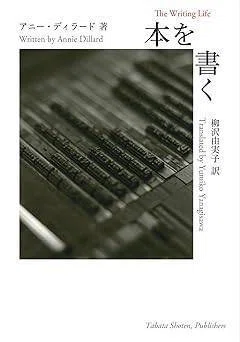
"The Writing Life" (Pocket Standard) by Annie Dillard, translated by Yumiko Yanagisawa
"Information Anxiety" by Richard S. Wurman, translated by Seigo Matsuoka

"Notre-Dame de Paris (Vol. 1)" (Iwanami Bunko) by Victor Hugo, translated by Toru Tsuji and Kazunori Matsushita

"Notre-Dame de Paris (Vol. 2)" (Iwanami Bunko) by Victor Hugo, translated by Toru Tsuji and Kazunori Matsushita

"The Art of Memory" by Frances A. Yates, translated by Nobuyoshi Aoki, Minoru Shinozaki, Yashuo Tamai, Shin Ide, and Mutsumi Nozaki

"The Printing Revolution in Early Modern Europe" by E.L. Eisenstein, translated by Sadanori Bekku

"Internet Strategy: The Nomadic Economic Sphere" by Seigo Matsuoka

■ 22nd Night, 220th Book
Starting April 18, 2024, I will select 10 books each night as appropriate, and by learning from and emulating them, I will introduce them as reference books for practicing 'Chibun' (written documents for conveying thoughts and matters to others) (^^)
I believe that each of you has nights that you have longed for, devoured, and made a part of your very being.
What kind of nights did you bring with you, and from among them, which nights did you choose?
And what is it that we are trying to emulate and follow?
I believe that encountering a book that can serve as the reason for such practice to be practice itself allows one to experience a very interesting night.
Well then, I wonder which one I should read today.
Dressing up as if for the practice of martial arts or the tea ceremony.
Changing one's demeanor.
Revisiting one's posture.
'Reading practice' where you immerse yourself in what you love.
The literal meaning of 'keiko' (practice) is to reflect on the past.
It does not mean returning to the classics, but rather learning from the 'past' itself and mastering that process.
'Zeami's Philosophy of Practice' by Tadashi Nishihira
'Hita-katsu' (immersion activity) to soak in time spent facing oneself (^ ^)
Now, for tonight's practice, the menu of books to savor is...
[Recommendation for 'Savoring'] Longing for 'Play' and Savoring Books
'Inamura Undou Works: The Universe of Kiwami' edited by The Mainichi Newspapers

'PLUTO Deluxe Edition Comic Complete 8-Volume Set' (Big Comics Special) by Naoki Urasawa

'Kamon-cho' (Book of Family Crests) by Yuko Omori / Atsuki Kikuchi

'The Heart of Kyoto A to Z: From Maiko to Coffee Shops' (Poplar Bunko) by Iuko Kimura

'Sora Tobu Neko Zakana' (The Flying Cat Fish) by Yuichi Watanabe

"Tiffany Timepieces" by John Loring

"A Compass to Fulfillment" by Kazuo Inamori

"Good Looking: Essays on the Virtue of Images" by Barbara M. Stafford, translated by Hiroshi Takayama

"Visual Analogy: Consciousness as the Art of Connecting" by Barbara Maria Stafford, translated by Hiroshi Takayama

"Artful Science: Enlightenment Entertainment and the Eclipse of Visual Education" by Barbara M. Stafford, translated by Hiroshi Takayama

■ (Reference Article) Seigo Matsuoka's Thousand Nights Thousand Books
・Saijiki (Chronicle of Talents)
・Back Number INDEX: Complete Reading List
・Theme INDEX: Comprehensive Overview Menu
・A Paperback Compilation Suite Woven from Vast Strata of Knowledge