
[Recommendation for 'Savoring'] Longing for the craft of editing techniques and savoring books


The things we secretly cherish.
Even though they certainly exist.
We cannot point to them.
They are not just things that can be seen.
Deciphering them one by one.
Expressing them with care.
And then, savoring the collection of words created in this way.
・
・
・
■ Text
"[Expanded Edition] Knowledge Editing Engineering" (Asahi Bunko) by Seigo Matsuoka

Revealing the historical background at the time of the book's publication, the thoughts during writing, and the production process of this expansion, the message that was intended to be questioned through "Knowledge Editing Engineering" is explained from the following five perspectives.
1. Connecting the "world" and the "self"
2. Making full use of various editing techniques
3. Maintaining an editorial worldview
4. Relatively re-weaving the values of the world
5. Utilizing narrative editing skills
It might be worth reconsidering now, in the age of AI, that at the root of these perspectives lies the basic stance of "learning from life," "opening up history," and "playing with culture."
■ Book Review (Lessons Learned)
"[The Art of Knowledge Editing] Techniques for Generating Ideas and Thoughts" (Kodansha Gendai Shinsho) by Seigo Matsuoka

Despite taking the form of an introductory book, there are few kind and detailed explanations.
However, for anyone who has ever thought about what editing is, I think this book is overflowing with hints and material to deepen that understanding.
At the beginning, it defines editing as follows.
1. Editing is born from play
2. Editing is born from dialogue
3. Editing is born from lack.
It first lists where it is born, and as its characteristics, it cites:
(1) Editing values 'culture' and 'context'
(2) Editing always keeps an eye on the 'state of information'
(3) Editing engages in 'mutual resonance' like daily conversation
It says that editing is collation, association, and adventure.
The editing referred to in this book is not just the work of an editor, but an act of editing in a broad sense that includes planning a trip, designing, engaging in dialogue, or even living itself.
It is a short phrase, but a summary that feels profound.
According to the author, 'play,' which appeared first as a place of birth, is the essence of editing.
This is because play has
'self-editability'
and
'mutual editability.'
It is because of this.
A very interesting four-part classification by Caillois is introduced.
A classification of play elements from around the world into four categories.
・Caillois' Four Classifications of Play
(1) Agon: Competition
(2) Alea: Games of chance
(3) Mimicry: Make-believe
(4) Ilinx: Vertigo, spasms, trance states
It is explained that the basics of editing lie in playing with oneself and others in this manner.
I think the appeal of this book lies in these lists that are presented in bullet points.
For example, modes for summarizing and editing information include the following six.
・Editing Modes
Emphasis mode: Digest
Outlining mode: Outline
Diagramming mode: 2 or 3 diagrams
Structuring mode: Relationships between ideas
Scripting mode: Converting to another medium
Reporting mode: Conveying as news
Schematic archetypes that convey 'likeness' include:
Stereotype (typicality)
Prototype (typology)
Archetype (originality)
these three types.
This is also profound.
Presentation styles include:
Declarative presentation style
Suggestive presentation style
these two types, and
George Lucas's classic plot is, in the end,
Departure from the homeland
Encountering difficulties
Perception of the goal
Struggle in the beyond
Return from the beyond
as I observe.
The highlight is the '64 Methods of Editing Techniques' that follows the 'Eight Brocades of Editing' and the '12 Editing Usages'.
I felt that these 64 editing techniques cover almost everything a human can do with information.
I was quite moved and stared at them for a long time.
Such lists might also be a form of play, but I think they are valuable as knowledge for creating something.
Because this book presents an overwhelming amount of information within the page count of a new book (shinsho), even though it is the work of an editing god, I feel it is hard to call it a perfect, easy-to-understand textbook.
However, perhaps it is more fruitful to receive hints and materials and think for yourself, rather than being taught in a kind and thorough manner.
I see, I realized halfway through that this is a collection of problems.
There are also many tasks presented.
I had realizations in every chapter, and in the end, I marked it up with over 30 sticky notes.
I think it is scattered with content that will resonate with anyone who has struggled with editing or planning.
Rather than accepting the dense and vast system of editing engineering as it is.
Is it perhaps too much of a stretch or over-interpretation to say that the author edited it with deep consideration so that we could edit and learn it in our own way?
[Reference Books]
"Editing Engineering to Unlock Talent: 10 Ways of Thinking to Change How You See the World" by Akiko Ando

"What is Editing?" (Seikaisha e-SHINSHO) edited by Takenori Okuno

"Proposals for Editing" by Kaitaro Tsuno, edited by Fumihisa Miyata, photography by Kohei Kawatani

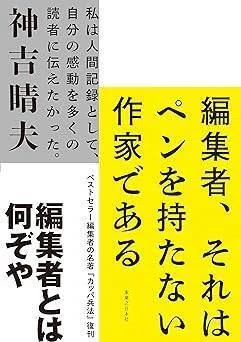
"The Editor, That Is a Writer Without a Pen: I Wanted to Convey My Emotions to Many Readers as a Human Record." by Haruo Kanki
"The Complete Guide to Everyone's Feedback" by Masamune Mimura

"Senya Sen-satsu Edition: Editing Power" (Kadokawa Sophia Bunko) by Seigo Matsuoka

"The Principle of 'Mental Flexibility': Creative People Are Actually Editing" by Mitsuhiro Matsunaga

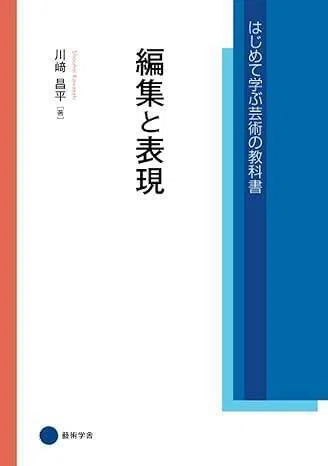
"Editing and Expression" (Art Textbook for Beginners) by Shohei Kawasaki
"6 Thinking Skills That Create Top Evaluations: Brain Editing Power - Thinking Methods to Live Like Yourself in a World Without Correct Answers" by Yoshitaka Kitamura

■ 23rd Night, 230th Book
Starting from April 18, 2024, I will appropriately select 10 books per night, and by learning from and emulating those books, I will introduce them as reference books for practicing 'Chibun' (documents for informing others of thoughts and matters) (^^)
I believe that for all of you, there are nights you have longed for, devoured, and made a part of your own flesh and blood.
What kind of night did you bring in, and from that, what kind of night did you choose?
And what are we trying to emulate and follow?
I believe that encountering a book that can serve as the practice of such practice allows one to experience a very interesting night.
Well then, I wonder which one I should read today.
Dressing up as if for the practice of martial arts or the tea ceremony.
Changing one's behavior.
Revisiting one's posture.
The 'practice of reading' where you immerse yourself in what you love.
The literal meaning of 'keiko' (practice) is to reflect on the past.
It does not mean returning to the classics, but rather learning from the 'past' itself and mastering that process.
Tadashi Nishihira, 'Zeami's Philosophy of Practice'
'Hita-katsu' (immersing oneself in time to face oneself) (^^)
Now, for tonight's practice, here is the menu of books to savor...
[Recommendation for 'Savoring'] Longing for the Methods of Editing Techniques and Savoring Books
'The Tiger and the Grandma Who Made Red Bean Porridge' by Park Yoon-gyu (Author), Baek Hee-na (Illustrator), Niji Kamiya (Translator)

'Aiueo Ehon' (The Alphabet Picture Book) by Koshiro Toda (Author)

'Ghost Party' by Jacques Duquennoy (Author), Akira Osawa (Translator)

'I Don't Think So' (Chikuma Bunko) by Yoko Sano (Author)

'Leftovers Have a Past' (Shincho Bunko) by Yuri Nakae (Author)

'Asking Children About Children: Interviews with 'My Child' - An 8-Year Record' (Chikuma Bunko) by Ryo Sugiyama (Author)

"Just My Type: A Book About Fonts" by Simon Garfield, translated by Mari Tashiro and Hideki Yamazaki

"Eento Kuchikara" (Chikuma Bunko) by Hiroyuki Sasai

"Koe o Tadoreba" (If You Follow the Voice) by Shinpei Wakamatsu

"Mainichi Aho Dansu: Yokohama Kotobuki-cho no Hiyatoi Tetsugakusha Nishikawa Norimitsu no Sekai" (Everyday Fool Dance: The World of Norimitsu Nishikawa, a Day-Laborer Philosopher in Yokohama's Kotobuki-cho) by Tom Gill

■ (Reference Article) Seigo Matsuoka's Thousand Nights, Thousand Books
・Saijiki (Chronicle of Talents)
・Back Number INDEX: Complete Reading List
・Theme INDEX: Comprehensive Overview Menu
・A Bunko Compilation Suite Woven from Vast Strata of Knowledge