
[Homework Notebook (Self-Study)] Serendipity is a keyword referring to the power to leverage chance opportunities


Serendipity consists of two elements: chance and the power of perception, and it can also be called the power of perceptive chance.
Serendipity is defined as the "ability to accidentally discover something good that you were not looking for," and
・The ability to discover and create is the ability to make the most of chance.
・If you sharpen your sensibilities and cultivate your power of perception, chance will no longer be just chance.
It carries a more concrete and proactive nuance (discovering > encountering) than just the ability to encounter accidental good fortune.
Taking this as an opportunity, to make unexpected discoveries by chance, it is important to believe that "if you feel something is strange, there is a cause if you pursue it."
If you leave this feeling of strangeness alone, the chance will simply pass you by.
Even if you don't know what it is, paying attention to things that make you think "Huh?" or things that catch your interest while you are doing something is the first step toward discovery.
The concrete procedure for discovery begins with the excitement of noticing something, and when you encounter such events or phenomena, you should observe them, keep a record, and give them a name.
Furthermore, recognize the issue and put yourself in a state where associations related to it are easily triggered.
Actively exchange information, and when you find related articles, create a system that allows you to easily file them.
Expand your range of activities to promote opportunities for unexpected associations to arise.
Once the causal relationship can be clarified, formulate a hypothesis and verify it.
And if you end up clarifying an unexpected causal relationship, this is a discovery, and creation is born from applying this.
To summarize the above, the procedure for utilizing serendipity is:
1. Observe and record what caught your attention
2. Give it a name
3. Convert it into the form of a task
4. Gather relevant information
5. Formulate and verify hypotheses
These are the five steps.
In this way, by turning your attention back to things you do somewhat habitually or unconsciously, and by thinking about their methods and mechanisms using the procedures above, it seems possible to create opportunities to demonstrate serendipity and take the first step into uncharted territory.
When looking at successful people, aren't there some who click their tongues, thinking, "They were just lucky," and become self-deprecating, saying, "I have no luck"?
Such feelings of envy are a cause of losing motivation, but it certainly seems that luck and misfortune vary from person to person.
However, accidental good fortune does not simply come from nowhere.
When something accidental happens around you, I believe it is all about your mindset whether you connect it to good fortune or let it pass by.
The idea that encounters are treasures is a common life lesson, and there is also the historical idiom 'ichigo ichie' (once-in-a-lifetime encounter).
Perhaps it is only after repeated lucky encounters that one truly realizes the weight of the phrase 'ichigo ichie'.
However, I feel that just accepting this as a life lesson is not enough.
The thought that there might be some secret hidden in coincidence has crossed my mind from time to time.
Of course, the secret of coincidence is not something that can be easily understood.
This theme is a major philosophical proposition that troubled great thinkers such as Schopenhauer, Nietzsche, and Heidegger.
"Contingency and Fate" (Iwanami Shinsho) by Gen Kida

"The World as Will and Representation (1)" (Chuko Classics) by Schopenhauer, translated by Kanji Nishio

"The Problem of Contingency" (Iwanami Bunko) by Shuzo Kuki

Shiso, December 2021 Issue

Living Together: For J.-L. Nancy
"Twilight of the Idols" (Kawade Bunko) by Friedrich Nietzsche, translated by Norio Murai

On Contingency (1) Is coincidence a manifestation of ignorance?
On Contingency (2) Philosophy dislikes coincidence
"The Philosophy of Regret and Self-Blame" by Yoshimichi Nakajima

"Nietzsche tries to stop the oscillation between coincidence and fate. In other words, he is not saying that we should acknowledge that there is 'something volitional' behind the various phenomena that appear to our eyes as coincidences, and that it is moving everything, but rather that we should acknowledge that everything is indeed just a coincidence." (From "The Philosophy of Regret and Self-Blame")
While we are interested in coincidence, our understanding remains at the level that coincidence is a mysterious thing.
It was the word 'serendipity' that caused that understanding to suddenly leap forward all at once.
When I looked it up in the dictionary, it was written as 'the ability to accidentally discover something good that you were not counting on.'
Moreover, this word was used by R. K. Merton, a leading American sociologist of science, and it attracted attention as a term to explain the contingency associated with scientific discovery.
First, I will introduce the origin of the word while tracing its history.
Merton first used this word in a 1945 paper.
Ten years later, he wrote the research paper 'The Travels and Adventures of Serendipity: A Study in Historical Semantics and the Sociology of Science' (unfinished), and published the contingency often seen in scientific discovery as 'serendipity,' making it a new concept in his theory of the sociology of science.
Examples include Newton, who developed the theory of universal gravitation after seeing an apple fall; Jenner, who developed vaccination after learning that milkmaids who contracted cowpox did not contract smallpox; and Roentgen, who discovered X-rays after seeing a fluorescent screen glow.
These historical discoveries are the results of a flash of the ability to accidentally discover something good that one was not counting on.
Merton's paper attracted attention and sparked debate.
However, 'serendipity' is not a word coined by Merton.
He wrote in his own book that he encountered this word 'when I was reading the Oxford English Dictionary (OED) casually, as if I were just wandering around.'
"The Dictionary of Lost Words" by Pip Williams, translated by Atsuko Saisho
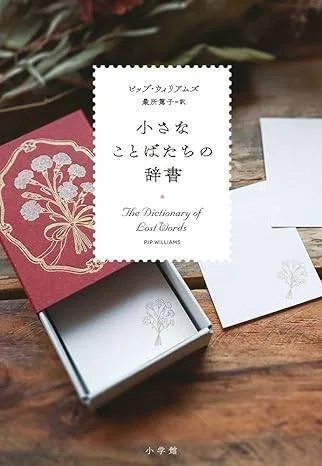
The birth of this word dates back to the 18th century.
It is known that Horace Walpole, a British writer, first used it in a letter to an acquaintance.
The circumstances were as follows.
A portrait of a queen was delivered to him, and he was tasked with adding a family crest to its frame.
However, the family crest of the queen's lineage was not certain.
While he was trying to investigate, he happened to find an old book recording the family crests of noble families, and he was able to finish the frame without any issues.
It seems he had similar experiences many times, and he wrote in a letter that he believed it was due to a mysterious power he named "serendipity," and he also noted the origin of the word as follows.
"In the fable 'The Three Princes of Serendip' that I read before, the princes who went on a journey made unexpected discoveries by exercising their perception according to each situation in response to the accidental events that occurred one after another.
These discoveries were different from what they were originally looking for, but they were very important discoveries."
Serendip is the present-day Republic of Sri Lanka, and the adventure story of the country's three princes was transmitted from Persia through Arabia to Venice, and was published in 1557 as 'The Peregrination of the Three Princes of Serendip'.
"The Three Princes of Serendip: A Persian Fairy Tale" (Kaiseisha Bunko), edited and translated by Yoshio Takeuchi, illustrated by Mikio Masuda

Incidentally, the aforementioned letter was written in 1754, which means the word "serendipity" was born exactly two centuries after the publication of the fable.
Furthermore, two centuries after that, in the mid-20th century, the word was rediscovered by Merton.
The two-century cycle may just be a coincidence, but it is a meaningful history that is fitting for the origin of "serendipity."
By the way, after Merton's rediscovery, without waiting for the next two centuries, the topic surrounding "serendipity" gradually spread.
In 1964, a children's book of this fable was published in the United States, in 1998 a book titled "Serendipity" by the master of semiotics, Umberto Eco, was published, and the original Italian version of the fable was also reprinted in 2000.
"Serendipities: Language and Lunacy" by Umberto Eco, translated by Ihei Taniguchi

It seems that interest was steadily increasing in Japan as well.
In particular, in 1985, the American chemist Ronald S. Lennox published a paper titled "Education for Serendipitous Discovery" in the 'Journal of Chemical Education,' and it is said that the impact of his statement that "it is important for scientists to recognize serendipity, which can be utilized in all aspects of discovery and creation when conducting research, and to educate graduate students about it" was significant.
What he introduces here are,
Friedrich Wöhler: Discovery of the difference between organic and inorganic substances
Röntgen: Discovery of X-rays
Henri Becquerel: Discovery of uranium radioactivity
Louis Pasteur: Discovery of crystal structure
Two geneticists in New York: Discovery of prostaglandins
Fleming: Discovery of penicillin
Others include discoveries by Luigi Galvani, Alessandro Volta, Charles Richet, Dam, Perkin, Malus, etc., but it concludes by noting that such a list could go on endlessly.
As mentioned above, because the same paper emphasized that 'it is important for scientists to recognize serendipity, which can be utilized in all aspects of discovery and creation when conducting research, and to educate graduate students about it,' it feels as though it has since become established as a technical term in the Japanese scientific and educational communities.
The book that I would like to introduce for its interesting content is this one, which is the first explanatory book on serendipity written in Japan.
'The Ability to Find Things by Chance: How to Utilize Serendipity' (Kadokawa one theme 21) by Juichi Sawaizumi

So, how can one master this ability?
In the same book by Juichi Sawaizumi, several techniques are introduced, but the key technique among them is explained starting from this experience of Sawaizumi's.
It happened once when he was on a domestic flight in the United States and sat next to a trading company employee with extensive overseas experience.
When asked 'Coffee or tea?' by the flight attendant during the in-flight service, the trading company employee replied 'Coffee,' but the attendant just kept tilting her head repeatedly.
In the end, after repeating the answer loudly five or six times, the coffee was finally poured, but the attendant did not have a convinced expression, and the trading company employee was also disgruntled.
If one simply concludes here that 'my pronunciation must have been bad,' that is the end of it.
However, the author, who was sitting next to him, wondered if the pronunciation of a trading company employee with extensive overseas experience could really have been misunderstood, and thought about various causes until they reached their destination.
After a while, this hypothesis flashed into his mind.
'Coffee' and 'tea'—since he said 'co,' it should have been understood, so why wasn't it?
Could it be that the attendant was confused by the 'fee' that followed 'co'?
'f' is pronounced by biting the lower lip.
However, because the trading company employee did not bite his lower lip, 'fee' and 'tea' became mixed up.
Convinced of this, the author held up his cup to a crew member in the distance and mimicked biting his lower lip.
To his delight, the coffee was brought over perfectly.
Finding it amusing, he repeated the same experiment every time he went to a cafe thereafter, taking pleasure in it all by himself.
The trigger is a small, incidental coincidence that makes you think, 'Huh?'
In most cases, people just think, 'Well, things like this happen,' and quickly forget about that surprise or realization.
However, it is essential to pause there and think, 'Wait a minute.'
The key at that moment is to formulate a hypothesis that makes sense to you regarding the mystery of that surprise or realization.
To formulate a hypothesis, you have no choice but to carefully rethink the accidental event.
And, in the process of formulating and verifying a hypothesis, a 'cause-and-effect' path begins to emerge within the coincidence.
In other words, the inevitability hidden in the coincidence suddenly reveals itself.
While this cannot be said to have solved the long-standing theme of the secret of coincidence for Juichi Sawaizumi, this technique certainly seems to hold the secret to acquiring the ability to seize good fortune from coincidence—that is, serendipity.
Expressed in order, it can be thought of as follows.
(1) Encounter the phenomenon by chance.
(2) Show interest in a phenomenon that deviates from common sense.
(3) Doubt common sense and formulate a new hypothesis there.
(4) Thoroughly analyze the phenomenon and support the hypothesis.
Whether this is truly a golden rule for attracting good fortune is something you'll just have to try for yourself!
However, in order for this technique not to end up as a mere manual, there is something that Juichi Sawaizumi emphasizes in particular.
That is the concept of 'having a sense of ownership'.
For example, to the question 'Who do you think runs the company?', answers like 'The president' or 'Essentially the department manager' might come back, but the question is whether you can think, 'No, it is you yourself who runs the company. If you don't realize that, the company won't run well.'
This is precisely what ownership means.
If you keep ownership in mind, you will become responsible for your own actions.
When that happens, you start paying attention to even the smallest things, and mere coincidences begin to look like important opportunities.
Once you reach this point, you might have already mastered serendipity.
Take ownership and focus on coincidence.
It is presumed that this mindset is the essence of serendipity, as it is what brings good fortune.
[Reference Materials (Seigo Matsuoka's Senya Sen-satsu)]
Night 0596 'Cosmology of Flowers and Moon' Akira Omine - Senya Sen-satsu
https://1000ya.isis.ne.jp/0596.html
Night 0689 'The Structure of Iki' Shuzo Kuki
https://1000ya.isis.ne.jp/0689.html
Night 1304 'The Quest for Serendipity' Juichi Sawaizumi & Osamu Katai
https://1000ya.isis.ne.jp/1304.html
Night 1330 'The Drunkard's Walk' Leonard Mlodinow
https://1000ya.isis.ne.jp/1330.html
Night 1334 'The Taming of Chance' Ian Hacking
https://1000ya.isis.ne.jp/1334.html
Night 1335 'Contingency and Fate' Hajime Kida
https://1000ya.isis.ne.jp/1335.html
Night 1336 'History of Thought in Market Society' Yosuke Mamiya
https://1000ya.isis.ne.jp/1336.html
Night 1340 'Probabilistic Thinking' Naoya Tabuchi
https://1000ya.isis.ne.jp/1340.html
Night 1345 'The Yardstick of Risk' Kazuya Nakayachi
https://1000ya.isis.ne.jp/1345.html
Night 1350 'Contingency, Irony, and Solidarity' Richard Rorty
https://1000ya.isis.ne.jp/1350.html
Night 1482 'Everything Is Obvious: How Common Sense Fails Us' Duncan Watts
https://1000ya.isis.ne.jp/1482.html
Night 1550 'Notes on Life' Kiyoshi Miki
https://1000ya.isis.ne.jp/1550.html
Night 1648 'Media Theory of Models' Hiroshi Matsui
https://1000ya.isis.ne.jp/1648.html
Night 1770 'Thumbnails and Formats' Michel Serres
https://1000ya.isis.ne.jp/1770.html
1838th Night "Chance and Chaos" David Ruelle
https://1000ya.isis.ne.jp/1838.html
[Related Articles]
[Miscellaneous Thoughts] Vertical Thinking and Lateral Thinking
https://note.com/bax36410/n/nc041319885eb
[Miscellaneous Thoughts] Contrapuntal Thinking
https://note.com/bax36410/n/nef8c398b72cb
[Miscellaneous Thoughts] Complex Systems Thinking
https://note.com/bax36410/n/neaab25206650
Phylogenetic tree thinking is reasoning as abduction
https://note.com/bax36410/n/n13a9cf9a3e9e
[Homework Notebook (Self-Study)] Scenery you happen to look at, things you see when you crouch down.
https://note.com/bax36410/n/nad27a9739ea4
[Short Review] Is individual freedom truly the essence of humanity?
https://note.com/bax36410/n/nc3f45d1a6aab
[Short Review] Where capitalism of desire leads
https://note.com/bax36410/n/nbd72e02c7b08