
Dave Pike, Jim Hall & Ron Carter, Herbie Mann, and others: Various versions of Sonny Rollins' "St. Thomas"

At the end of my recent article titled Oregon Guitar Quartet - Covers: The Backflow of Beat Music into Classical, I mentioned that I had compared the originals and old cover versions of the songs covered on that album. I wrote that since Sonny Rollins' "St. Thomas" isn't exactly a super-famous song, it was fresh and interesting to listen to them side-by-side.

Since that was an article about the Oregon Guitar Quartet and I had already spent a long time discussing other songs, I couldn't delve any deeper, which left me with a bit of lingering regret.
The rosy cheeks of tomorrow may become white bones by evening; furthermore, I am at an age where I can no longer cheekily claim to have rosy cheeks, and becoming bones myself might happen "soon, very soon, before long." Therefore, I should quickly clear away any lingering regrets. I shall conduct a full inventory of all "St. Thomas" versions.
◎ Dave Pike's Straight Latin Rendition
As a long-time vibraphone enthusiast, I found this Dave Pike album to be the most enjoyable among all the "St. Thomas" versions I have at home.

During his improvisation, Pike scats along with the phrases he plays, and I like how his "singing" doesn't stick too perfectly to the vibraphone phrases, but is rather quite loose. If it were exactly the same as the phrases he plays, it wouldn't be interesting at all.
The percussion is primarily Ray Barretto's congas, with the drums in a supporting role. Fortunately, this means the right hand is fixed on the ride cymbal and doesn't try to insert paradiddles with both hands, so I can listen without getting a vein popping out on my forehead. Most four-beat drummers cannot use their left and right hands in a balanced way. In the past, people who hadn't received basic training tended to end up like that.
◎ The Ultra-Fast Mundell Lowe Version
Nick Ceroli (or "Cheroli" if maintaining the Italian pronunciation), who sat on the drum stool for Mundell Lowe's "St. Thomas," plays safely with both hands on the hi-hat in 16th notes during the theme. Even after switching to ride cymbal with the right hand and snare with the left, his side-stick playing is highly precise, and the sound isn't muddy (clumsy drummers can't produce a crisp, resonant "clack" sound with side-stick, instead making a dull "thud"), which is pleasant.

However, the tempo is too fast, and it doesn't result in a very good groove—or rather, when it's too fast, a groove cannot be born, and it becomes neither good nor bad. Lowe is playing properly, but that's all there is to it; there's no real flavor or substance to speak of.
◎ Billy Taylor and Four Flutes
Billy Taylor's version of St. Thomas was included on a project album featuring four flutists in the front line: Herbie Mann, Frank Wess, Phil Bodner, and Jerome Richardson.

There is a reason why wind or string instruments in small combos are often arranged in groups of four. With three, you only get the so-called "triad"—the obvious, simple sounds like C-E-G, D-F-A, or B-D-G (chords like C, Dm, G). But when you add one more note, you can create complex chords with "tensions," such as diminished or augmented chords. I believe this is why there are countless string quartets but hardly any string trios. Composers likely prefer four-note harmonies over three.
All four seem to have played standard flutes, as the credits do not list flutes with different ranges like piccolo or bass flute (in Japan, we only use the abbreviation "piccolo," but in US album credits, they are usually listed as "piccolo flute." I believe we should use the full term "piccolo flute" without abbreviating, as saying "bass flute, flute, piccolo flute" makes it clearer that these are variations of the same instrument with different ranges).
Since the album is intended to showcase the sound of four flutes, Billy Taylor's St. Thomas also features his piano on the intro, but the theme is played by the flutes, and naturally, they play in harmony rather than unison. It certainly has a cool, refreshing sound that suits the Latin-flavored track, and it is quite a pleasant experience.
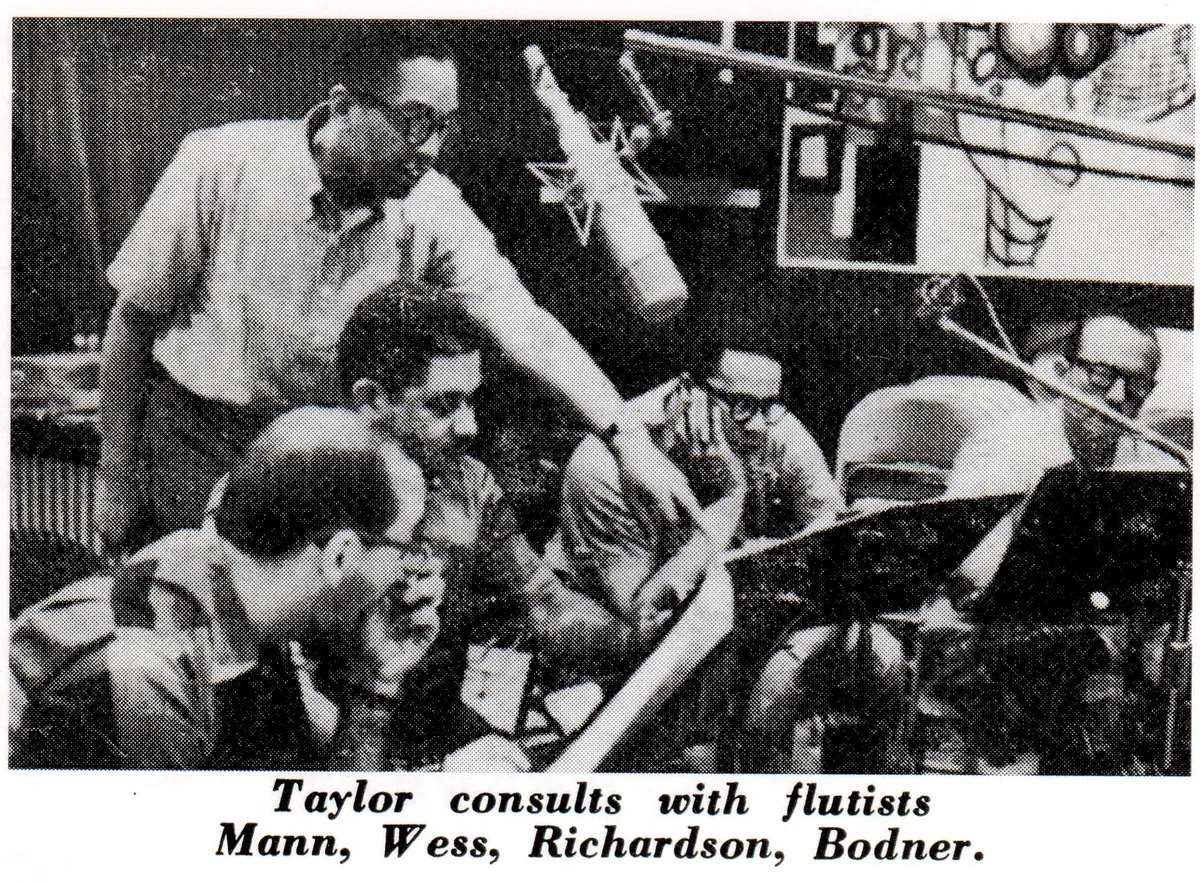
However, what really grabs the ear is the piano improvisation after the theme. The left hand only provides sparse, light comping, and the solo is centered on the right hand—mostly single notes with very few chords—but the way this line is constructed is clean and excellent. I also feel a sense of taste in the chord construction of the comping. That is likely because he is a professional arranger.
◎ Two versions by Herbie Mann
He may have recorded others, but the two versions of St. Thomas by Herbie Mann that I have at home are those included on African Suite (1959) and The Common Ground (1960).
African Suite was recorded in 1959, the same year as the aforementioned Billy Taylor St. Thomas that Herbie Mann also participated in. However, since the Taylor sessions were recorded on July 20 and 24, 1959, and the date for the Mann session is unknown, I could not determine which was recorded first.

At the beginning of the theme, the flute and vibraphone play at the same time, but the second time around, they use a "round" style where the vibes go first and the flute follows one measure later, which is a clever arrangement.
The improvisation follows the order of vibes, flute, and piano. As a vibraphone enthusiast, I naturally found Johnny Rae's playing to be very comfortable. The same can be said for the Dave Pike album. It is a song well-suited for the vibes.
The other version included on Common Ground also features the vibraphone, and the player is the same Johnny Rae. Well, I think the African Suite version is better when it comes to the improvisation.
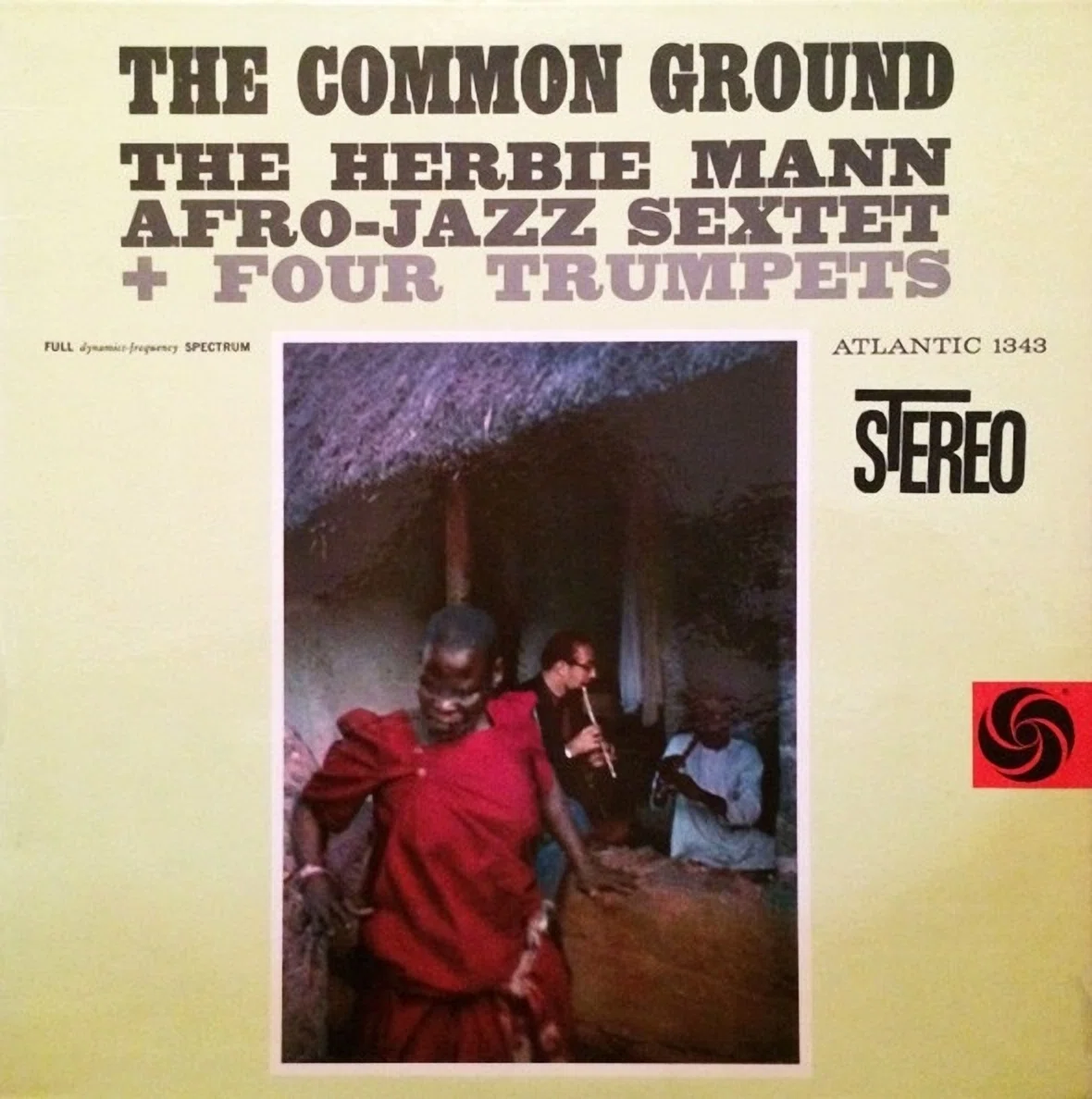
As the artist name The Herbie Mann Afro-Jazz Sextet + Four Trumpets suggests, it adopts a rather unusual style featuring four trumpets. Perhaps it was inspired by the four-flute arrangement by Billy Taylor mentioned above.
However, unlike the flute, the sound of the trumpet is powerful. There was a band called Chase back in the day that also featured four trumpets and had a hit with the song "Get It On," but it was just so noisy; I remember watching their live performance in Japan on TV, getting fed up, and changing the channel.
High-pitched brass instruments always come with a "handle with care" warning. The two-trumpet lead of Herb Alpert & The Tijuana Brass, and the success of the flugelhorn album by Shorty Rogers, a titan of West Coast jazz, were both due to that careful handling of sound.
The Herbie Mann Afro-Jazz Sextet + Four Trumpets avoids the clamor of a brass ensemble through mixing, resulting in a sound that is easy to listen to. It's like the sound of cicadas chirping in the distance. However, because of that, their presence is faint, and it made me think, "Couldn't they have done this without the trumpets?"
◎ Various Jim Hall Albums
I have five versions of "St. Thomas" by Jim Hall in my collection. While the statistical population is too small, he is, for the time being, the record holder for the most recordings of "St. Thomas" in my library. Since I only have 30 albums where Jim Hall is the leader or co-leader, the inclusion rate is very high. It is safe to say that "St. Thomas" is one of his favorite songs.
The oldest recording among them is from a 1973 duo album with Ron Carter. Jim Hall's characteristics are his high-precision picking and the clear, unclouded sound resulting from his fingering, but since "St. Thomas" is a Latin-flavored song, he uses a lot of chord cutting, so it doesn't really feel like I'm listening to Jim Hall.

I love Ron Carter, but I'm not a fan of Miles Davis (he goes off-pitch too much), so I don't have many opportunities to enjoy him. Since there are few "lead" instruments that mask the low end like this, and the lead player is someone characterized by extremely high-precision playing, and because "St. Thomas" is the type of song that tests rhythmic sense and innate groove, it can be said that this is the best way to enjoy Ron Carter's bass.
Next, jumping forward nearly ten years to 1982, is another duo with Ron Carter, "Live at Village West." Midway through, he turns down the guitar volume and does some chord cutting with the raw sound without going through the pickup. Thanks to the recording, Ron Carter's bass is clearer here, and you can enjoy a wonderful groove.

Next is the 1989 "The Complete Jazz Heritage Society Recordings (Live at the Townhall)," which is credited to Jim Hall alone, but it is another duo with Ron Carter. However, the bass is electric; I wondered if it might be an electric upright and looked it up, but I could only find photos of him playing a regular electric bass, a Rickenbacker.
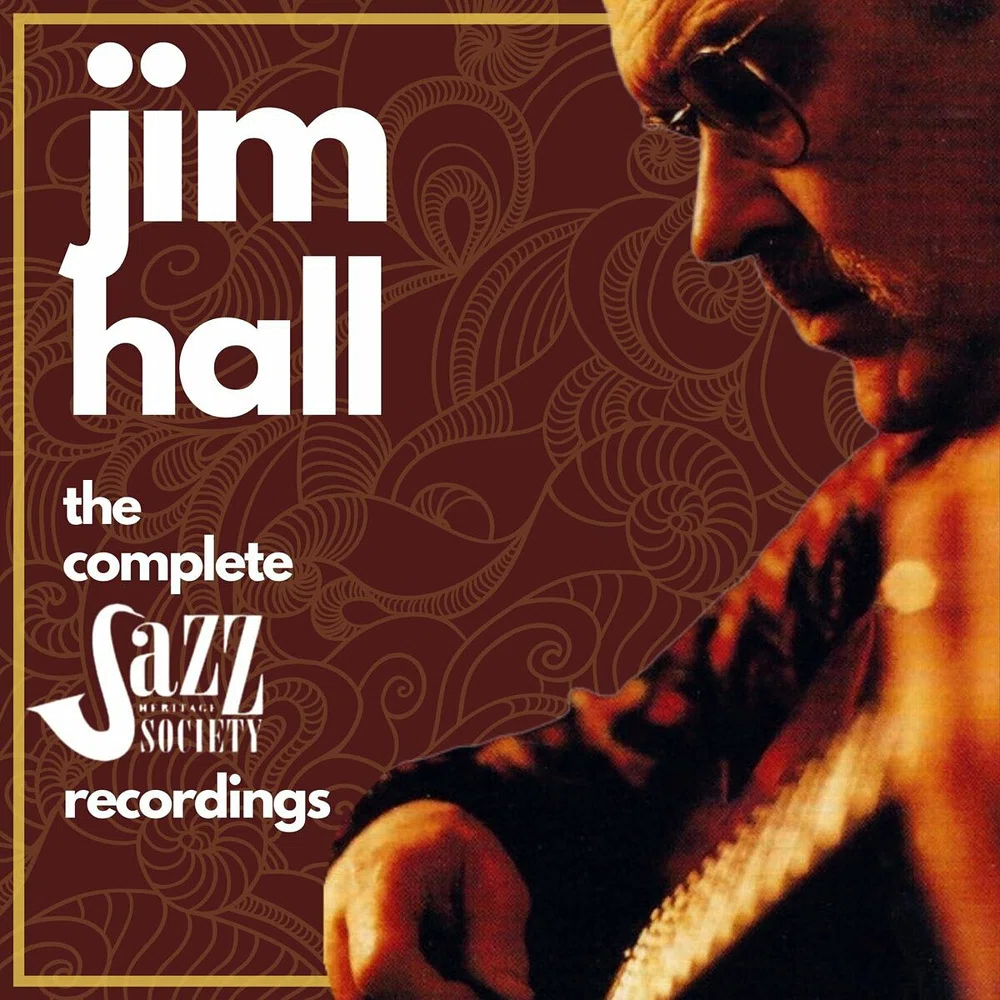
While some people, like Steve Swallow, play like a completely different person on upright versus electric bass, Ron Carter is not like that; his magnificent groove remains intact even on electric (it is truly a shame that Swallow's groove died on electric), although the sound itself is not very pleasing.

On the 2004 Magic Meeting, Jim Hall processed his guitar sound with some kind of effect (apparently chorus), and as someone who prefers old-fashioned jazz guitar, I am perplexed when forced to listen to things like this.

However, as if to compensate for that, he switches to the raw, unplugged sound during improvisation; while the sound in the high positions is mediocre, the open chords have a wonderful resonance, reminding me of the raw sound of the Epiphone Emperor that Phil Spector loved (though that one is different in that it has a beautiful sound even in the high positions). The guitar used at this time appears to be a Sadowsky Jim Hall model.

Finally, there is the version from the 2010 duo with Joey Baron, included on Conversations. Since Baron is a drummer, the only melodic instrument is the guitar; this is a matter of taste, and I did not enjoy it very much.
The front cover shows the machine head of a D'Aquisto Jim Hall Custom, so it seems he played the D'Aquisto, not the Sadowsky, on this album.
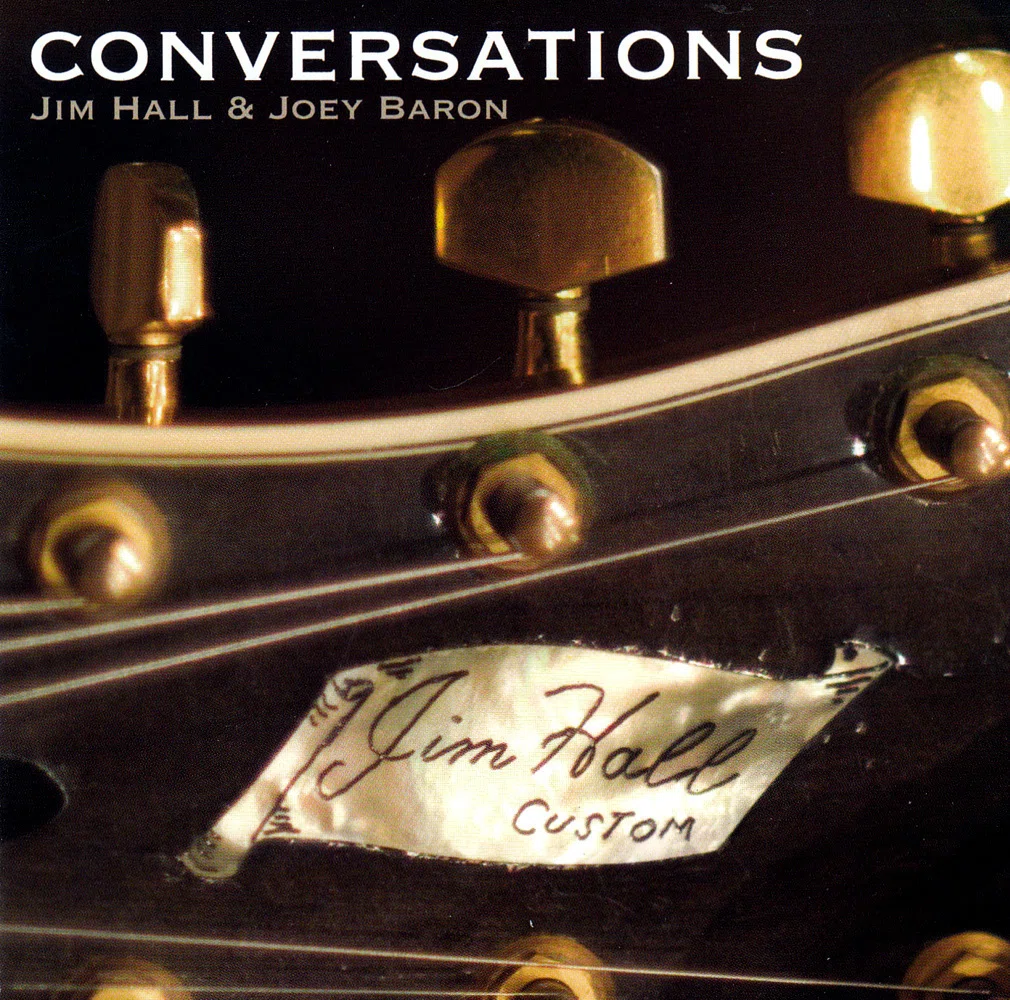
The "Jim Hall Custom" logo appears to be inlaid with mother-of-pearl. This shape must have made for some troublesome craftsmanship.
This version of St. Thomas is played entirely with the raw, unplugged sound, and when comparing the sound of the open strings, the Sadowsky is more pleasing. Well, things like this involve the shape of the neck, the feel of the fingerboard, the overall playability, and the resonance in specific ranges, so the extent to which an outsider's imagination can reach is limited.
Jim Hall is a figure who symbolizes the old style of jazz guitar, and I have collected his music precisely because I wanted to hear that kind of thing. St. Thomas is music of the groove, which deviates from the image of Jim Hall that I hold.
The reason why I played St. Thomas so many times probably lies somewhere around there. There is naturally a gap between the image most people have and one's self-image, and I felt that Jim Hall also wanted to bring out that side of himself in St. Thomas, which has a funk-music aspect that is not thought of as his style.
◎ The original Sonny Rollins version
The only versions of St. Thomas by Sonny Rollins I have are the original included in The Complete Prestige Recordings and the live version included in The Complete Sonny Rollins in Japan. I don't collect saxophone music, so I don't own much of Rollins either.
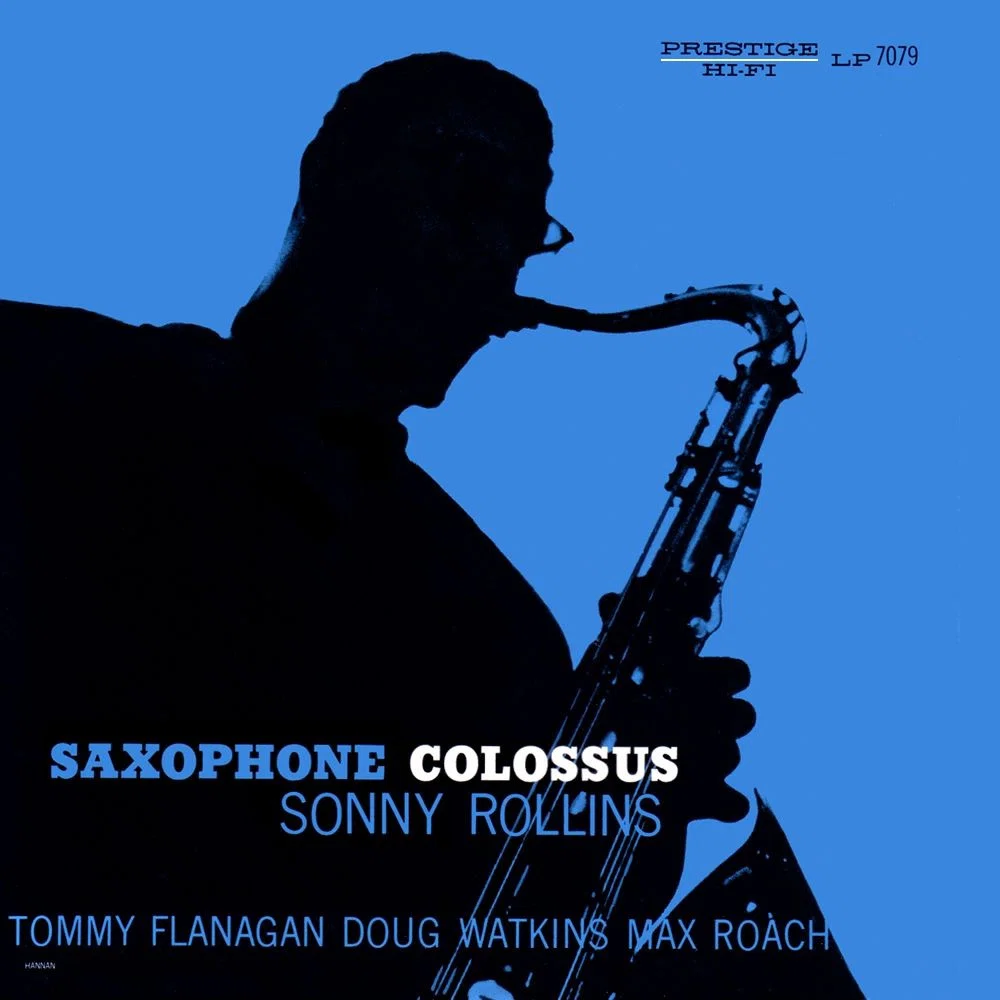
The Complete Prestige Recordings is a recent compilation, and the original album is 1956's Saxophone Colossus. Of the five tracks included, three were written by Rollins, and St. Thomas is the album opener.
However, this is, well, I don't know. Since it's a lighthearted song, frankly speaking, it's unsuitable for the saxophone. It's a song that feels much better when played on vibraphone or flute, and no matter how I listen to it, it doesn't seem suited for Rollins. The fact that the drums are Max Roach, who has poor timing, also creates a bad groove. The original was the worst version.
◎ What is the origin of 'Koko-to' (St. Thomas)?
My collection of wind instruments is poor, so I checked Wikipedia to see if there were other artists who played St. Thomas. Although the author credit is listed as Rollins, it seems it was originally a Bahamian folk song and is in the public domain; Rollins apparently just transcribed or adapted it.
That makes perfect sense. It's not at all suited for saxophone, nor is it very 'Rollins-like'; it's a cheerful, lighthearted song. When listening to versions played on vibraphone, I think, wouldn't this be best if played on oil steel drums (steel pans)? It has a calypso flavor.

The audience is happy and making a lot of noise, but I don't find this St. Thomas interesting either.
I was let down, thinking 'what is this?', but the question of why Rollins wrote such a song—which is unsuited to his style and also unsuitable for the saxophone—was cleanly resolved, so I'll just pat myself on the shoulder and say, 'well, that's fine.'
However, the Wikipedia entry for St. Thomas only mentions two other versions, and as usual, I got angry thinking that these people don't listen to music at all.
◎ Not quite a further listening comparison, but...
Actually, when I wrote the aforementioned article on the Oregon Guitar Quartet, I also compared versions of All the Things You Are, Tequila, and Sleepwalk. I thought if the St. Thomas listening comparison ended easily, I might touch on those a little, but that was an impossible request from the start.
I can't possibly touch on every version, so as a bit of fun, I made a list of artists who have performed All the Things You Are. Please take a look if you have the time.

The vibraphone is Gary Burton, who was still in his teens, and the drums are the reliable Joe Morello.
Nino Tempo & April Stevens
Jo Stafford
Judy Garland
Frank Sinatra
Masahiko Togashi & Masabumi Kikuchi
Michael Jackson
Paul Buskirk
Hank Garland (with Gary Burton)
MJQ
Terry Gibbs
Howard Roberts
Attila Zoller + Hans Koller + Martial Solal
Baden Powell
Bill Harris
George Benson
Grant Green
The Guitars Inc.
Jack Marshall & Shelly Manne
Ron Carter & Jim Hall
Jimmy Raney
Jimmy Wyble
Joe Pass with Red Mitchell
John Lewis & Sacha Distel
Johnny Smith
Lloyd Ellis
Lou Mecca
Louis Stewart
Marcel Bianchi
Rene Thomas
Sal Salvador
Tal Farlow
Vic Jurius
Wes Montgomery
Bernard Peiffer
Dave Brubeck
Elmo Hope Trio
Lennie Tristano
Thelonious Monk
Marty Paich Quartet featuring Art Pepper
Booker Ervin
Bud Shank
Buddy DeFranco
Charlie Parker
Chet Baker
Dizzy Gillespie
Don Ellis
Donald Byrd Quintet
Johnny Griffin
Lee Konitz
Paul Desmond & Gerry Mulligan
Sonny Rollins & Coleman Hawkins
Stan Getz
Stan Kenton
Lou Levy Trio
Jimmy Rowles Trio
Andre Kostelanetz
Art Van Damme
Billy Vaughn
Bob Crewe
Bob Thompson
Don Ralke & His Orchestra
Harpo Marx
Lalo Schifrin
Lincoln Mayorga
Stradivari Strings
Danny Williams
Andre Previn
Helen Forrest
Larry Coryell
Hapton Hawes Trio
Artie Shaw Orchestra
Herb Alpert
Tony Mottola
Dion & The Belmonts
Les Baxter
Mantovani Orchestra
Norrie Paramor
Paul Weston
Jack Jones
Ray Conniff
Django Reinhardt
Yehudi Menuhin & Stephane Grappelli
Peter Sellers
As expected of a standard recorded across genres like jazz, pop, and lounge, the list of names is so impressive that it brings a smile to my face just looking at it.
My personal favorites include Art Van Damme (accordion), Harpo Marx (harp), Yehudi Menuhin (violin), Hank Garland (guitar), and Johnny Smith (guitar). Well, there are plenty of other great versions, of course.

This is a box set that compiles Menuhin's covers of standard songs, and it is packed with wonderful sounds.