

If you want to use Claude Fable 5 for free, the honest answer is that there’s one genuinely no-extra-cost route, and it has a deadline. Anthropic launched Fable 5 on June 9, 2026, and from launch day through June 22, 2026, the model is included at no additional charge on its paid subscription plans. If you already pay for Pro, Max, Team, or seat-based Enterprise, you can run Fable 5 inside the Claude apps during that window without per-token charges. There’s no permanent free API tier, and no promo codes. This guide walks through every realistic way to access Fable 5 cheaply, what changes on June 23, and how to stretch any free credit you do have. If you’ve already read our guide on how to use Claude Opus 4.8 for free, the pattern here will feel familiar.
TL;DR
The only no-extra-cost route to Claude Fable 5 is the June 9 to June 22, 2026 inclusion on paid plans: Pro, Max, Team, and Enterprise. Use it inside the Claude apps, where normal plan limits still apply. The API is paid ($10/$50 per million tokens). New API accounts may receive a one-time Console credit. After June 22, access becomes metered.
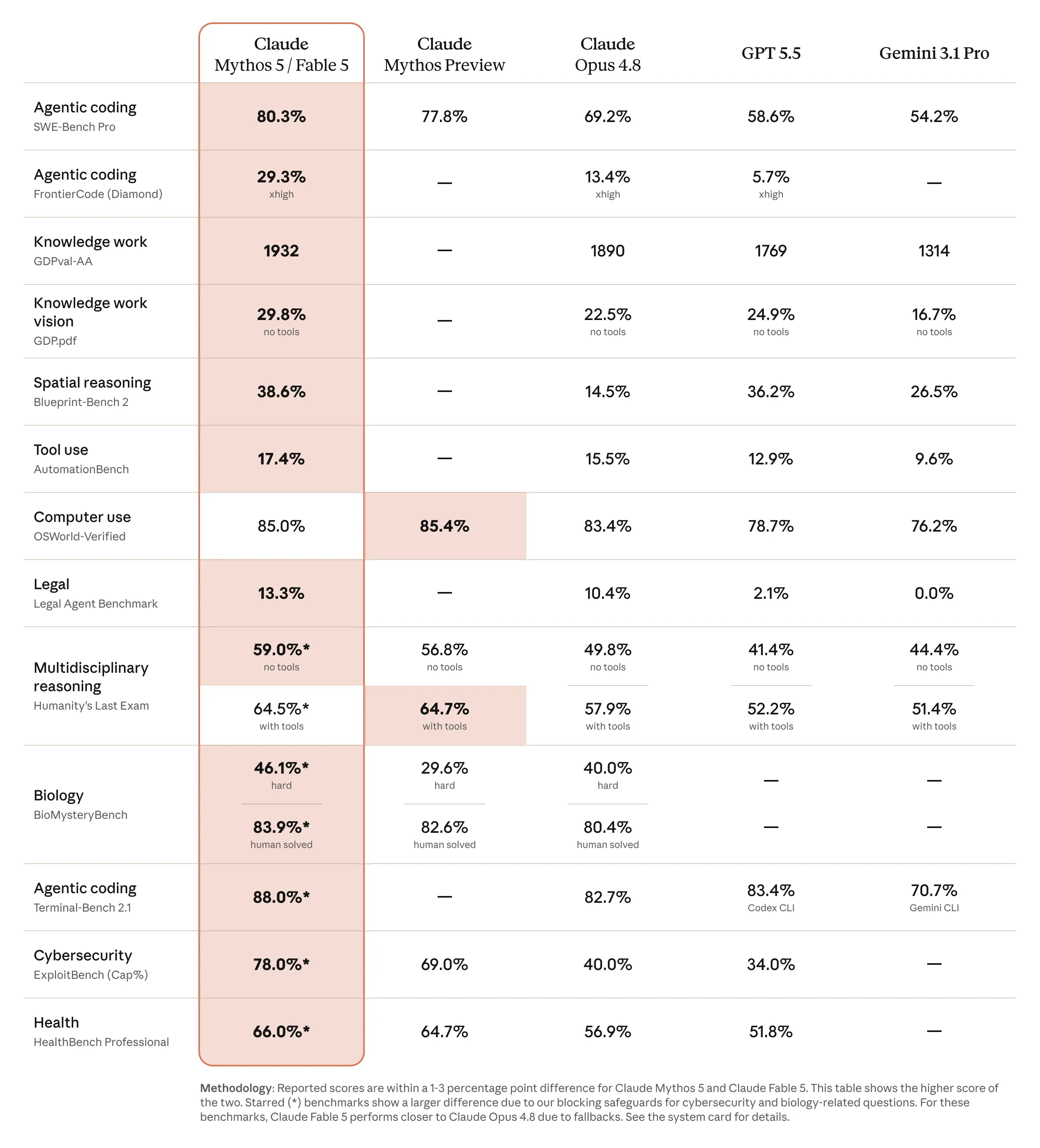
Can you use Claude Fable 5 for free?
Partly, and only for a short time. Let’s separate the two things people mean by “free.”
If “free” means “no extra cost beyond what I already pay,” then yes. Between June 9 and June 22, 2026, Fable 5 ships inside the Pro, Max, Team, and Enterprise subscriptions you may already hold. You won’t see a separate Fable 5 charge during that window. You’re using your existing plan, and Fable 5 is one of the models you can pick.
If “free” means “no money at all, forever, including the API,” then no. The Fable 5 API costs $10 per million input tokens and $50 per million output tokens. There’s no free public API tier. New API accounts sometimes get a small one-time credit in the Console, but that’s a starter grant, not an ongoing free plan, and Anthropic doesn’t publish a fixed amount.
So the practical answer is: if you pay for a Claude subscription, use the launch-window inclusion right now. If you only want API access, expect to pay, though a new account might come with a little credit to test things. Everything below explains how to act on both paths.
For the full background on the model itself, see our explainer on what is Claude Fable 5. For costs, the Claude Fable 5 pricing breakdown has the numbers in one place.
Method 1: The June 9 to June 22 free inclusion on paid plans
This is the real free path, and it’s the one most people should use first.
What’s included
From June 9 through June 22, 2026, Anthropic bundles Fable 5 into its paid subscription plans at no extra cost:
- Pro: the individual plan most solo developers and writers use.
- Max: the higher-usage individual tier.
- Team: for small groups with shared billing.
- Enterprise: seat-based plans for larger organizations.
If you hold any of these, Fable 5 appears as a selectable model in the Claude apps during the window. You pay nothing on top of your subscription to use it.
How to use Fable 5 in the Claude apps
The steps are short:
- Sign in to the Claude app (web, desktop, or mobile) with the account tied to your paid plan.
- Start a new conversation.
- Open the model picker, usually at the top of the chat or near the message box.
- Select Claude Fable 5 from the list.
- Send your prompt. Responses now come from Fable 5.
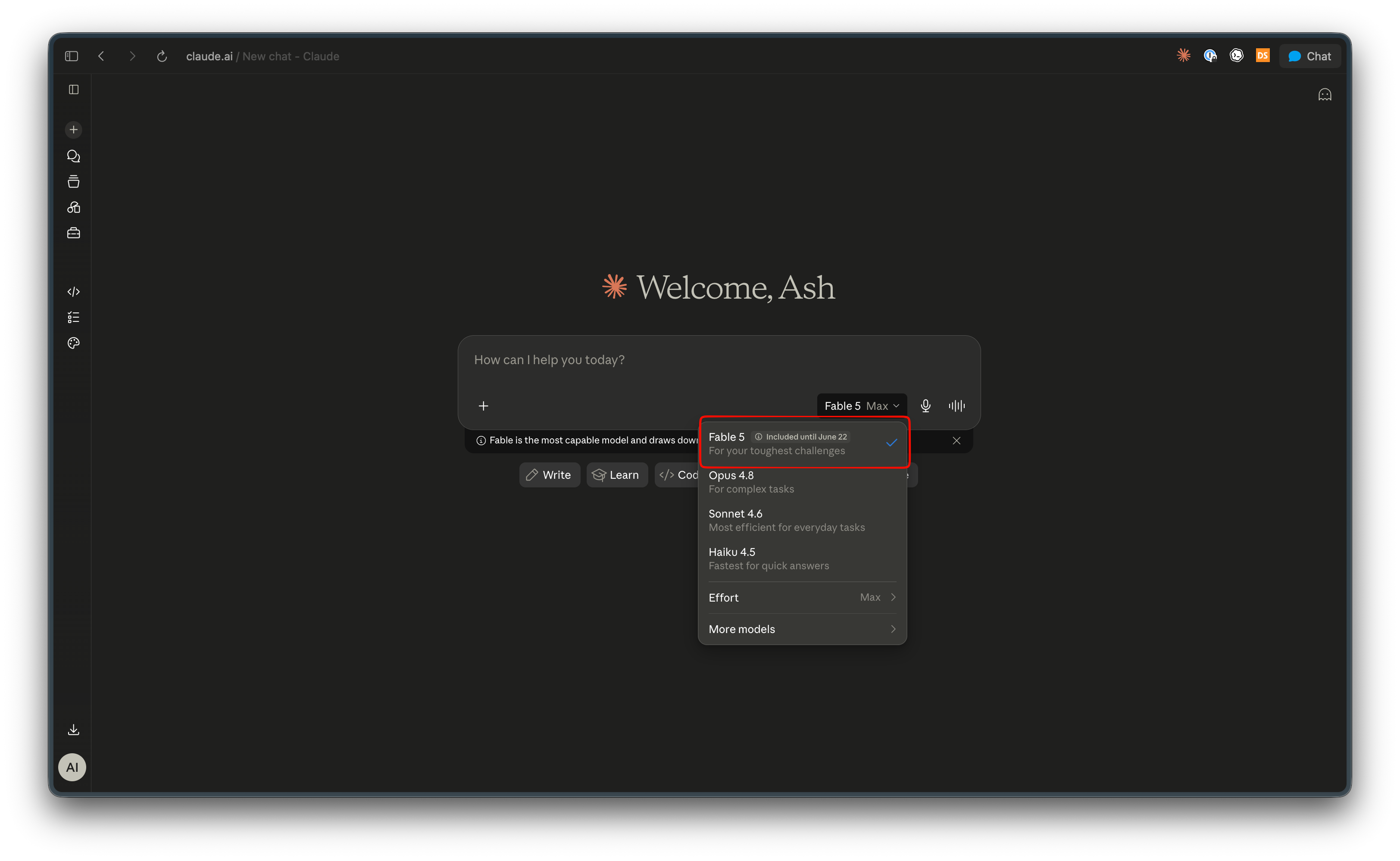
That’s the whole flow. No API key, no billing setup, no code. If you don’t see Fable 5 in the picker, confirm you’re signed in to the paying account and that your app is up to date. Rollouts can lag by a few hours across regions right after a launch.
Plan limits still apply
Free inclusion is not unlimited use. Your plan’s normal usage caps remain in force. Pro has lower limits than Max, and both reset on a rolling schedule. Heavy back-to-back sessions on a frontier model can hit those caps faster than you’d expect, because larger models consume more of your usage budget per message.
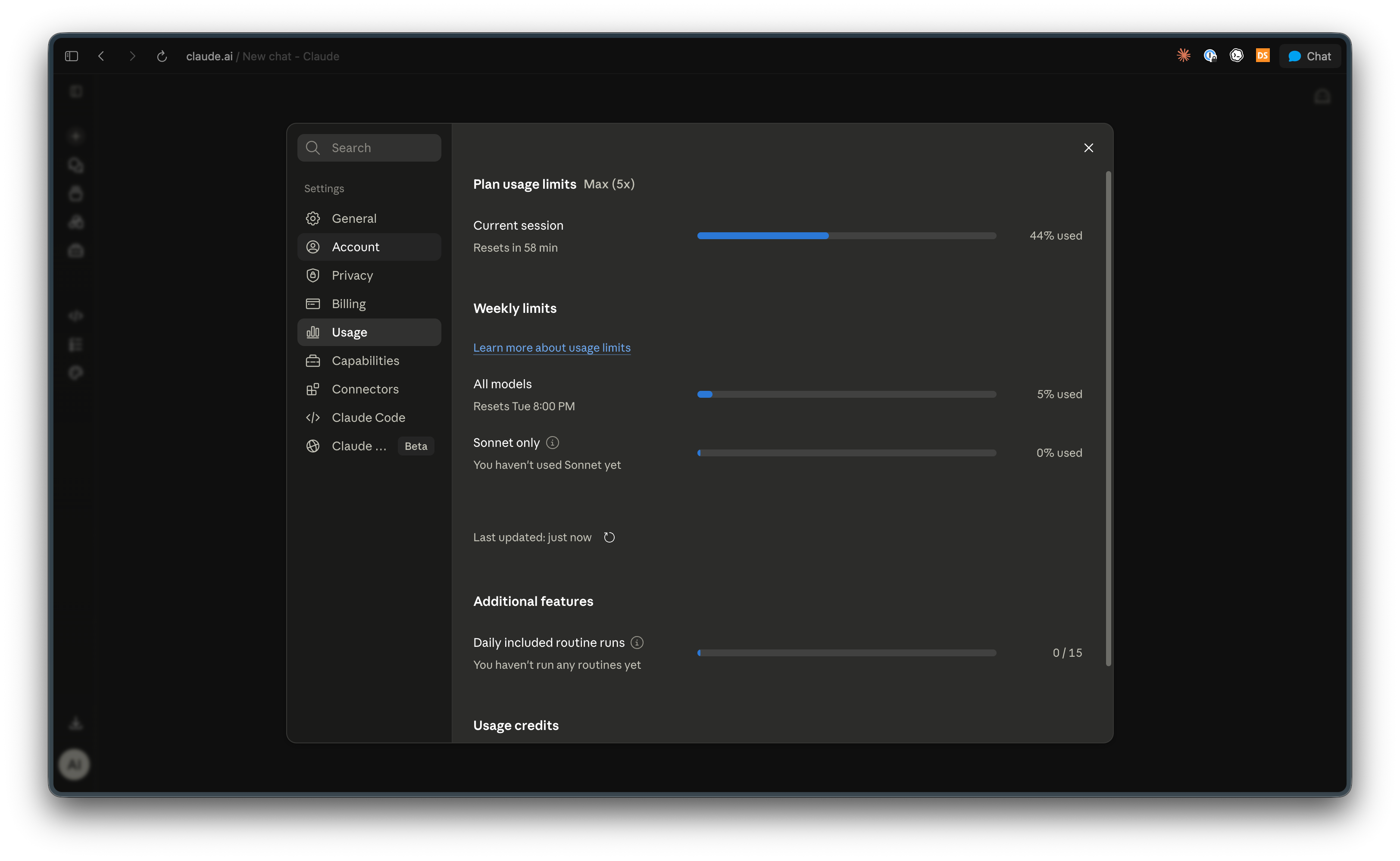
A few habits keep you under the ceiling:
- Batch related questions into one conversation instead of opening many.
- Trim long pasted context to the parts that matter.
- Use a smaller model for routine drafts, then switch to Fable 5 for the hard reasoning step.
One safety detail worth knowing: on Fable 5, prompts touching cybersecurity, biology and chemistry, or model distillation route to Claude Opus 4.8 instead. Anthropic says these safeguards trigger in fewer than 5% of sessions, so most users never notice. If a response feels different on a sensitive topic, that’s why. Our what is Claude Opus 4.8 post covers that model in depth.
The June 23 cutoff
Mark the date. On June 23, 2026, Fable 5 is removed from those plans. After that, using it on Pro, Max, Team, or Enterprise draws on usage credits, metered at API token rates. Anthropic has said it plans to restore some standard plan access when capacity allows, but there’s no confirmed date for that. So the free-inclusion window is genuinely time-boxed. If you want to evaluate Fable 5 at no extra cost, do it before June 23.
You can confirm the launch details on the official announcement.
Method 2: New-account API credit (check the Console)
If you don’t have a paid subscription, or you want programmatic access rather than chat, the API is the other route, and a new account may come with a small head start.
The possible one-time credit
When you create a fresh Anthropic API account, the Console sometimes grants a small one-time credit. Think of it as trial money for testing, not a free plan. Anthropic doesn’t publish a guaranteed figure, and the amount can vary or change over time, so treat it as “may be available, check the Console” rather than a fixed promise. Don’t count on a specific dollar number when you plan a project.
How to find it
- Go to console.anthropic.com and sign up or sign in.
- Open the billing or credits section in the Console settings.
- Look for any starting balance or promotional credit on the account.
- Create an API key under the API keys section.
- Call the model with the ID
claude-fable-5.
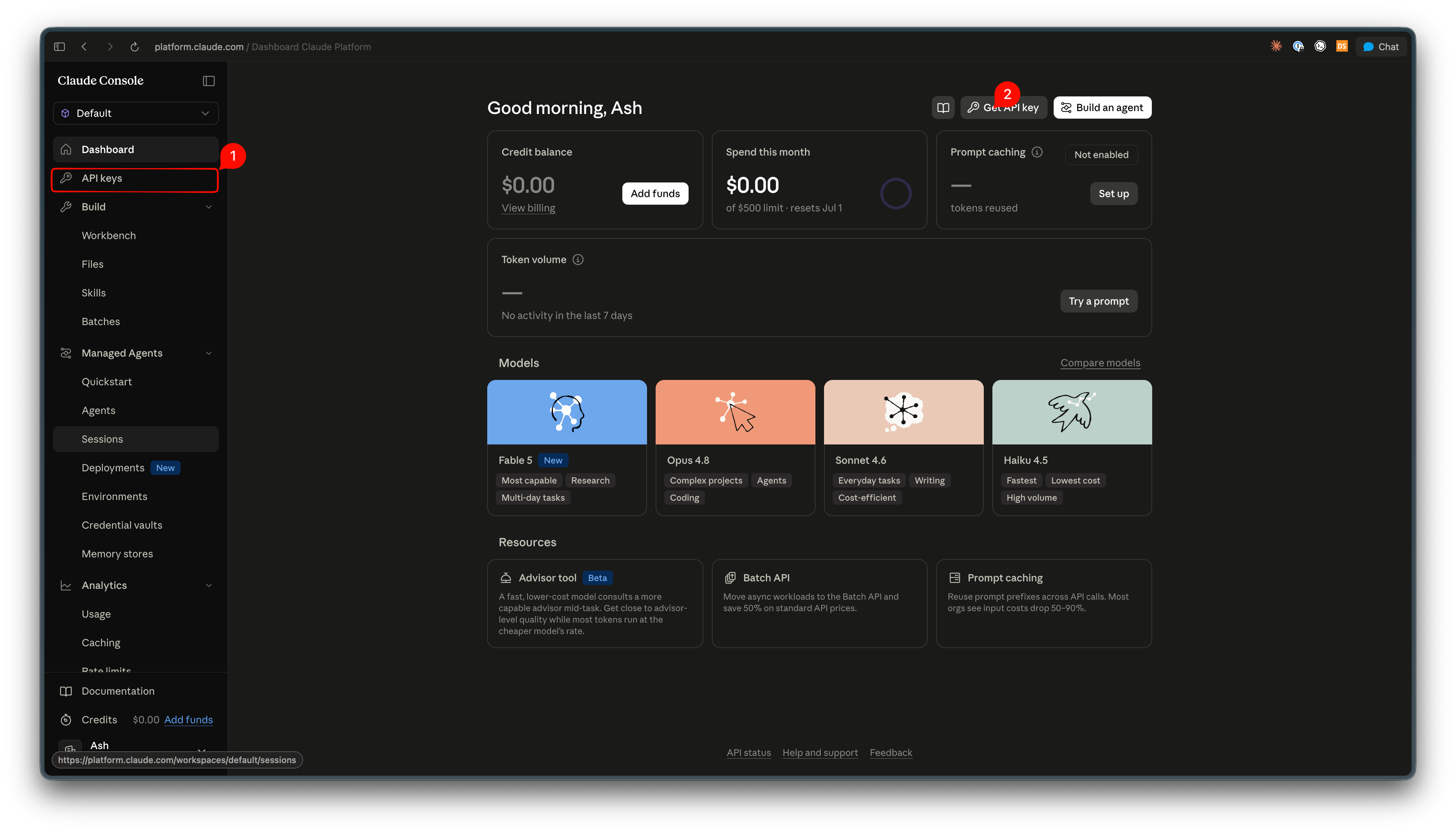
If a credit is present, your API calls draw it down until it runs out, then your card is charged at standard rates.
How far a small credit stretches
Here’s where honesty matters. Fable 5 is a premium model: $10 per million input tokens and $50 per million output tokens. Output is the expensive side.
A rough mental model: one short request might send a few hundred input tokens and get back a few hundred output tokens. At Fable 5 rates, that’s a fraction of a cent each. A small trial credit can cover a meaningful number of those lightweight calls, enough to test prompts, check formatting, and confirm the model fits your task. But it disappears fast once you start sending large documents or asking for long generated outputs. A single request that feeds in a long file and asks for a detailed multi-page answer can cost noticeably more than a hundred small ones.
So a trial credit is for evaluation, not production. Use it to decide whether Fable 5 earns its price for your workload, then budget real money if it does. The same caution applies across providers. We made the same point in our guides to how to use the GPT-5.5 API for free and how to use the Grok 4.3 API for free: trial credits are evaluation fuel, not a standing free tier.
For setup specifics, our how to use the Claude Fable 5 API walkthrough covers authentication and your first call, and how to access Claude Fable 5 maps out every entry point.
What happens after June 23
Once the launch window closes, the economics shift.
On June 23, 2026, Fable 5 leaves the standard plan inclusion. From that point:
- Using Fable 5 on Pro, Max, Team, or Enterprise consumes usage credits, metered at API token rates ($10 input, $50 output per million).
- The API continues unchanged. It was always paid, so nothing about its pricing moves.
- Anthropic intends to restore some standard plan access later, when capacity allows, but no date is set.
The practical takeaway: after June 22, there’s no truly free way to run Fable 5. You’re either spending API dollars directly or burning metered credits inside a subscription. If your budget is tight, that’s the moment to weigh cheaper models, which the next section covers. For a fuller cost picture, including batch and caching math, see the Claude Fable 5 pricing article and the official Anthropic pricing page.
Cheaper alternatives to Fable 5
Fable 5 is a frontier model with frontier pricing. For many tasks, a cheaper Claude model does the job at a fraction of the cost. Here’s how the lineup compares.
| Model | Input ($/M tokens) | Output ($/M tokens) | Notes |
|---|---|---|---|
| Claude Fable 5 | $10 | $50 | Frontier model, premium price |
| Claude Opus 4.8 | $5 | $25 | 1M-token context, strong reasoning |
| Claude Sonnet 4.6 | $3 | $15 | Balanced cost and capability |
| Claude Haiku 4.5 | $1 | $5 | Fastest and cheapest |
A few ways to read that table:
- Claude Opus 4.8 costs half of Fable 5 on both sides and brings a 1M-token context window, so it handles very large inputs without losing the thread. For most heavy reasoning work, it’s the value pick. The Claude Opus 4.8 pricing page has the details, and you can also check whether the free Opus 4.8 route fits your situation.
- Claude Sonnet 4.6 sits in the middle. At $3/$15 it’s a sensible default for drafting, summarizing, and code that doesn’t need the absolute top tier.
- Claude Haiku 4.5 is the budget option at $1/$5. For classification, extraction, short replies, and high-volume jobs, it’s often all you need.
The free Claude app tier
There’s also the free tier of the Claude app. It runs a default model, not Fable 5, but it costs nothing and handles everyday questions, drafting, and light coding. If you don’t strictly need Fable 5’s frontier reasoning, the free app tier is a real option that many people overlook while hunting for a free version of the newest model.
Two ways to cut API cost without changing models
If you do use a paid model on the API, two features lower the bill:
- Batches API: for jobs that aren’t time-sensitive, the Batches API runs about 50% cheaper than standard real-time calls. Send a batch of requests, accept a slower turnaround, and pay roughly half. This suits overnight processing, bulk content generation, and large evaluation runs.
- Prompt caching: when many requests share the same long context (a system prompt, a reference document, a code base), caching lets you reuse it instead of re-sending it. Cache reads cost about 0.1x the normal input price, so repeated-context workloads get dramatically cheaper after the first call. This is one of the biggest levers for anyone running the same prompt scaffold over and over.
Stack both, and a workload that looked unaffordable on Fable 5 can become reasonable on Opus 4.8 or Sonnet 4.6.
Stretch your free credit further with Apidog
Whether you’re spending a trial credit or paying full rate, the fastest way to waste money on a model API is sloppy testing: firing half-formed prompts, re-running calls you already made, and never checking how many tokens each request actually burns. An API client fixes that, and Apidog is built for exactly this kind of work.
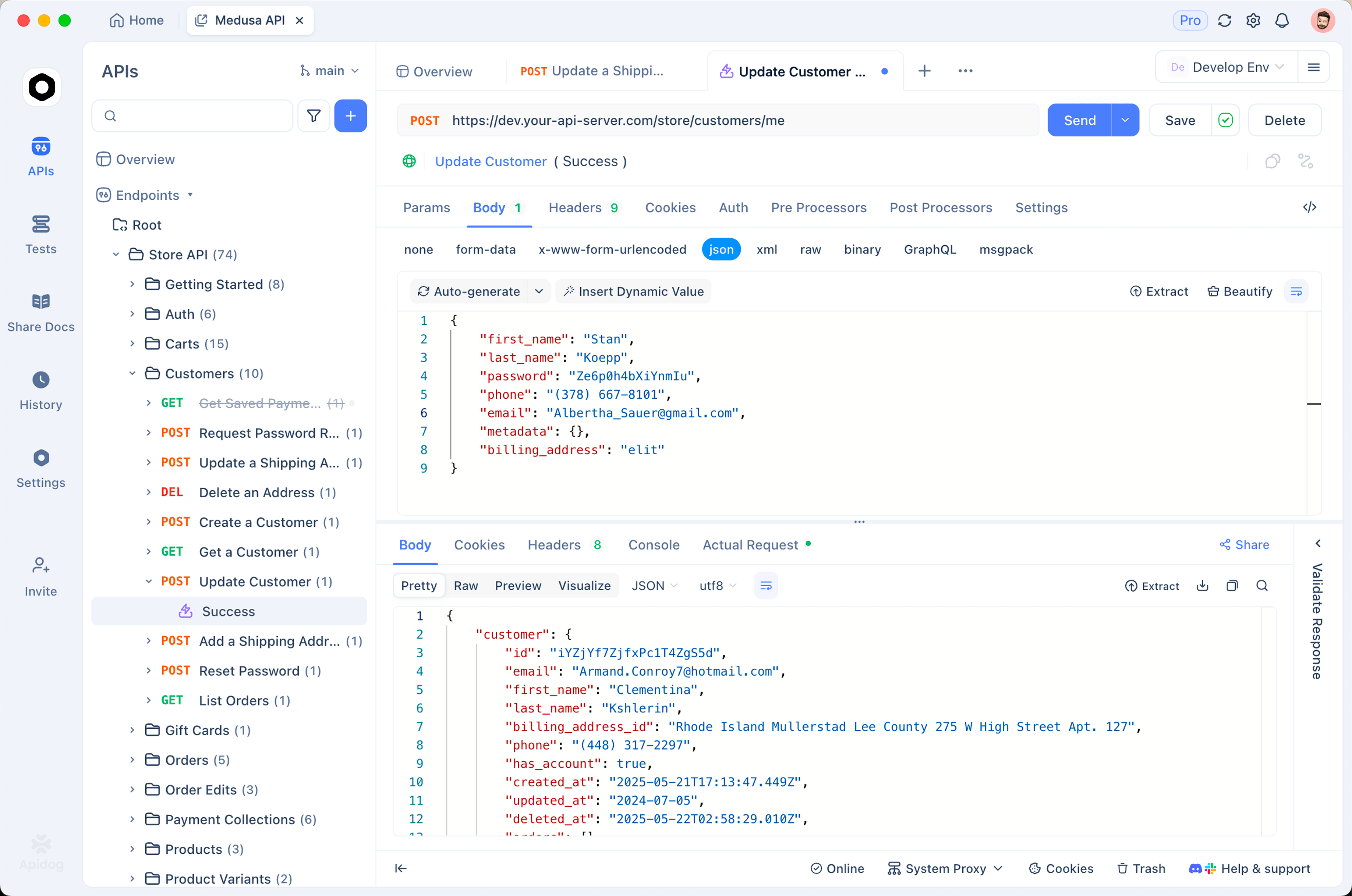
Here’s how to use it to make every call count.
Test and refine prompts before you spend. Set up a single request to the Claude API in Apidog with the claude-fable-5 model ID, your prompt in the body, and your API key in the headers. Now you can edit the prompt, tweak parameters like max_tokens and temperature, and re-send, all in one place. You iterate on the request structure until it’s right, instead of guessing in code and redeploying. When you’re testing against a trial credit, getting the prompt correct in a few deliberate sends beats twenty throwaway attempts.
Watch the usage object to see token counts. Every Claude API response includes a usage object with input_tokens and output_tokens. In Apidog you can read that directly in the response panel after each call. This turns abstract pricing into concrete numbers: you see that a given prompt cost, say, 1,200 input and 800 output tokens, and you can do the math against the $10/$50 rates before you scale anything up. It’s the difference between budgeting on a hunch and budgeting on data. If a prompt is burning more output than you expected, you catch it on call one, not after the credit’s gone.
Save working requests so you don’t waste calls. Once a request works, save it to a collection in Apidog. Next time you need it, you reuse the exact request instead of rebuilding it and re-discovering the right parameters by trial and error. You can keep a small library: one request for short completions, one for long-context jobs, one tuned for the Batches API. Reusing a known-good call means you’re not spending tokens to relearn what you already figured out.
You can also set up environment variables in Apidog for your API key and base URL, so the same saved requests work across testing and production without pasting secrets each time. Download Apidog and import the Anthropic API schema to get a ready-made starting point. For teams, sharing those saved requests through Apidog means everyone tests against the same vetted prompts, which keeps token spend predictable across the group.
None of this changes the model’s price. What it changes is how much you pay to reach a working result, and with a frontier model at $50 per million output tokens, that gap adds up fast.
The cleanest way to try Claude Fable 5 for free is the launch-window inclusion: if you pay for Pro, Max, Team, or Enterprise, open the Claude app before June 23 and select Fable 5 from the model picker. If you want API access, create a Console account to check for a starter credit, then test carefully so it lasts. Next step: set up a single Claude API request in Apidog, watch the usage object on your first call, and you’ll know exactly what Fable 5 costs for your work before you commit a dollar to it.


